


The state’s massive revenue deficit and weak tax-GDP ratio has made banking sector completely government-oriented while heavy monthly government borrowing is leaving the private sector credit-starved and creating a ‘crowding out’ crisis.
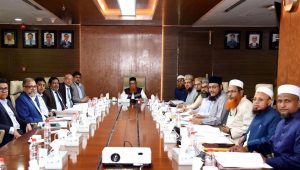
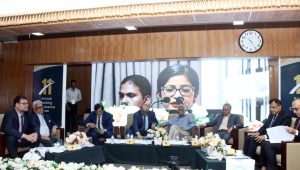
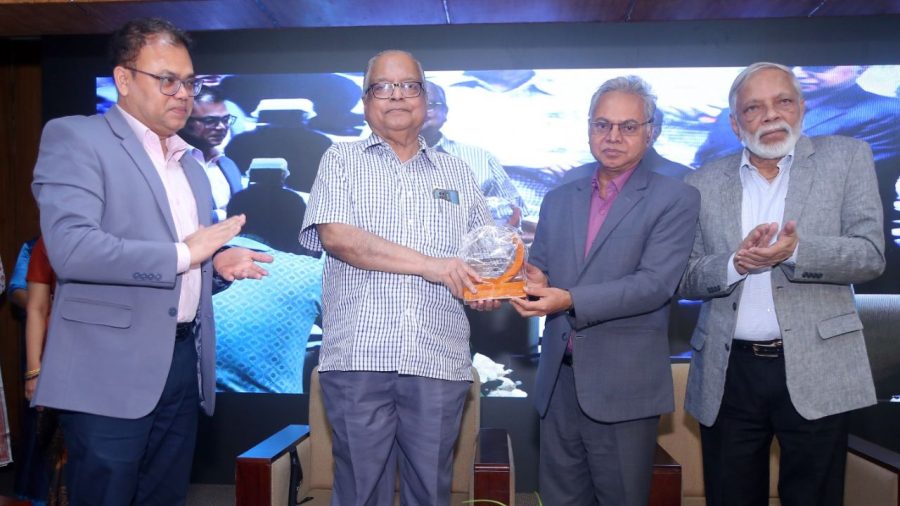
National Professor Mahbub Ullah came up the observations on Thursday at the inaugural session of the second day of 11th Annual Banking Conference, themed “Reforming the banking sector to accelerate economic growth.” The programme was held at Bangladesh Institute of Bank Management (BIBM) auditorium in Mirpur, Dhaka.
Mahbub Ullah said the government’s regular borrowing trend and uncertainty over future loan repayments send a major ‘red signal’ to the economy. Public trust in the banking sector has fallen to near zero, he said adding that some good banks and honest individuals remain within the sector to guide future actions.

He described the current state of the banking sector and the prevalence of non-performing loans (NPLs) not as an isolated incident but as a symptom of a systemic disease. He argued that the state has become ‘extractive’, serving the interests of a few powerful oligarchs. He warned that the NPL issue has evolved into a dangerous nexus of bankers, corrupt businessmen and bad politicians. If this syndicate is not stopped, he said the economy will derail.




Presenting the keynote paper, former Dhaka University Economics Department professor Barkat-e-Khuda said NPLs, lack of good governance, capital shortfall, liquidity crisis, money laundering and low productivity of bankers are holding back the sector. He said that family dominance and a lack of skilled independent directors have created a structural crisis, driving the Capital Adequacy Ratio (CAR) to a record negative level. The former professor stated the sector is now divided into two, with only about 10 banks performing well.
Barkat-e-Khuda highlighted a liquidity paradox- weak and Shariah-based banks are facing severe liquidity crises, while idle liquidity across the overall banking sector has reached nearly Tk4.5 lakh crore. He said that about Tk5 lakh crore has been embezzled through fake loans and corruption, while a syndicate of influential politicians and businessmen has laundered Tk2.5 lakh crore to Tk3 lakh crore abroad.
To resolve the crisis, he stressed the need for structural reforms. This includes reducing the number of excess banks in the economy and merging state-owned and specialised banks into a manageable system.

BIBM Director General Md Ezazul Islam presided over the session. BIBM professor Shah Md Ahsan Habib delivered the welcome address.