


Vegetable seedling growers in Cumilla’s Burichang upazila are targeting Tk50 crore in sales this season, but irrigation shortages, waterlogging and inadequate agricultural support are hampering a trade that supplies seedlings to at least 34 districts across Bangladesh.
In Someshpur village, where vegetable seedlings have been grown for more than six decades, around 150 families depend on the business. Farmers are producing at least 23 varieties of vegetable seedlings on approximately 20 acres of land as demand rises ahead of the winter growing season.
Located between the Gomti River and Rani Moynamoti’s bungalow, Someshpur is busy with farming activities from dawn to dusk. Some farmers water seedlings while others collect young plants, negotiate prices with buyers or load seedlings onto vehicles for delivery across the country.
With the winter season is approaching, farmers are working long hours to meet rising demand.
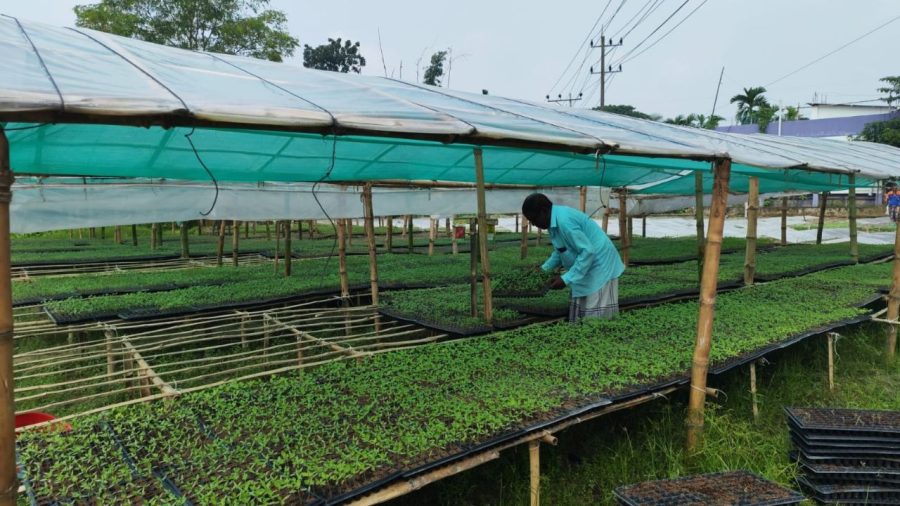
Cauliflower, cabbage, tomato, aubergine, chilli, beans, bottle gourd, pumpkin and broccoli are among the vegetables grown from seedlings produced in the village. Inside small polythene-covered tunnels, rows of trays filled with coco peat are arranged on raised platforms where seedlings grow before being sold.
Farmers begin preparing new batches even before selling the previous ones, keeping production and sales running throughout the season.

Abdul Kuddus, one of the village’s senior growers, has been involved in seedling production and sales for more than 30 years.
“Vegetable seedling production began in Someshpur in 1966. Our seedlings are supplied to at least 34 districts, and around 150 families in the village are involved in the business,” he said.
Kuddus said farmers produce seedlings throughout the year, including varieties suited to summer cultivation.
Seedling grower Jahangir Hossain said farmers had set a sales target of at least Tk50 crore for the current season.




Despite the trade’s potential, growers say inadequate irrigation, declining soil fertility and difficulties obtaining quality seeds and fertilisers are holding back further expansion.
Mohammad Saiful Islam, another farmer, said vegetable seedling production and sales were among the largest sources of agricultural income in Burichang after paddy cultivation.
“Despite its importance, we receive very little support from the agriculture department. We need better-quality seeds and research on soil conditions,” he said, adding that government assistance could help expand production.
Growers said irrigation shortages were particularly severe during the peak selling season, while monsoon waterlogging frequently damaged seedlings. They also reported difficulties accessing soil testing facilities and obtaining quality agricultural inputs.
Farmer Sohag Mia expressed concern about declining soil fertility.
“The soil here needs proper research. Its fertility is declining, and unless steps are taken to restore it, seedling production will fall further,” he said.
Another grower, Bazlu Mia, said government assistance was almost nonexistent despite the substantial business generated by the village.
“Seedlings worth crores of taka are sold from Someshpur, meeting a significant share of demand across the country. Yet we receive hardly any government support,” he said.
Buyers from distant districts visit Someshpur for its affordable, quality seedlings.
Taher Mia, who travelled from Khagrachhari, said he had been buying seedlings from the village for the past 14 years.
“The prices are reasonable, and the quality is good,” he said.
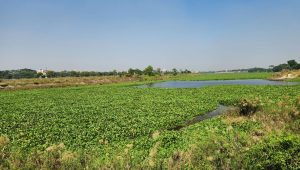
Farmers say restoring a canal that once ran through Someshpur could help address both irrigation shortages and seasonal waterlogging.
Abul Kalam, a local grower, said the canal had gradually filled up because of encroachment and pollution, forcing farmers to rely on expensive pumps for irrigation.
“If the canal is re-excavated, it could help drain excess water during the rainy season and allow us to store water for irrigation during winter,” he said.
Burichang Upazila Agriculture Officer Afrina Akter acknowledged the economic importance of seedling production, describing it as one of the major sources of income for local farmers after paddy cultivation.
She said she had heard about the problems faced by Someshpur’s growers and would raise them with higher authorities. She also assured farmers that necessary measures would be taken to address their concerns.