Bangladeshi households are sinking deeper into financial insecurity, with average debt exceeding savings by 44.6 per cent and the poorest families spending nearly half as much again as they earn, according to a new nationwide study that exposes the strain beneath the country’s broader economic indicators.
Average household debt stood at Tk1.89 lakh against savings of Tk1.31 lakh, leaving a gap of Tk58,305. Monthly household income averaged Tk32,685 against expenditure of Tk32,615, producing a surplus of just Tk70.
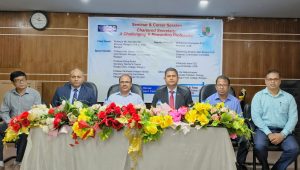
The findings were unveiled on Saturday by the Power and Participation Research Centre (PPRC) at the Cirdap Auditorium in Dhaka during the launch of its study, State of the Real Economy: Dynamics of Reversals and Resilience in Bangladesh.
Based on a nationally representative survey of 8,067 households across all eight divisions between 8 and 31 May 2025, the study estimated that 27.93 per cent of Bangladeshis were living below the upper poverty line.
That compares with the Bangladesh Bureau of Statistics’ poverty estimate of 18.7 per cent in 2022, although the figures come from different surveys conducted three years apart.
The PPRC study put rural poverty at 31.58 per cent, substantially above the urban rate of 19.66 per cent.
But the pressure extends beyond those already classified as poor.
The researchers identified a growing group of financially vulnerable households living above the poverty line but at risk of slipping back into poverty following illness, unemployment or other economic shocks.

Presenting the findings, PPRC Executive Chairman Hossain Zillur Rahman called for economic conditions to be assessed through households’ lived experiences rather than aggregate indicators alone.
PPRC estimates that about 3.1 crore people belong to the “fragile middle”, highlighting how quickly modest economic gains can be reversed.
For the poorest 10 per cent of households, the financial imbalance is already severe.
Their average monthly income stood at just Tk8,477 against expenditure of Tk12,294, leaving a deficit of Tk3,817.
Their average debt reached Tk62,767, more than three times their savings of Tk19,737.


The figures point to a household economy increasingly dependent on borrowing, even as families struggle to meet basic expenses.
Food alone accounted for 54.9 per cent of average household expenditure nationally, rising to 57.35 per cent in rural areas.
Healthcare emerged as one of the biggest threats to household financial security.
The survey found that 52.5 per cent of households had at least one member suffering from a chronic illness, rising to 55.3 per cent among the poorest 10 per cent.
Government assistance has offered relatively little relief.
Social safety-net programmes reached 23.5 per cent of households, but public assistance accounted for less than 1 per cent of average household income. Private assistance contributed 18.3 per cent, according to the study.
The strain on household finances also reflects weaknesses in employment generation.
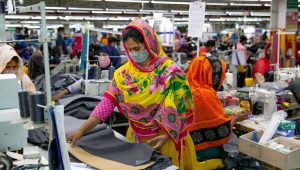
Between 2013 and 2024, the number of economic units in Bangladesh increased by about 50 per cent, from 78 lakh to 1.17 crore. Employment, however, grew by only 25 per cent, from 2.45 crore to 3.06 crore.
As a result, average employment per economic unit declined from 3.1 to 2.6 workers.
The figures suggest that expanding business activity has not generated jobs at the same pace.
Underemployment presents another challenge.
The survey found that 37.7 per cent of working adults had worked fewer than 40 hours during the preceding week.
The disparity was particularly pronounced among women. Some 65.5 per cent of employed women worked fewer than 40 hours, compared with 28.1 per cent of employed men.
World Bank Country Director Jean Pesme said Bangladesh must confront structural weaknesses at home rather than attributing its economic difficulties solely to external pressures.
“While external shocks make structural problems more acute, global instability cannot serve as an excuse to delay addressing core domestic issues,” Pesme said.
He called for banking-sector reform, stronger revenue mobilisation, solutions to energy constraints, prudent public debt management, economic diversification and more effective social protection.
Centre for Policy Dialogue Distinguished Fellow Mustafizur Rahman emphasised the need to shift towards more diversified and productive economic growth.
Around 40 per cent of Bangladesh’s workforce remains engaged in agriculture, although the sector contributes roughly 12 per cent of gross domestic product, he said.
The imbalance underscored the need to improve agricultural productivity while strengthening connections with processing industries and supply chains.
“We must try not to patch up a broken system,” ActionAid Bangladesh Country Director Farha Kabir said, adding that minor reforms would amount to little more than a temporary remedy.