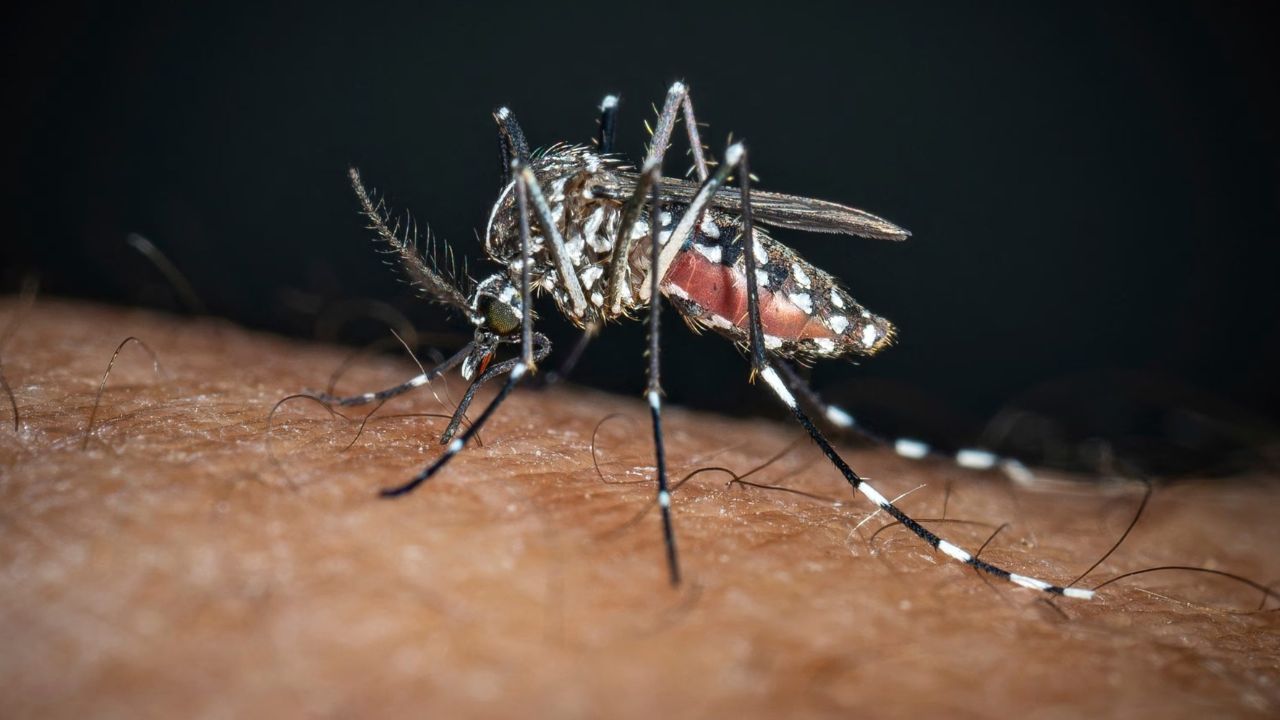



A pioneering mosquito trap that listens, captures, and identifies dengue-carrying Aedes mosquitoes before their numbers surge could offer Bangladesh a formidable new weapon in its battle against vector-borne disease.
Developed by researchers at Dhaka University, the automated, internet-connected device uses acoustic frequencies to attract mosquitoes, photographs those it captures, and identifies them in real time using artificial intelligence. Named MAST-CloudNet, the smart surveillance system was detailed in the international journal IEEE Transactions on Instrumentation and Measurement.
The breakthrough is the result of a joint effort between the Microsystems and Nanoengineering Laboratory in DU’s Department of Electrical and Electronic Engineering and the Muid Research Group in the Department of Zoology. Funded by the Dhaka University Research Fund, the multidisciplinary team was led by researchers including Saeed Mahmud Ullah, Khandaker Ashfaqul Muid, and Ahsan Habib.

How the acoustic trap operates
The technology exploits a unique biological vulnerability of Aedes mosquitoes. Female Aedes produce a distinctive wingbeat sound that attracts males seeking mates. The MAST-CloudNet trap replicates that sound by emitting precise acoustic frequencies between 350 and 500 hertz.
When male mosquitoes approach the source, an internal fan pulls them inside onto yellow adhesive paper. An integrated camera immediately photographs the trapped specimens and transmits the images via the internet to a cloud server, where an AI algorithm identifies whether they belong to the Aedes genus and logs their counts automatically. Public health officials and researchers can monitor vector density live through a centralised web dashboard without physically visiting each site.



Although male mosquitoes do not bite or transmit dengue, they reach adulthood earlier than females and remain close to breeding grounds. Tracking sudden spikes in male populations provides an early indicator that a new generation of mosquitoes is emerging, granting authorities crucial time to intervene before disease transmission escalates.
During three days of outdoor campus testing under heavy rain and urban noise, the acoustic trap captured 49 Aedes mosquitoes with a target selectivity of 83.1 per cent, while a silent control trap captured just one.
Cost-effective surveillance planned for 2027
Crucially, the device represents an affordable alternative to traditional monitoring tools. Manufactured for approximately Tk12,000 per unit, MAST-CloudNet is significantly cheaper than conventional CDC light traps (Tk25,000) or BG-Sentinel traps (Tk20,000). The unit also features a four-and-a-half-hour battery backup for continuous operation during power outages.
Encouraged by these preliminary findings, researchers are planning an expanded field trial in residential areas under Dhaka South City Corporation, installing 10 to 15 units between June and July 2027 to generate real-time early-warning maps of breeding hotspots. Future iterations will incorporate solar power, enhanced weatherproofing, and Long Range Wide Area Network (LoRaWAN) technology for longer-range data transmission.
Congratulating the research team, DU Vice-Chancellor ABM Obaidul Islam emphasised the importance of translating academic innovation into practical public health solutions, noting that automated surveillance could revolutionize vector control across Bangladesh.