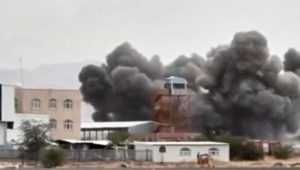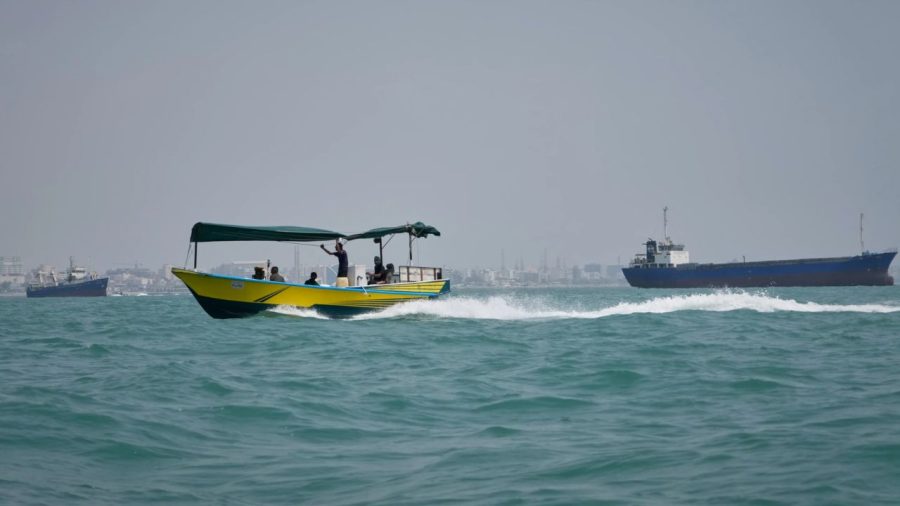

Iran said on Sunday it would soon declare an “exclusion zone” outside the Strait of Hormuz targeting vessels attempting to transit the waterway, a day after the United States struck three Iranian oil tankers in retaliation for Tehran firing ballistic missiles at US warships, says AP.
Mohsen Rezaei, the newly appointed head of Iran’s Supreme National Security Council, made the announcement in an interview with state television, offering few details of how the zone would operate. Experts have described the missile launches as a dangerous escalation, coming after previous Iranian attacks at sea had focused on commercial shipping rather than military targets.
Rezaei said the new zone would be unveiled within days or weeks and would run “from the line of the US naval blockade, extend toward the Strait of Hormuz, and from this side continue into the Persian Gulf”.
He added that “any ship that enters this area with the intention of passing through the Strait of Hormuz and is identified will be placed on our sanctions list.” It remains unclear exactly where Iran considers the US blockade, which targets Iranian ports and is designed to prevent Tehran exporting oil, to be located.

The US military says more than 20 warships are enforcing the blockade, which had redirected 92 commercial vessels and disabled three others as of Sunday. Washington has been ramping up economic pressure on Tehran since negotiations collapsed, with no resolution to the intermittent fighting in sight.
Iran, meanwhile, continues to target ships attempting to pass through the strait, which has become a key point of leverage for Tehran in the conflict that erupted on 28 February following US and Israeli strikes. Iran claimed earlier on Sunday to have struck an unmanned US vessel approaching the strait, an assertion the US military rejected as a “total lie”.


Hostilities resumed a week ago after roughly a month of relative calm, with renewed strikes hitting the strait and Iran’s southern coastline. At least five people were killed earlier in the week in a US bombardment that again struck the area where a school was hit during the war’s opening attacks.
The Trump administration appears to be pursuing a two-pronged strategy, combining military responses to attacks on the strait with action against foreign financial institutions that handle Iranian funds.
Tehran’s hardline new leadership, Rezaei included, has signalled a readiness to hold firm after decades of enduring sanctions, having previously found ways to circumvent both those measures and the current US blockade to keep oil flowing to buyers.
Discussing the collapse of talks with Washington, Rezaei voiced distrust not only of the United States but of the mediators involved, saying the memorandum of understanding signed in mid-June had unravelled within days as both sides accused each other of breaching it.
He said Iran had trusted Pakistan, Qatar and Oman to intervene as mediators should either side violate the agreement, but that this had not happened, and that Tehran was “now pursuing diplomacy with guarantees”.
Separately, US Energy Secretary Chris Wright said on Sunday that around nine million barrels of oil a day were still passing through the strait, a figure he said should ease pressure on global energy prices. His estimate appeared higher than average flows recorded over the previous 28 days by TankerTrackers.com and other monitors.
Wright told CNN that, accounting for regional pipeline flows too, volumes were “probably two-thirds or more of preconflict levels”, though this depends on the US Navy continuing to escort tankers and guard against Iranian attack. He said he expected other nations to eventually assist the Navy in this role.
Rezaei, for his part, claimed Iran was still selling “one million, one and a half million” barrels of oil daily, saying production and trade were continuing “as usual” despite the blockade.