The Rohingya refugee crisis remains one of Bangladesh’s most formidable challenges, placing an immense burden on the nation’s economy, infrastructure, and overall administrative management, Prime Minister Tarique Rahman said on Monday.
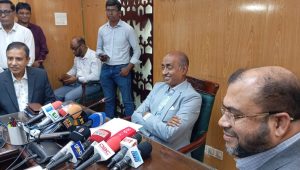
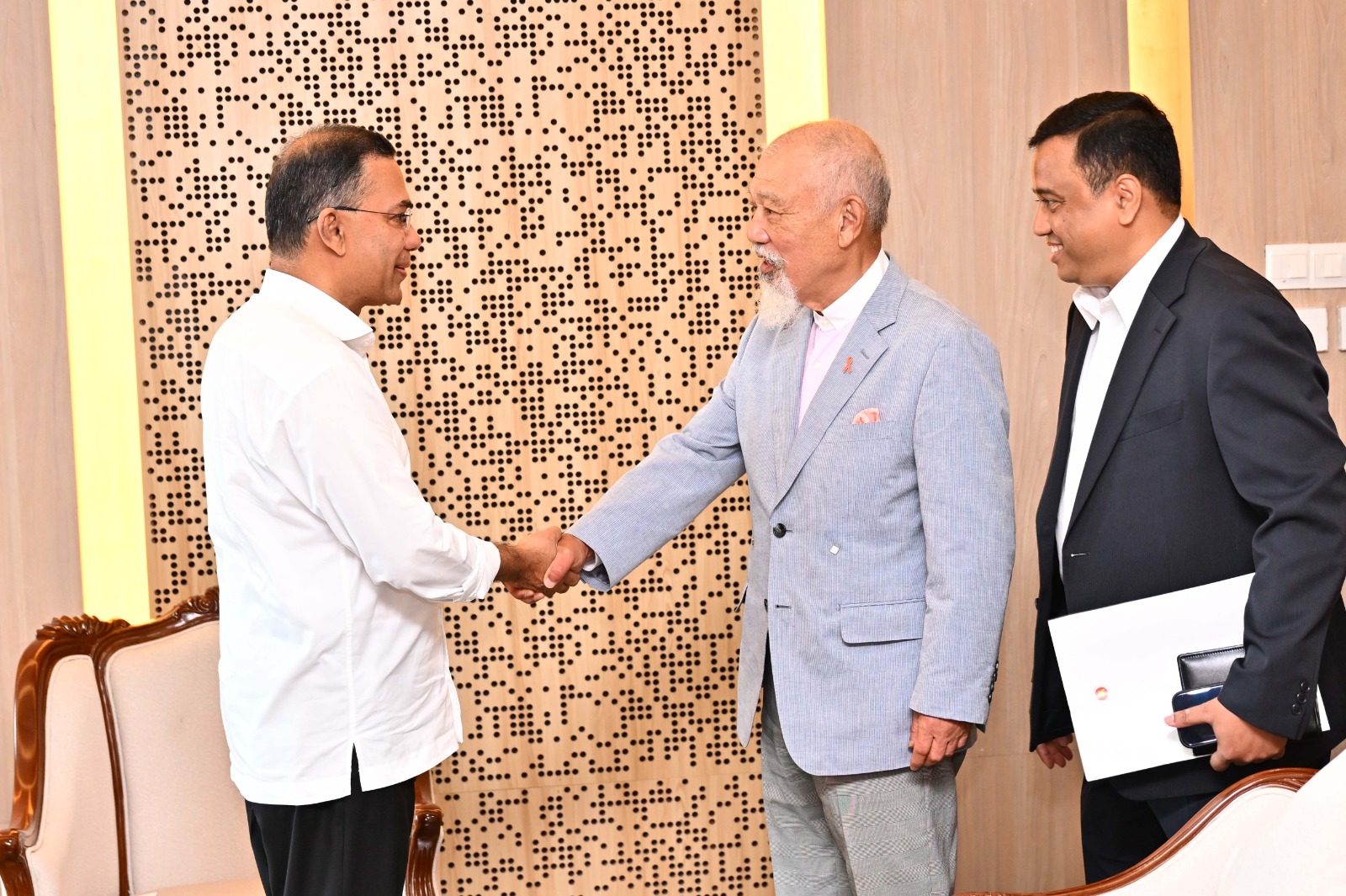
He made these remarks during a courtesy call by Yohei Sasakawa, special envoy of Japan government for national reconciliation in Myanmar and chairman of Nippon Foundation, at the Prime Minister’s Office in the Secretariat.
During the high-level meeting, Tarique pointed out that Bangladesh is already a highly populous country. He explained that hosting an exceptionally large number of Rohingya refugees over a prolonged period has created severe additional pressure across key sectors of the nation.
Thanking the Japanese government for standing by Bangladesh with various grants and humanitarian assistance, the prime minister urged Special Envoy Sasakawa to use his position to facilitate the safe, voluntary, and dignified repatriation of the Rohingyas to their homeland.

Tarique underscored that returning to Myanmar is essential for the Rohingyas, as it would enable them to improve their quality of life, particularly in critical areas such as education and healthcare.
He assured the special envoy that Bangladesh is prepared to extend all necessary co-operation for the rehabilitation of the Rohingyas in Myanmar once repatriation is achieved.



The prime minister expressed Bangladesh’s interest in further improving its bilateral relations with Myanmar.
In response, Special Envoy Sasakawa, who has worked to establish peace and eliminate discrimination globally for nearly 50 years, acknowledged the massive burden the crisis has imposed on Bangladesh.
He shared that he has discussed the Rohingya issue with the president of Myanmar and believes the government is sincere about finding a resolution.
However, he noted that the complex situation currently unfolding in Rakhine Province has delayed progress in the repatriation process. Sasakawa reassured the prime minister that he would make his utmost endeavours from his position to help resolve the crisis.
The two leaders agreed that a sustainable, long-term solution to the Rohingya crisis requires strengthening multilateral initiatives and international co-operation, rather than relying solely on bilateral efforts.
Beyond the Rohingya crisis, the prime minister sought Japanese co-operation in establishing a vaccine production centre in Bangladesh, which Sasakawa promised to work towards with sincerity.
He also highlighted Bangladesh’s keenness to attract Japanese investment, emphasising that the government is actively working to ensure an investment-favourable environment.
The meeting was attended by Minister of Finance and Planning Amir Khosru Mahmud Chowdhury, Finance and Planning Adviser Rashed Al Mahmud Titumir, State Minister for Foreign Affairs-1 Humaiun Kobir, State Minister for Foreign Affairs-2 Shama Obaed, and the Prime Minister’s Special Assistant Shakirul Islam Khan.