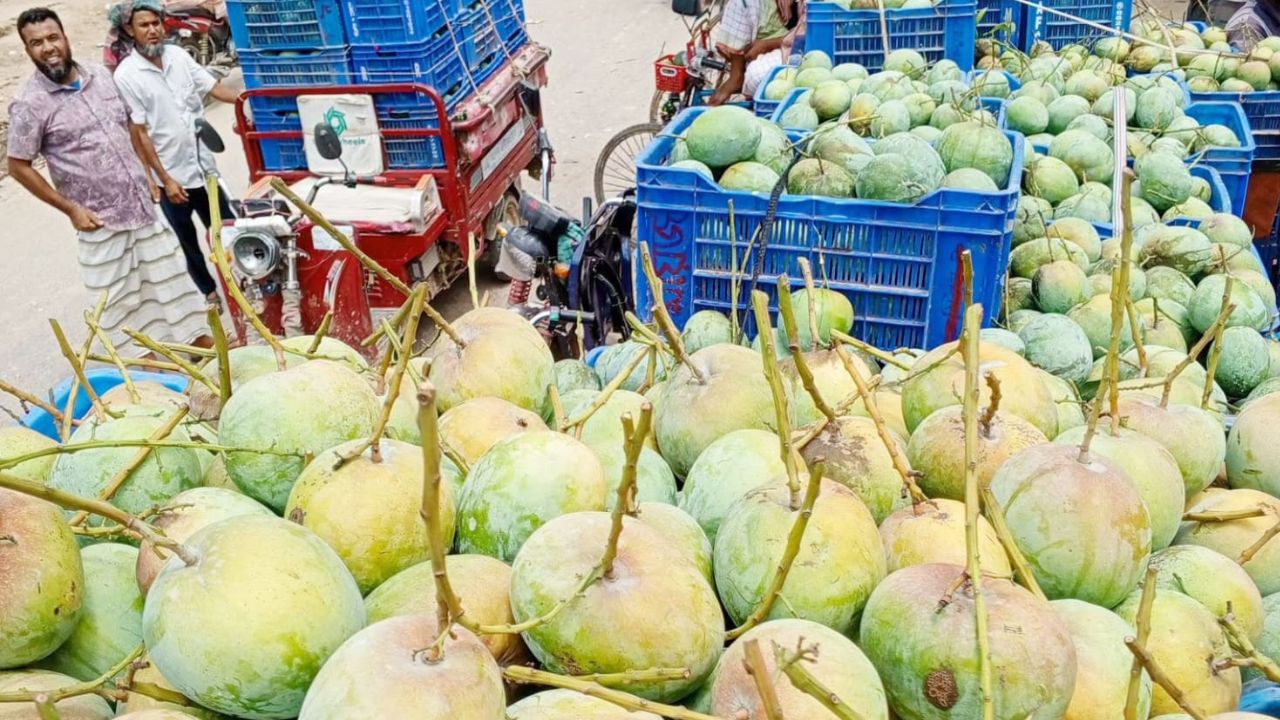



As August draws to a close and the rainy season nears its end, the peak of the mango season has long passed. Yet, the calls of vendors still echo across capital markets, “Sweet mangoes, Rajshahi-Chapainawabganj mangoes!”
On Friday, shoppers stepping into major markets across Dhaka – including Karwan Bazar, Merul Badda, Uttar Badda, Rampura, Banasree, and Malibagh – were met with late-season fruit. Whilst steep prices put them out of reach for many, wealthier consumers were still indulging.
Late-season varieties such as Katimon, Kalyanbhog, Fazli, Jhinuk, and Ashwina were retailing between Tk120 and Tk200 per kilogram. Fully ripe Katimon fetched Tk150-170 per kg, whilst slightly firmer stock reached Tk180-190. Malta Fazli and Jhinuk were priced at Tk120–130 per kg, with Bari and Kalyanbhog selling for Tk140-160.
At Karwan Bazar, Mahdi Islam was spotted buying Ashwina mangoes with his young daughter, Jui. “My little girl loves mangoes,” he said. “I thought they would be gone by late August, but I spotted the Ashwina variety today. Since it’s a late crop, I picked some up for her.”
Fruit trader Khalid Islam noted steady demand, “Local fruits like hog plums and pomelos are selling well, but we are also moving 5 to 10 kilograms of mangoes every day.”

Professor Jahangir Alam of Bangladesh Agricultural University explained that modern farming practices and cold storage now allow late-season mangoes to be marketed into September.
Meanwhile, the abundance of local produce – including Thai guavas (Tk50-70/kg), hog plums (Tk60-80/kg), ripe papayas (Tk80-100/kg), and increasingly affordable dragon fruit – has steered consumer attention away from costly imported apples, grapes, and pomegranates.




Winter vegetables arrive early
Despite the late-summer heat, early winter produce has begun appearing on kitchen market shelves. At Karwan Bazar, shoppers paid Tk180-200 per kg for early-season runner beans.
Broader vegetable prices, which had spiked following recent flood damage, have begun to ease. Green chillies – which touched Tk400 per kg weeks ago – have dropped to Tk100 per kg. Green papaya is selling at Tk20 per kg and sweet pumpkin at Tk40 per kg, whilst staples such as aubergine, okra, bitter gourd, and pointed gourd fell by Tk10–20 per kg over the week as supply bottlenecks resolved.
However, inflation continues to squeeze household budgets. Private sector worker Rahima Sultana pointed out that tomatoes, ginger, and carrots remain stubbornly expensive, whilst another shopper, Anwar Hossain, lamented paying Tk100 per kg for aubergines.
Egg, meat, and fish prices remain high
Egg prices have failed to retreat from flood-induced highs, retailing at Tk140-150 per dozen.
Trading Corporation of Bangladesh (TCB) data indicates prices have risen by Tk14-16 per four eggs over the past six months. Traders attribute the surge to poultry feed costs and livestock heat stress caused by power outages.
Sohag Morshed, an egg seller at Merul Badda market, said, “The wholesale price of 100 eggs is Tk1,120.”
Karwan Bazar trader Nakib said, “Egg prices have increased due to chicken deaths caused by load-shedding and the high cost of poultry feed.”
Protein prices across meat and fish markets remain equally steep. Beef is selling at Tk780-800 per kg, whilst mutton stands at Tk1,300 per kg.
In the fish aisles, a single 1 kg hilsa commands a prohibitive Tk2,700-3,000, sending most buyers away empty-handed.
Even humble farmed options have grown costly, with tilapia priced at Tk250 per kg and indigenous catfish or prawns starting at Tk800 per kg.