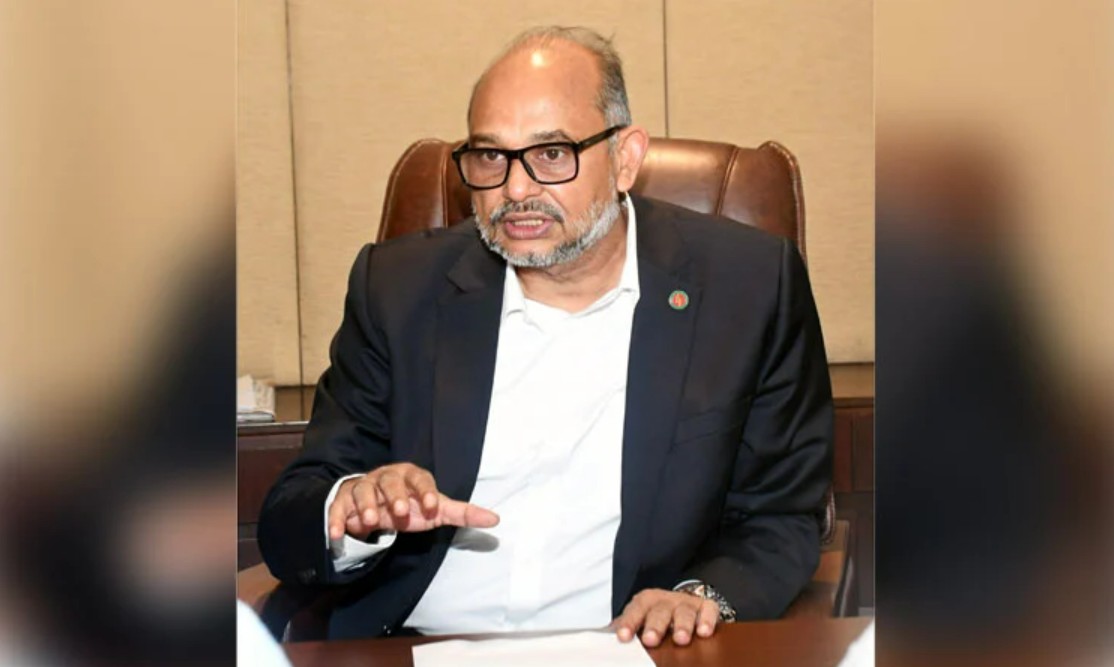



The government will soon decide when and how to implement a new pay structure for government employees, Prime Minister’s Finance and Planning Adviser Rashed Al Mahmud Titumir said on Thursday.
For that, stronger domestic revenue collection and disciplined borrowing must ensure fiscal room.
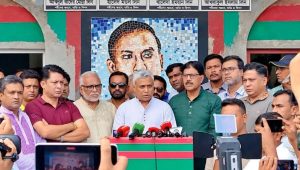
The Cabinet is expected to decide the implementation timeline, Titumir told journalists at his Secretariat office on Thursday, marking six months of the BNP-led government.
The government will seek to expand domestic resource mobilisation without raising tax rates and borrow only when loans are expected to generate economic returns through investment, employment and wider economic activity.
“Loan decisions will be assessed against three factors—return on investment, the time value of money and the immediate multiplier effect,” he said.

Fiscal policy is also being geared towards private-sector investment and job creation.
The pay decision carries a significant fiscal impact.
About 14 lakh government employees receive basic salaries, while the number rises to nearly 20 lakh when pensioners and other beneficiaries are included.




“Persistent inflation has made it necessary to review their pay and benefits,” Titumir said.
He said the government inherited structural problems including energy insecurity, a heavy debt burden and poorly conceived projects, while questioning the credibility of some past growth figures.
The new administration, he said, wants to build a democratic welfare state that can also attract investment.
Titumir said he expects the energy situation to improve during winter, with more visible progress by summer, while targeting energy security appropriate for a large economy by 2029.
Recent LNG disruptions exposed weaknesses in the country’s energy security, with inadequate reserves amplifying the impact of supply interruptions.
The government is now working to build reserve capacity, diversify supply sources and develop alternative transport routes. Titumir said fuel and electricity should have reserve standards similar to food-security stocks.
Bangladesh also plans to expand domestic gas exploration and invite bids for offshore oil and gas exploration blocks in November.
Future power and energy agreements will be reviewed to limit unnecessary financial pressure, including consideration of a “no power, no pay” principle for power-generation contracts.
The government also sees greater use of solar power as part of its energy-security strategy.
Titumir said he expects the government to address the economy’s structural weaknesses during its tenure and put Bangladesh on a path to becoming a $1 trillion economy by 2034 by restoring growth.
He also said the government is committed to publishing credible economic data rather than concealing weaknesses.
“This government is not concealing facts. The numbers it provides are trustworthy,” he said, arguing that greater transparency in economic data represents a fundamental shift that investors should recognise.