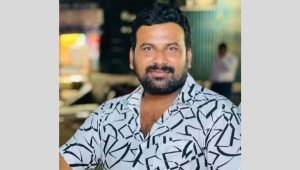
The government is hopeful that former inspector general of police (IGP) Benazir Ahmed will be brought back home from United Arab Emirates (UAE), as he did not renounce Bangladeshi passport and both the countries are members of the United Nations Convention against Corruption (UNCAC) and Interpol.
Even if the ex-IGP carries passports of any other countries, he remains a Bangladeshi citizen and accused of corruption in his home country. As per UNCAC protocol, member nations are obliged to cooperate in corruption-related matters.
This clause will help Bangladesh authorities move forward with efforts to secure Benazir’s repatriation from the UAE.
Home Ministry has completed processing a formal request, which will be sent to the UAE through the Ministry of Foreign Affairs. Benazir was apprehended in Dubai on Friday after Interpol shared crucial intelligence regarding his whereabouts.
Meanwhile, speculation surrounding his arrest and possible extradition has been rife on media and social media. Rumours have also circulated that Benazir possesses a Turkish passport and therefore cannot be repatriated to Bangladesh.
However, multiple sources confirmed that Benazir remains a Bangladeshi citizen and that UAE authorities are expected to cooperate if Dhaka formally requests his return.
An expert, speaking on condition of anonymity, said: “Turkey allows dual citizenship. Therefore, there is no requirement to renounce Bangladeshi citizenship. Benazir remains a Bangladeshi citizen.”
The expert added that a person generally retains Bangladeshi citizenship even if he or she holds another passport, provided the citizenship process in the second country does not require an ‘oath of allegiance’ that automatically nullifies Bangladeshi nationality.

UNCAC route
Bangladesh had earlier invoked the UNCAC to gather information about Benazir’s assets in the UAE.
According to officials, Dhaka sent a formal request to the UAE authorities at the end of last year seeking permission for Bangladeshi investigators to examine assets allegedly acquired by Benazir in Dubai. The request, however, did not receive a response amid the ongoing instability in the Middle East.
A government official said there were two parallel efforts to track Benazir.
“There were two approaches. One was through Interpol and the other through diplomatic channels. The government wanted to send an investigation team to collect information about the assets Benazir allegedly acquired in the UAE,” the official said.
Another official said cooperation under UNCAC could facilitate his return.




“Both Bangladesh and the UAE are parties to UNCAC and are obliged to cooperate in corruption-related matters. If there are no legal complications, he could be repatriated. Possession of another citizenship would not necessarily be a barrier to extradition,” the official added.
Meanwhile, the government has formally set in motion the legal process to bring Benazir back following his arrest in Dubai.
Home Minister Salahuddin Ahmed told Parliament on Sunday that the former police chief was apprehended after Interpol shared intelligence on his location.
Strategic reliance on ACC cases
Although Benazir has been named as an alleged order-giver in 17 murder cases linked to the 2024 mass uprising and faces 10 allegations of crimes against humanity before the International Crimes Tribunal over the 2013 Hefazat-e-Islam rally, the government has chosen to prioritise ACC cases in seeking his return.
An additional IGP told Times of Bangladesh that murder and human rights cases involving large numbers of accused persons have drawn criticism from both domestic and international rights groups, which have questioned aspects of the investigations and judicial process.
As a result, authorities believe corruption cases offer a stronger and less controversial legal basis for repatriation.
Benazir currently faces six ACC cases involving corruption, illicit wealth accumulation, money laundering and passport forgery.
Trial proceedings are already underway in one case concerning the alleged acquisition of Tk11.04 crore beyond known sources of income.
In the case, currently being heard by Dhaka Special Judge’s Court-5, five witnesses, including the complainant, have already testified. The next hearing is scheduled for June 23.
According to the ACC, Benazir declared assets worth Tk12.19 crore, including Tk6.45 crore in immovable property and Tk5.74 crore in movable assets. However, investigators found his total wealth amounted to Tk15.68 crore.
The ACC further alleged that, based on his lawful income and expenditures, his savings should have been only Tk4.63 crore.
Passport forgery and money laundering allegations
The former IGP is also accused of obtaining a passport through fraudulent means.
In October 2024, the ACC filed a case alleging that while serving in senior positions, including director general of the Rapid Action Battalion (RAB) and commissioner of the Dhaka Metropolitan Police (DMP), Benazir identified himself as a private-sector employee to avoid the requirement of obtaining a departmental No Objection Certificate (NOC).
In a separate money laundering case filed in February 2025, the ACC alleged that Benazir withdrew Tk11.34 crore in cash before leaving the country in an attempt to conceal the source and location of the funds.
Investigators also found that Benazir and members of his family prematurely encashed several Fixed Deposit Receipts (FDRs) in 2024 and withdrew cash before authorities could freeze the assets.
His family members are also facing corruption allegations.
His wife, Zeeshan Mirza, has been accused of acquiring Tk31.69 crore in illegal wealth and concealing information about assets worth Tk16 crore.
His daughters, Farheen Rishta Binte Benazir and Tahsin Raisa Binte Benazir, face allegations of illegally acquiring Tk8.75 crore and Tk5.59 crore, respectively.
The ACC alleges that these assets were acquired through Benazir’s influence and has therefore included him as a supporting accused in the related cases.
ACC official Joynal Abedin said investigations into the family’s assets remain ongoing.