Political stability is one of the most essential conditions for the survival, security, and progress of a nation. No country can achieve long-term economic growth, social harmony, national security, or sustainable development without a stable political environment. Political stability creates confidence among citizens, investors, institutions, and international partners, while political instability weakens the state from within and exposes it to both internal and external threats. Nations that achieved remarkable economic and social progress maintained strong political stability, institutional continuity, and national unity, while countries suffering from prolonged political conflict, violent confrontation, corruption, and institutional distrust often face economic collapse, social unrest, insecurity, and developmental stagnation.
When political institutions become weak or divided, governance suffers significantly. Public confidence in the state declines, administrative efficiency weakens, corruption increases, and law enforcement agencies face difficulties maintaining order. Such conditions create opportunities for criminal networks, extremist groups, foreign interference, and anti-state elements to exploit national weaknesses. A politically divided and unstable country becomes vulnerable to internal violence, social polarisation, and external manipulation. When political conflicts intensify beyond democratic limits, the government’s attention shifts from development and strategic planning toward crisis management and survival politics. As a result, national priorities such as defence modernisation, economic planning, education, healthcare, energy security, and technological advancement are neglected.
Political instability can also damage a country’s international reputation. Foreign investors generally avoid politically unstable countries because uncertainty creates financial risks. Industries hesitate to invest where frequent protests, violent clashes, strikes, policy changes, or governance crises exist. This directly affects employment generation, industrial expansion, foreign direct investment, export growth, and overall economic confidence.

Economic growth depends heavily on political predictability and policy continuity. Businesses require a stable environment to invest, produce, expand, and create jobs. Financial institutions need confidence in governance, regulatory systems, and legal protections. Infrastructure projects, energy development, trade agreements, and technological innovation all require long-term political commitment and stability. Political instability often leads to inflation, unemployment, currency pressure, capital flight, and declining investor confidence. Tourism sectors suffer, industrial productivity declines, and development projects face delays or cancellation. Ordinary citizens become the primary victims as the prices of essential goods increase, job opportunities shrink, and social insecurity rises.
Furthermore, political instability weakens democratic culture. In unstable environments, political intolerance grows rapidly. Opposition groups are often viewed as enemies rather than democratic competitors. Public institutions become politicised, and the rule of law weakens under partisan influence. When democratic institutions lose credibility, citizens gradually lose trust in governance itself. This creates frustration, anger, and social division among the population. Weak governance systems and political uncertainty create opportunities for misuse of public resources, bribery, financial irregularities, and abuse of power. In many developing countries, political instability and corruption reinforce each other in a vicious cycle. Weak institutions fail to ensure accountability, while corruption further weakens state capacity and public trust.



In a democratic society, differences of opinion are natural and necessary. Stability does not require suppressing dissent; rather, it requires maintaining constitutional order, institutional continuity, tolerance, dialogue, and peaceful political competition. A mature democracy allows political disagreements to be resolved through democratic processes instead of violence, revenge, or destructive confrontation. For this reason, the responsibility of restoring and protecting political stability does not belong solely to the government. Political parties, civil society, media, institutions, and ordinary citizens all share equal responsibility in preserving national stability and unity.
The government must play a leading role by ensuring good governance, justice, transparency, accountability, and equal treatment under the law. Governments that ignore public concerns, suppress democratic participation, or allow corruption and inequality to grow ultimately weaken political stability themselves. Effective governance requires trust between the state and the citizens. Public trust can only be built through fairness, responsiveness, and institutional integrity. Political parties must prioritise national interests above narrow partisan goals. Destructive political culture, hate-based politics, violent confrontation, and irresponsible rhetoric can seriously damage national unity and democratic stability. At the same time, opposition politics should remain constructive and responsible.
The public also has a crucial role to play. Citizens must reject extremism, political hatred, misinformation, and violence. An informed and responsible population strengthens democracy and social harmony. People should support democratic values, respect differing opinions, and encourage peaceful political participation. Social media and modern communication technologies should be used responsibly to promote truth, awareness, and national unity instead of division and propaganda. Young generations must be educated about democratic values, constitutional principles, civic responsibility, and national unity.
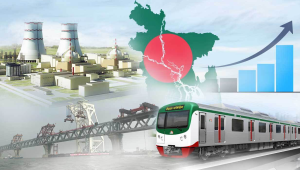
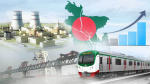
For countries like Bangladesh, political stability is especially critical. With a large population, economic ambitions, strategic geographic importance, and growing global engagement, the country requires strong institutional stability to sustain development and protect national interests. Economic growth, industrialisation, export expansion, infrastructure modernisation, and social progress can only continue successfully within a stable political environment.
The future prosperity of any nation depends not only on economic resources or geographical advantages but also on the strength of its political culture and institutions. A politically stable nation can overcome crises, attract investment, strengthen national security, and create opportunities for future generations. An unstable nation, however, remains trapped in uncertainty, conflict, and underdevelopment.
The writer is a columnist and political analyst