Despite mounting public frustration over the government’s handling of key sectors, the opposition alliance of Jamaat-e-Islami and the National Citizen Party (NCP) has remained largely silent, prompting growing questions in political circles over whether a strategic understanding exists between the alliance and the government.
Although instability in the banking and financial sectors has deepened since the formation of the Bangladesh Nationalist Party government, visible political resistance from the opposition has remained limited.
Allegations of politicisation in the administration persist, law and order concerns remain unresolved, and recent public anxiety over child deaths linked to measles has intensified criticism of the government. Yet the opposition alliance has not launched any major political movement either in parliament or on the streets.
The opposition had an opportunity to push for forming a National Investigation Committee to probe the deaths of children from measles, seek accountability from the Health Ministry for its weaknesses in the vaccination programme, expose the conditions of district-level hospitals, and stand beside affected families to mobilise public engagement.
But beyond a handful of seminars and meetings on traditional political issues, little effective action has been visible.
Political analysts say the opposition has failed to capitalise on the opportunity to hold the government accountable on pressing national issues.
Political scientist Dilara Chowdhury told TIMES of Bangladesh, “People had high expectations of Jamaat as an opposition party. But in reality, it is not being fulfilled.”

She added, “We have seen the condition of most of the Jamaat members in the parliament as well. Besides, the government has created a bad situation in all areas, starting from the banking sector, but the Jamaat alliance is failing to play an effective role.
They may say that the government does not want to listen to the opposition. But before that, the opposition party has to present a correct statement to the nation. I thought that many of them are well-informed people. Now, whether we are not seeing it in reality or for some reason they are unable to show it is unclear.”
Following the 13th parliamentary elections, many had expected a more assertive opposition to emerge, especially after years in which the Jatiya Party was criticised as a “homegrown” opposition during the Awami League era.
Analysts say the current alliance could have mounted strong pressure inside and outside parliament over banking irregularities, default loans, the healthcare crisis and administrative partisanship. Its failure to do so has strengthened speculation about a political compromise with the government.
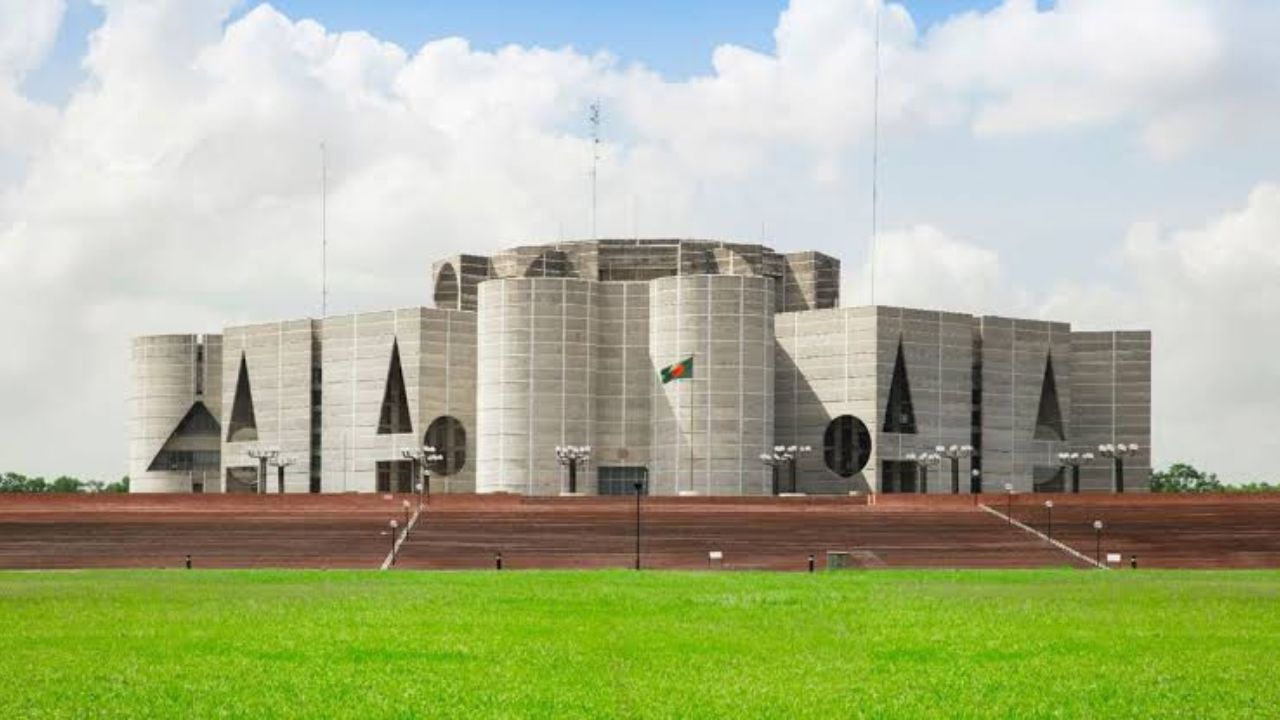



The debate intensified after speeches delivered on the concluding day of parliament’s first session by Prime Minister Tarique Rahman and opposition leader Shafiqur Rahman, where both spoke about running the country through discussion and mutual understanding, while pledging not to let anyone “fail.”
Since then, talk of an understanding between the government and opposition has spread across political circles.
Rejecting such claims, Saiful Alam Khan Milan, a member of Jamaat’s central executive committee and MP for Dhaka-12, told TIMES, “Despite some limitations, they are active in both parliament and the streets. New parliamentarians need some time to understand the rules.
Even then, even though they speak on important issues, many do not see them. In addition, they are continuously holding programs on various issues of public importance, including the implementation of the July Charter. There is no chance of compromise with the government.”
Critics, however, point to missed opportunities.
Although a white paper exposing banking-sector irregularities has already been published, opposition lawmakers failed to sustain pressure in parliament over accountability for influential actors in the financial sector or the role of the central bank.
While some MPs spoke on the issue, analysts say their interventions lacked strong information and data, with many struggling more with parliamentary procedures than substance.
The alliance has also remained largely inactive over allegations of administrative politicisation, worsening law and order conditions, extortion and land grabbing since the current government assumed power. It has, however, been comparatively vocal on the implementation of the July Charter and the recent energy crisis.
Badiul Alam Majumder, secretary of Citizens for Good Governance (Sujon), said the opposition was not entirely inactive, but had failed to maximise its role.
“It is not that the opposition party is not playing a role at all. However, they may have had the opportunity to play a more important role in various areas, but they did not,” he told TIMES.
He added, “It is not wrong for the opposition party to have an agreement with the government party in some fundamental areas of state governance.
However, the opposition party must oppose and constructively criticize the government by pointing out its mistakes and failures. We must also keep that in mind that being an opposition party does not always mean abusing the government.”
Many observers believe the opposition alliance has yet to fully define its political identity. As a result, the robust anti-government platform many expected from the Jamaat-NCP combination has yet to materialise.
Akhtar Hossain, member secretary of the NCP and MP for Rangpur-4, defended the alliance’s role, saying, “We have spoken in parliament by presenting information on every issue.
Besides, starting from the July Charter, the NCP is holding some meeting or seminar every day on every issue of public importance. It is working to create pressure on the government by making people aware.”
Still, despite repeated denials from alliance leaders, the debate over “compromise politics” between the government and opposition continues to dominate political discussion.
Questions are now growing louder over why the opposition alliance remains restrained despite the government’s failures, and whether its silence stems from future political calculations, administrative pressure, or a deliberate strategic choice.