Rajbari’s farmers are turning their fortunes around by embracing the cultivation of new and nutritious vegetables alongside traditional crops.
In the Sultanpur Union’s Shailkathi village, local farmers have achieved great success this year by cultivating beetroot, with farmer Liakat Sardar’s bumper harvest drawing the attention of fellow farmers. The success of his crop has sparked a significant interest in beetroot farming across the area.
A visit to Shailkathi reveals vast fields now planted with beetroot. Liakat Sardar, who has cultivated the foreign vegetable on 40 decimal of land, shared that his yield has been impressive, with around four mounds of beetroot harvested per decimal. “The yield has been excellent, and I am satisfied with the market price as well,” he said.
Inspired by Liakat’s success, other local farmers, including Sujat Mollah and Bachchu Mollah, have also ventured into beetroot farming, planting four and five decimals of land respectively. Both reported satisfying yields from their small plots.

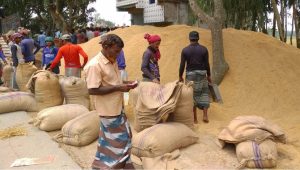
Once fulfilling local demand, Rajbari’s high-quality beetroot is now expanding into neighbouring districts. It is being supplied to wholesale markets in Faridpur, Magura, Jhenaidah, and Pabna, as well as in the capital, Dhaka. With its nutritional value, demand for the vegetable continues to rise.
For the winter season, Rajbari set a target to cultivate 5,100 hectares of vegetables, with beetroot taking up a notable portion. Due to the unexpected success in Shailkathi and increasing demand in neighbouring districts and Dhaka, the area under beetroot cultivation in Rajbari is expanding.



Agricultural experts believe that the short cultivation period and high profitability of beetroot make it a highly promising crop for Rajbari. With the right government support and effective marketing, beetroot cultivation could become a significant contributor to the economic development of the region.
Liakat Sardar, reflecting on his experience, shared, “I planted the beetroot seeds in January and began harvesting in April. I never expected such a yield and profit in such a short time. Initially, I sold it at Tk2,000 per mound, but even now, with the price at Tk1,200, beetroot farming is more profitable than other crops.”
Sujat Mollah, who planted beetroot on four decimals of land, said, “I was inspired by Liakat bhai’s success, and tried growing it on a small scale. The results were better than I expected. Even with such a small plot, I made a good profit, which helped with many household expenses. I plan to expand my cultivation next season.”
Similarly, Bachchu Mollah, who planted beetroot on five decimals, shared how the crop provided economic stability for him. “Beetroot has brought new hope for us. The profit from selling five decimals of beetroot far exceeded what we earn from traditional crops. It is a fantastic cash crop that requires minimal investment and offers maximum returns.”
Assistant Agriculture Officer Mohammad Manjur Morshed attributed the success of beetroot cultivation in Shailkathi to the area’s fertile soil and the encouragement of modern farming techniques. He has been offering technical assistance, including advice on seed planting, irrigation management, and the use of organic pesticides. He believes that beetroot farming is quickly improving the financial status of local farmers, and the positive economic impact is being felt in the region.
According to Rajbari District Agriculture Officer Md Joni Khan, the district’s soil and climate are highly suitable for beetroot cultivation, which is much more profitable than traditional crops. “Thanks to the agriculture department’s intensive field monitoring, technical support, and accurate advice, farmers are getting bumper yields in a short time and are securing good market prices. Rajbari’s beetroot is now being supplied to Dhaka and neighbouring districts, making a significant contribution to the local agricultural economy.”
The success of beetroot farming in Shailkathi village has marked a new chapter in the agricultural economy of Rajbari. Farmers have ventured beyond traditional crops like rice and jute, setting an inspiring example for other farmers in the region.
As demand for beetroot continues to rise, the district is poised to establish itself as a leading beetroot-producing area in Bangladesh. With continued use of modern agricultural technology and government support, beetroot could become a key driver of economic change for farmers in the region.