Bangladesh’s widening trade deficit is being increasingly driven by its reliance on imported fossil fuels, with energy imports accounting for 59 per cent of the gap, according to a new report.
The report, The Electric Fast-Track for Emerging Markets, released on Thursday by global energy think-tank Ember with the Climate Vulnerable Forum and the V20, said rising fuel import bills are deepening pressure on foreign exchange and exposing the economy to external shocks.
Energy import costs for the climate-vulnerable economies reached $155 billion in 2024 and are projected to rise by another $30 billion this year amid global volatility, the report said.
For Bangladesh, the impact is already visible.
Heavy dependence on imported fuels is straining reserves and making the economy vulnerable to geopolitical disruptions, with supply shocks beginning to affect daily life and economic activity.

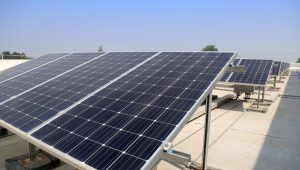
Against this backdrop, Ember urged Bangladesh to accelerate solar power expansion to cut import dependence and stabilise the balance of payments.
The report finds that Bangladesh remains behind in renewable energy adoption, with only around 3 per cent of total power generation capacity coming from renewables, leaving the country exposed to global price swings.
By contrast, more than half of climate-vulnerable countries have already surpassed the United States in solar adoption, signalling a faster-than-expected global shift.



The economic cost of inaction is rising.
Change Initiative Managing Director M Zakir Hossain Khan said global fuel price spikes are already affecting households and businesses.
“In least developed countries, the $88 families once saved annually for flood protection is now being absorbed by a 40 per cent increase in fuel and food prices,” he said.
He added that Bangladesh is incurring an additional $5 billion annually due to global energy disruptions, underscoring the urgency of reducing import dependence.
The report also highlights a structural shift in energy markets.
Solar panel imports in many countries are far higher than official installation figures, indicating rapid growth of decentralised energy systems led by households and small businesses.
At the same time, costs of solar panels, batteries, and electric appliances have fallen sharply by between 30 per cent and 95 per cent over the past decade, making clean energy more accessible.
Unlike fossil fuel systems that require large-scale infrastructure, solar and battery solutions can be deployed in phases, offering a practical alternative in countries like Bangladesh where grid expansion remains costly and slow.
Institute for Energy Economics and Financial Analysis energy analyst Shafiqul Alam said reliance on fossil fuels has increased exposure to volatile global markets and rising subsidy burdens.
“Renewable energy offers a credible pathway to strengthen energy security, especially amid recurring geopolitical crises,” he said.
The report concludes that scaling up solar power is no longer only an environmental goal but an economic necessity, as Bangladesh seeks to reduce import pressure, improve resilience, and stabilise its external balance.