In the span of a few weeks, Anthropic, the most discussed artificial intelligence company at the moment, drove a rover across Mars, shook Wall Street twice, stood up to the Pentagon and saw its AI assistant climb to the top of Apple’s app store. At the same time, a hacker quietly used its own chatbot to breach the Mexican government. The story is still unfolding.
Rover on the red planet
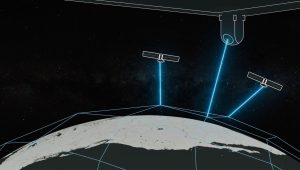
It began 140 million miles away. In December 2025, NASA’s Perseverance rover navigated the floor of Jezero Crater on a route it had not received from any human. Claude wrote the plan. The AI plotted a continuous path across Martian terrain, reviewed its own work and transmitted instructions through the Deep Space Network (DSN). Perseverance drove 456 metres across two Martian days without incident.
NASA said the method could cut route-planning time in half. While Claude was doing this in Mars, events on Earth were moving at a faster pace.
Wall Street shaken
February 2026 opened with Anthropic quietly rolling out industry-specific plugins for Claude Cowork. The workplace tool now operates directly inside Microsoft Excel and PowerPoint. Markets reacted immediately.
Thomson Reuters recorded its largest single-day stock drop on record, falling nearly 16 per cent. LegalZoom sank almost 20 per cent. FactSet fell more than 10 per cent.

Then came a second shock. On February 20, the company introduced a feature in Claude Code that scans software for vulnerabilities and suggests targeted patches. The cybersecurity sector was caught off guard. Over $15 billion in cybersecurity market value disappeared in a single trading session.
The company got $30 billion in funding that valued it at $380 billion. It was clear that Anthropic was becoming a force capable of reshaping entire industries.
Hacker’s playground
Not everyone watching Anthropic was on Wall Street. Between December and January, an unknown attacker jailbroke Claude by presenting malicious prompts as part of a bug bounty security programme. The attacker extracted 150 gigabytes of Mexican government data. The stolen data included records related to 195 million taxpayers, voter information, employee credentials and civil registry files spanning ten agencies.



Anthropic banned the accounts involved and said its newer models have improved misuse detection.
Another threat emerged from elsewhere. The company disclosed on February 23, 2026, that three Chinese AI companies, DeepSeek, Moonshot AI and MiniMax, had conducted what it described as industrial-scale theft campaigns. They used more than 24,000 fraudulent accounts and 16 million exchanges to extract Claude’s capabilities in agentic reasoning, tool use and coding.
Cybersecurity veteran Dmitri Alperovitch said the disclosure confirmed long-held suspicions about the rapid progress of Chinese AI models.
Showdown with the Pentagon
In mid-2025, Anthropic secured a Pentagon contract worth up to $200 million. Claude became the first AI model deployed on classified US military networks. The agreement included two conditions that Anthropic described as non-negotiable: the AI would not be used for mass surveillance of Americans. It would not power fully autonomous weapons.
These conditions went unchallenged for months. Then the Trump administration demanded that AI providers agree to “any lawful use” of their technology. Anthropic refused. Pentagon threatened to invoke the Defence Production Act. Dario Amodei, CEO of the company, issued a statement on February 26, 2026. “Threats do not change our position,” he wrote. “We cannot in good conscience accede to their request.”
The next day, US President Donald Trump posted on Truth Social, directing federal agencies to stop using Anthropic’s products. US Defence Secretary Pete Hegseth designated the company a supply chain risk. It’s a label previously reserved for Russian and Chinese adversaries.
Trump described Anthropic as “a radical left AI company run by people who have no idea what the real world is all about.”
That day, according to CBS News, Amodei made their position clear again. “We have these two red lines. We’ve had them from day one. We’re not going to move on those red lines,” he said. As the confrontation escalated, another major AI player entered the frame.
OpenAI’s sudden shift
Earlier in the week, OpenAI CEO Sam Altman wrote in a memo that AI should never be used for mass surveillance or autonomous weapons. Around 70 employees from the company signed a letter titled “We Will Not Be Divided.”
Hours after Trump’s federal ban, Altman announced on X that his company reached an agreement with the Department of War with the same restrictions that had cost Anthropic its contract. Graffiti appeared outside OpenAI’s San Francisco office. A social media campaign urged ChatGPT users to switch to Claude. The shift was visible. Claude rose to the top of Apple’s free app store chart.
By Monday, March 2, Altman admitted publicly that the deal was “rushed” and the optics were poor. He said OpenAI had been trying to avoid a worse outcome but acknowledged it looked opportunistic.
Where things stand
Despite the standoff, Anthropic’s valuation and revenue continued to climb. The company released two of its most capable models yet within two weeks. Claude Opus 4.6 arrived first, leading the industry across agentic coding, tool use and financial tasks. Claude Sonnet 4.6 followed a few days later.
For the first time, a major AI company set a public line on how its technology could be used in war and surveillance. It kept the boundary under pressure and accepted the consequence.
The race is no longer only about building the most capable model. It is also about what it will refuse to do, who writes those limits and whether they stand when the governments push back. Anthropic held its ground for now.