


The coastal areas of Hatiya, an island upazila in Noakhali, are witnessing a period of intense activity as the winter season draws to a close. From sunrise to sunset, fishermen at various centres are fully occupied with drying various types of fish to produce shutki (dried fish).
With an abundance of fish being caught at sea, “shukti mohals” (drying yards) or kholas are buzzing with activity as the “silver harvest” is laid out in the sun.
Families in coastal areas, including Rahmat Bazar, Kazirbazar, Jangalia, Jahajmara Katakhali, and Nijhum Dwip, are busy processing renu (fish fry), small prawns, and cheua fish.
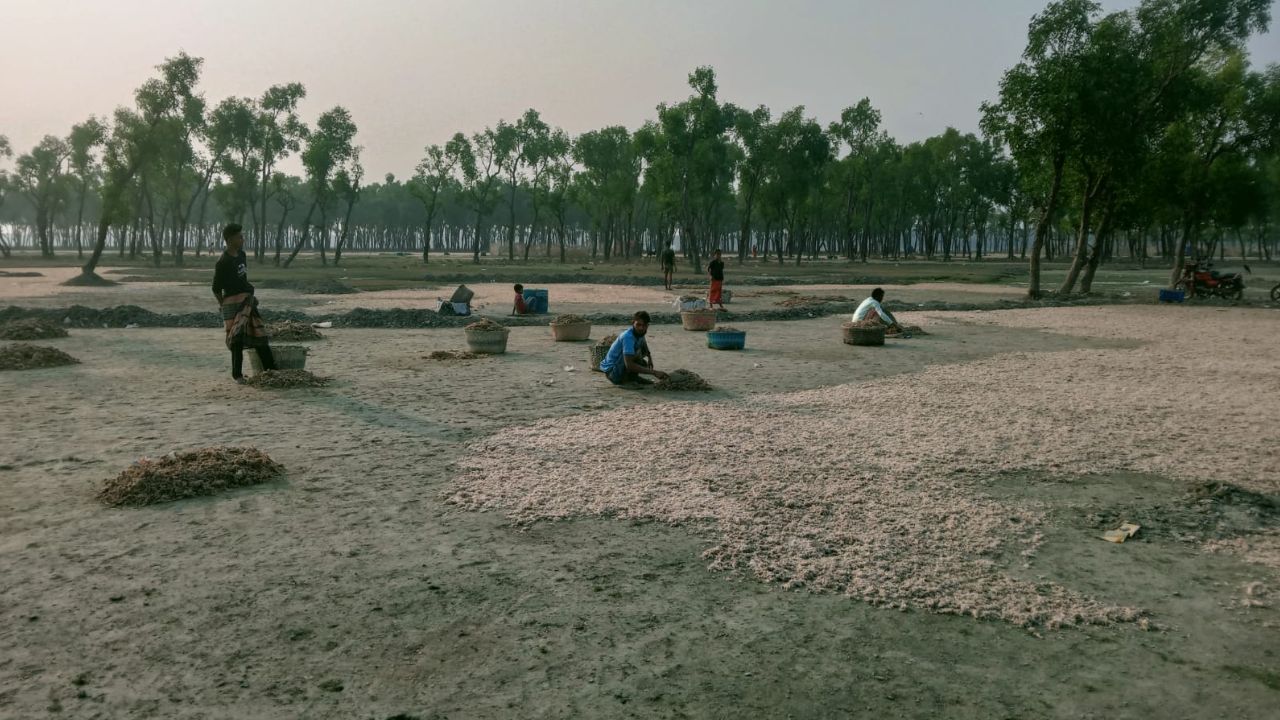
At an open space near the Rahmat Bazar Golpata Tourism Centre, rows of fish can be seen spread out for drying. While some workers spread the fish, others flip them or gather those already dried.

However, alongside the production boost, there is a noticeable presence of child and adolescent labourers in these yards.
Local fishing families claim the industry provides essential livelihoods and seasonal employment. On average, each producer employs 10 to 12 workers on either daily or monthly wages. Among them, 12-year-old Sohel and 10-year-old Alif earn Tk5,000 per month working under Nabir Majhi. Ripon and Saiful, aged only 6 or 7, report earning daily wages of Tk200 to 300.




Shah Alam, a fish trader, noted that dried small prawns, used for fish and animal feed, are selling for Tk2,200 to 2,500 per maund.
The produce is supplied to local markets such as Khaser Hat, Ochkhali, and Tamruddi, as well as to major traders in Chattogram and Sylhet. Due to favourable weather, the quality of the dried fish is high this year, and traders are considering plans for international export.
In Nijhum Dwip, trader Salahuddin reported a significant catch of cheua fish over the past week. While large, fresh cheua sells for Tk60 to 100 per kg, smaller fish with lower market value are dried in open fields. These naturally dried fish are popular among tourists and local businessmen for their unique taste.
Despite the profits, some residents have expressed concern. The indiscriminate drying of renu and small prawns is feared to cause severe damage to future fish stocks. Furthermore, conscious citizens view the use of child labour as a serious social and legal issue.
Trader Nabir mentioned that while millions of takas worth of dried fish are supplied from Hatiya, the production process remains largely informal.
Addressing the situation, Md Fayzur Rahman, Hatiya Upazila Fisheries Officer (Additional Charge), stated that training sessions could be arranged for producers interested in chemical-free and eco-friendly production methods.
Experts believe that with planned management, conservation of fish resources, and initiatives to discourage child labour, the dried fish industry could become a sustainable source of income for Hatiya. Without such measures, the islanders may face long-term environmental and social consequences despite immediate financial gains.