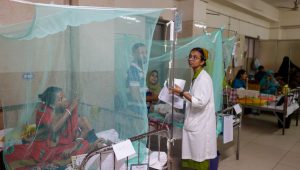
It was some years back, I have had the opportunity to visit an NGO office in Dhaka and meet about 20 HIV positive men, who were there to receive their medicine and attend a counseling session. I knew the director of the NGO so it was possible to meet the men who were HIV positive registered with the NGO, and eligible to receive the antiretroviral medicine. I went soon after lunch and had a heart-to-heart conversation with the patients. They frankly narrated their story mentioning how they had contacted the virus and how they were managing their life in Bangladesh amidst the blight of stigma in society and so on. Most of them worked in the Middle East, while some came from Italy and Greece. Those from the Middle East practiced homosexuality and those from Italy and Greece used to visit cheap brothels. When did they realise that they had contacted HIV virus? It was when they started to feel weak for days and had recurrent fever, did they go to the hospital. When the virus was detected in their blood, the owners immediately terminated them from their jobs and sent them home. It was difficult to tell the truth about losing their job on account of HIV/AIDS, especially to their wives and parents.
Because of lack of knowledge, all sorts of baseless stories about AIDS were circulating in the country so they could not take any risk. Initially, they did not know where to go for the medicines. The NGO in question actually found them through a government partnership programme in partnership with GOB and UNAIDS.
As we kept talking about the virus and their present lifestyle, some tea and snacks were brought in. After consuming some biscuits, I drank water from one of the glasses. I had no fear as I knew that the plates and glasses are washed with soap after every use, so you do not get infected by using dry cups or glasses. I also knew very well how one gets infected and how one doesn’t. The patients were surprised that I even shook their hands when I entered the room, because no one even touched them at home. Surprisingly, there was fear even among my journalist friends about getting infected by HIV virus by interacting with the patients. In fact, those were the days when people believed one may get infected by taking a bath in the same pond with HIV patients. It took many more years of dissemination of true information that people began to understand how the virus spreads from one individual to another.

We may recall that globally HIV/AIDS epidemic began to wreak havoc in the late 80 and throughout the 90s. The virus caused widespread deaths as there was no medicine for cure. Then came the Highly Active Antiretroviral Therapy (HAART), which dramatically reduced AIDS-related mortality in many countries. The medicine also allowed many years to be added to a patient’s life by delaying the devastating effect of the deadly virus.
Study reports show that AIDS had become the leading cause of death among young adults, ages 25-44. In the United States, by 1992 and 1994, it was the leading cause of death for all Americans in that age range. That was the decade when the number of new infections surged, which peaked in the mid-1990s with over 3 million new HIV infections reported yearly. Sadly, by the end of 1997, an estimated 30 million people worldwide were diagnosed with full blown HIV/AIDS.



Meanwhile, alarming situation evolved in the Sub-Saharan Africa region. There the virus had a catastrophic impact on life expectancy, where the virus was responsible for more than half of all deaths. Numerous deaths of the patients resulted from stigma, neglect and fear. Neighbours and family members avoided a patient as they would avoid a leprosy patient. This led to social isolation for many people living with HIV. The worsening situation prompted the UN and other major countries to initiate strong advocacy programmes, and the establishment of the Red Ribbon as the international symbol of AIDS awareness.
It was in the late 90s and beginning of the 21st century that some form of relief came in the shape of a therapy- HAART. It was a combination of three or more drugs that delayed the replication and fatal effect of the virus in blood. With the introduction of the drugs, rates of death began to decline slowly among the AIDS patients. Research shows that AIDS-related deaths in the U.S. fell drastically by 47% between 1996 and 1997, and by 80% between 1995 and 2000 in the UK.
Hospitals started to set up testing laboratories, new testing methods were developed including the first non-blood-based antibody test, and the first home testing kit making diagnosis more accessible. There was better global response with international bodies like the Joint United Nations Programme on HIV/AIDS (UNAIDS) forming a global action plan.
Reports show that by the end of the 90s, the epidemic continued to be a major global health crisis, especially in developing nations where the cost of new treatments was extremely high. But the coordinated behaviour changes communication programmes and community-based awareness campaigns regarding prevention worked well resulting in the reduction of new cases.
When complacency set in, from the mid-2000, the stress on HIV/AIDS campaign slowed down and the health departments of the governments in the vulnerable countries shifted their focus elsewhere. As a result, the virus became strong again and continued to infect the vulnerable people, especially drug users who shared needle without having knowledge of the consequence. This caused HIV virus to come back in an alarming rate in the recent years.
I believe the health communication department of DGHS, GOB, will take up strong campaigns once again to spread the knowledge throughout the communities in a bid to arrest the sudden surge of the deadly virus. Prevention is better than cure should be the guiding mantra of the awareness programmes throughout the country.