Every morning, 12-year-old Jannat Akter Meherun hesitates before stepping out of her home. Her uniform is folded. To enter her school, Jannat must wade through murky, foul-smelling water which is sometimes up to her knees. There is dread on her face as she passes the municipal garbage dump and enters the school, which is sinking into the earth.
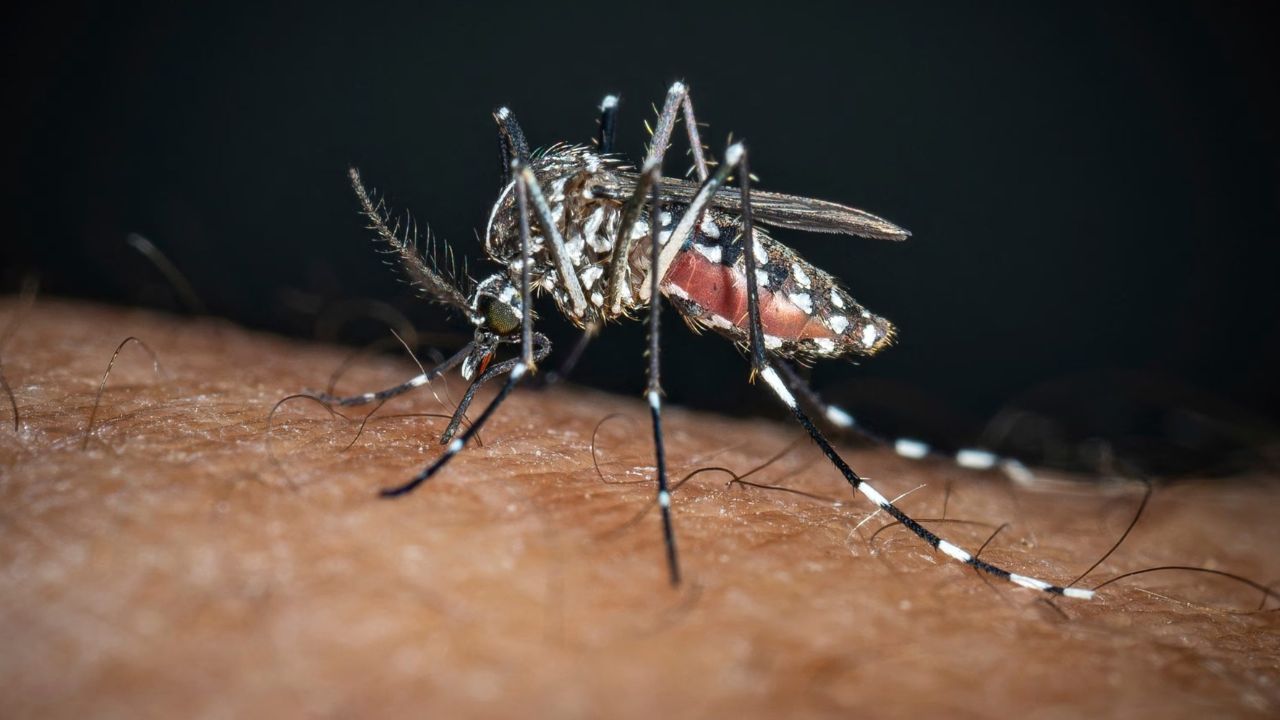
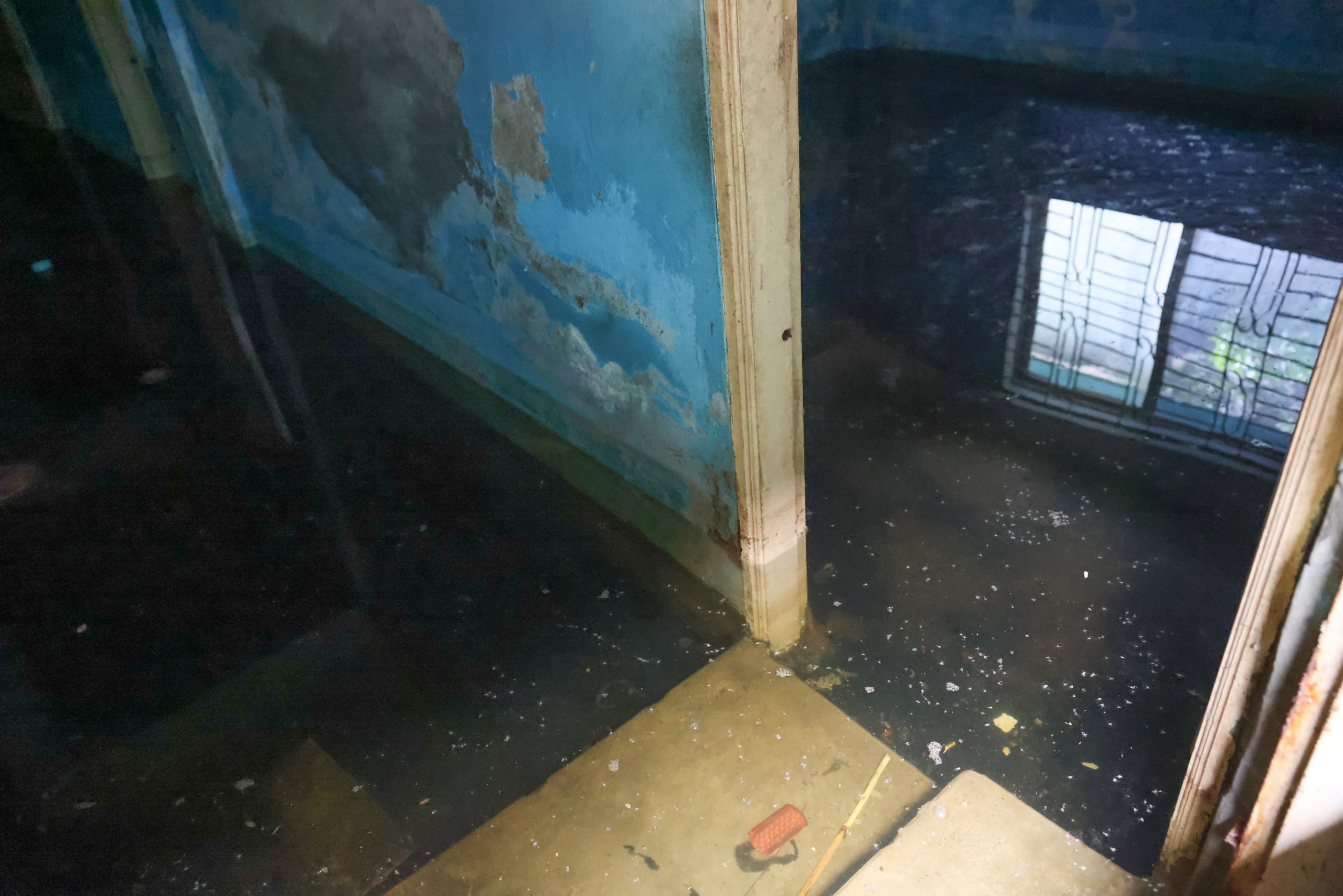
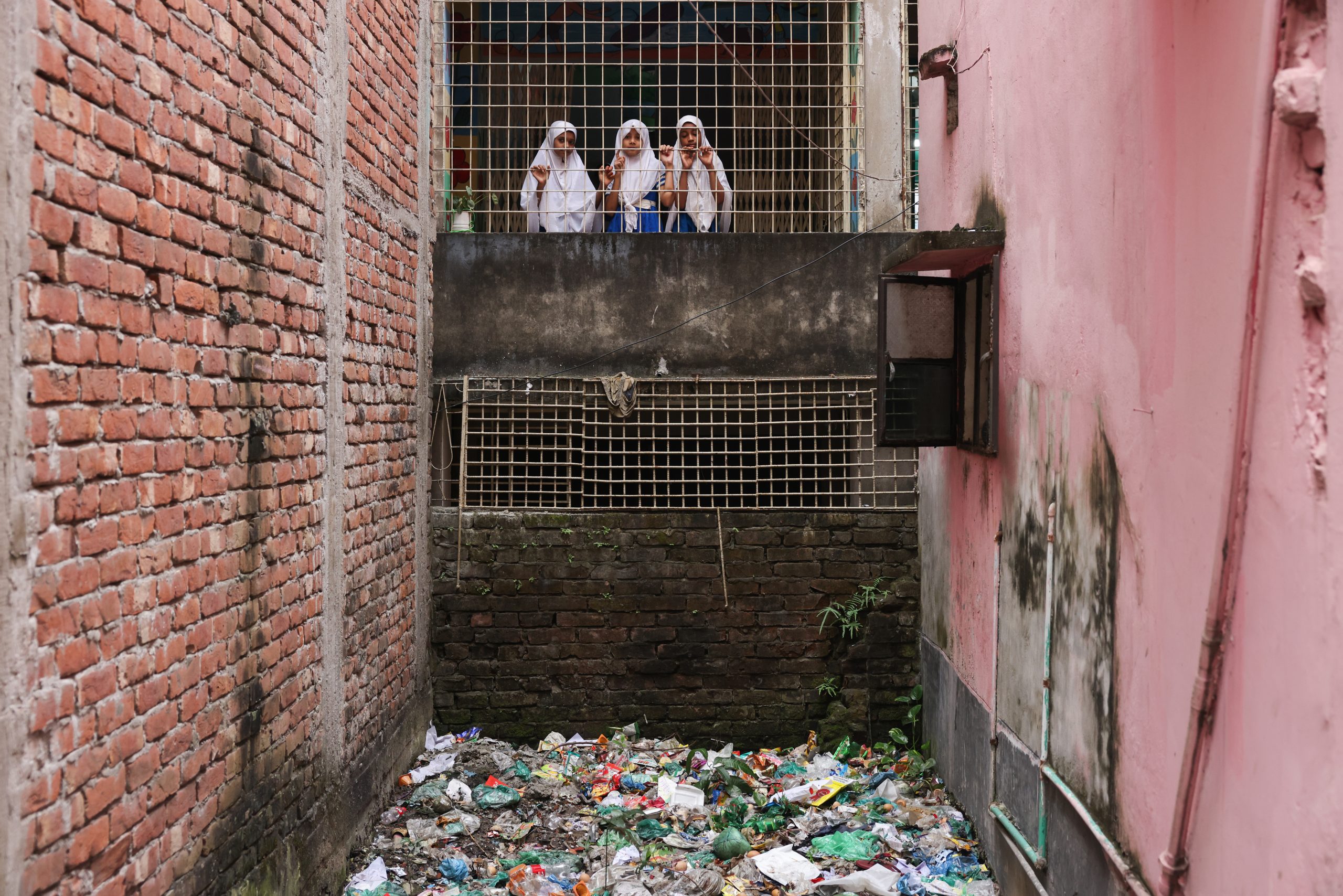
Inside Purbo Jurain Government Primary School, the first floor has vanished underground, buried over decades as Dhaka’s roads and buildings rose higher. The school has turned into a shallow basin where wastewater collects, mosquitoes breed and children learn amid stench and sickness.
“I feel itchy all the time,” Jannat said softly, scratching at the red patches spreading across her arms. “Sometimes I don’t want to come but I don’t want to fall behind either.”
Her mother, watching nearby, tries to hide her worry. “She is only 12,” she whispered.

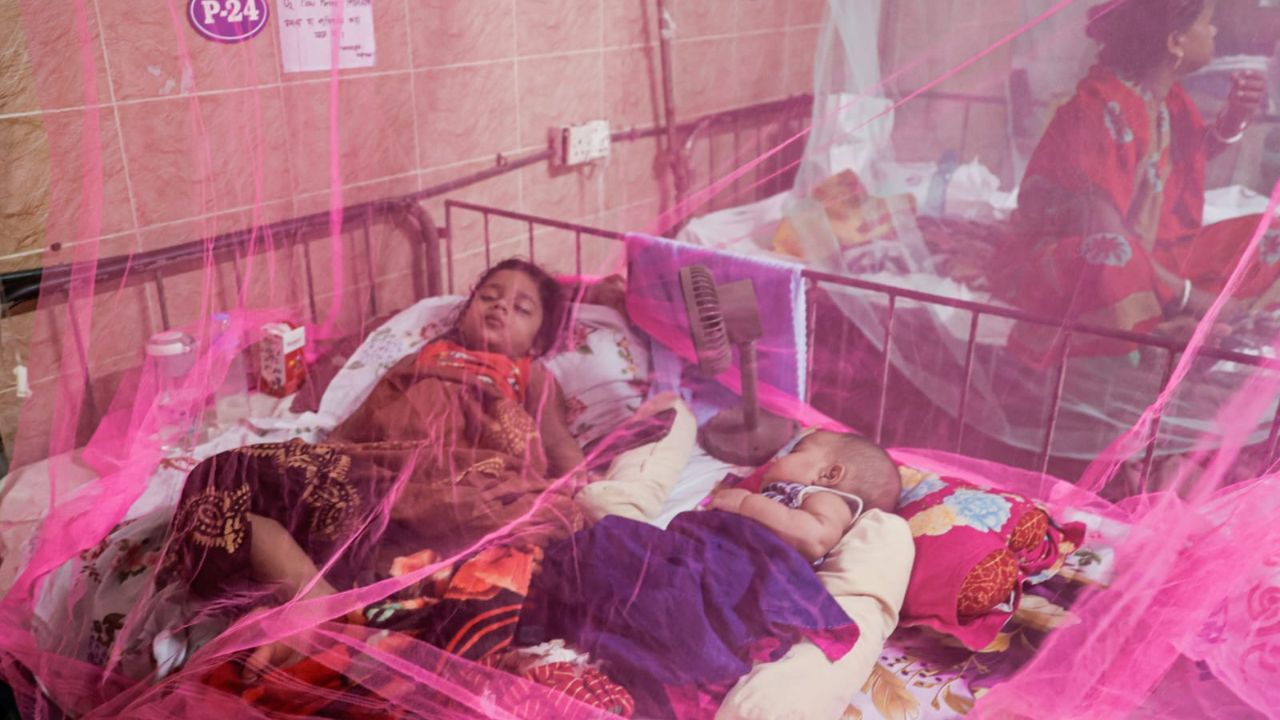
More than 280 children study in this public school, taught by six teachers who wade through the same water, breathe the same stench and fall sick from the same mosquito-ridden air. Dengue, chikungunya and rashes are common, making it difficult for children to focus. “We are fighting water, illness, and exhaustion every day,” said head teacher, Sanjida Hossain.
Built in 1978 and nationalised in 2013, the three-story school never moved; the city rose around it. Each new layer of asphalt raised the surrounding roads, slowly burying the old structure. The ground floor now lies below earth level, where teachers warn students not to go. Pumps push out dirty water after every rain, but it always returns, carrying the same foul smell.


“We are spending crores of taka on infrastructure development, yet we are unable to ensure even the most basic facilities for primary education,” said Professor Dr Md. Ahsan Habib of Dhaka University’s Institute of Education and Research. “If such a dire situation exists in a city like Dhaka, one can easily imagine how grim the condition might be outside the capital.”
During recess, students cluster at the school gate searching for air untouched by rot but even there, they hold their noses. There is no playground; only a dumping yard and a narrow alley choked with wastewater. “Even in the dry season, the ground stays wet. The children scratch continuously. Their minds are tired before the class even begins,” said the head teacher.
After photos of students trudging through filth surfaced online, a local leader arrived with sandbags. He created a fragile footpath, one that will dissolve with the next heavy rain. But diseases won’t wait for sandbags to fail. “Hospital visits have spiked,” said Sanjida, who herself recently recovered from chikungunya.
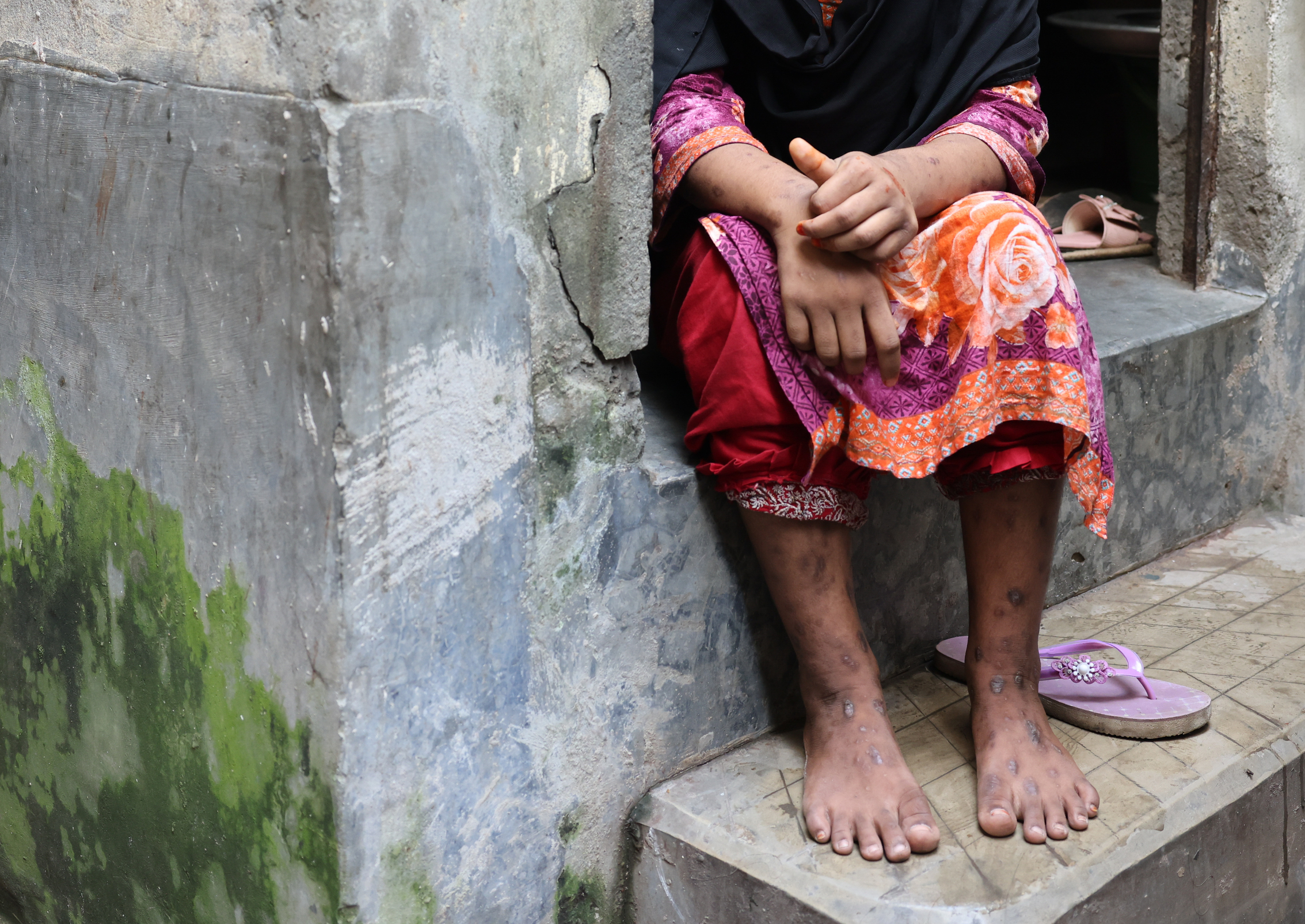
Public health expert Dr Mushtaq Ahmed of icddr,b warned that stagnant water creates breeding grounds for mosquitoes and increases the risk of dengue, typhoid, cholera and chronic skin infections. “If these skin infections become chronic, they can lead to kidney infections and weaken immunity. The foul odour from stagnant, decaying water causes respiratory problems, reducing children’s appetite and focus,” he said.
The crisis is visible in textbooks swollen from moisture, in uniforms stained by mud, in the weary eyes of teachers wiping sweat and mosquito bites from their arms.
And amid it all Jannat carefully carries her school bag above the water, as if she is protecting her dreams from sinking too. When asked what she wants most, Jannat does not mention medicine for her skin or better air to breathe.
“I want to study in a school where we don’t have to stand outside because it smells inside,” she said. “Just a normal school.”
A normal school, this simple wish shouldn’t be so hard to grant. Yet for Jannat and hundreds like her, the path to education remain an obstacle course of flood and filth, where learning itself struggles to stay afloat.