

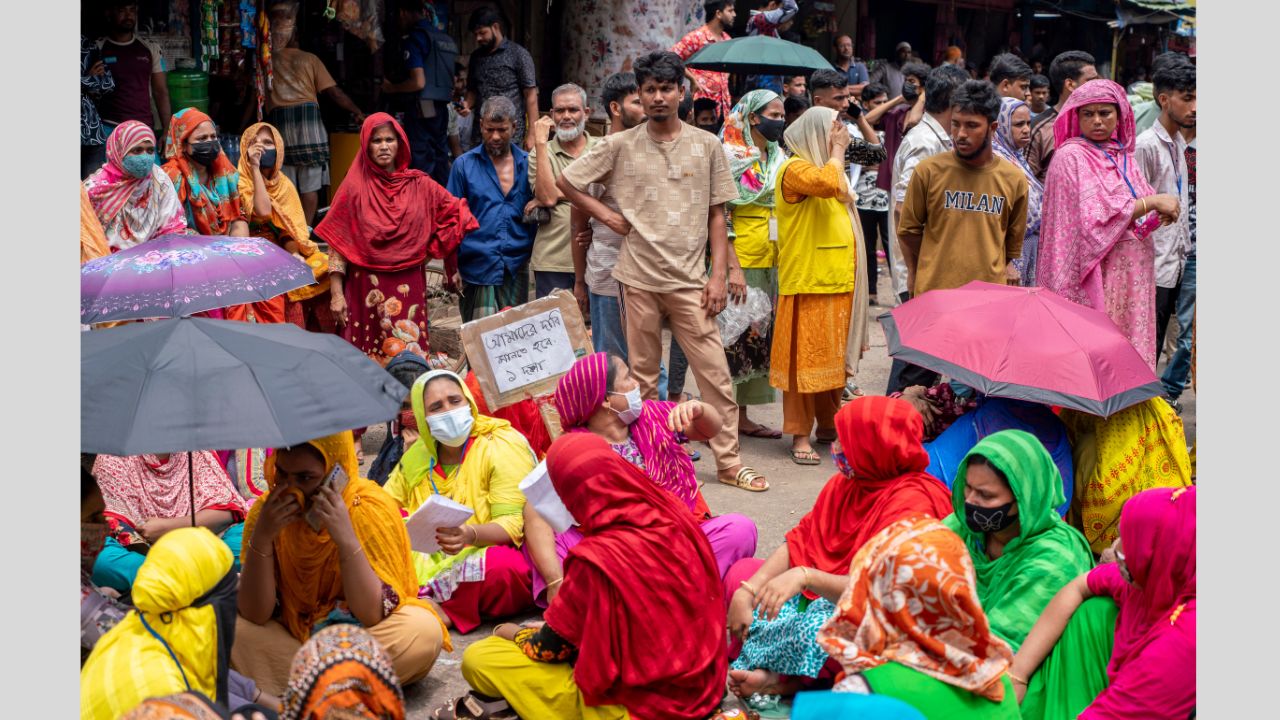




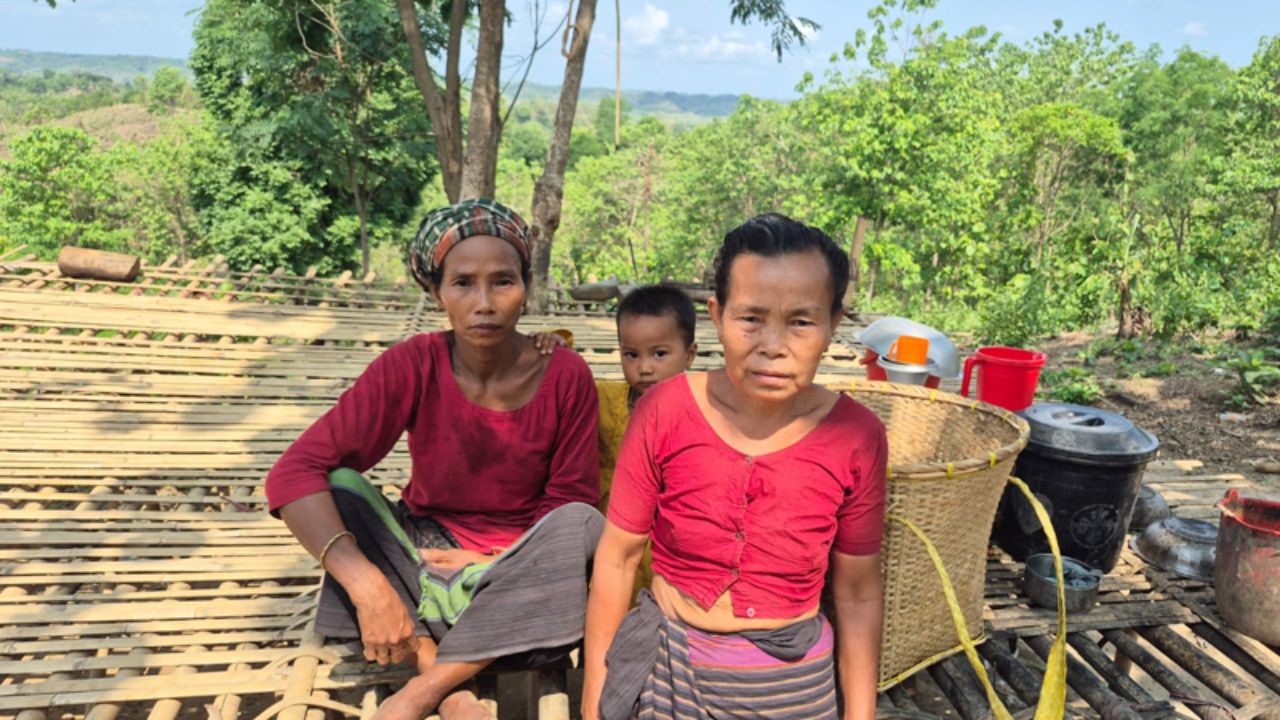
Forty-four prominent citizens of Bangladesh have issued a joint statement strongly protesting and expressing deep disappointment over “contradictory” and “unexpected” comments made by two cabinet ministers who denied the existence of indigenous communities in the country.
In the joint statement released on Tuesday, the citizens condemned recent remarks by Home Minister Salahuddin Ahmed and Information and Broadcasting Minister Zahir Uddin Swapon.
During a roundtable discussion held in Dhaka on 11 August 2026, titled “Indigenous Identity is Irrelevant for Bangladesh,” both ministers claimed that there are no indigenous communities in the country, and that all citizens should solely be identified as “Bangladeshi”.
They further argued that because Bangladesh has not ratified the UN Declaration on the Rights of Indigenous Peoples (UNDRIP) and International Labour Organisation (ILO) Convention No 169, these international instruments do not apply to the nation.
The information minister also claimed that the term “indigenous” (Adivasi) is “irrelevant” in the context of Bangladesh.
The signatories expressed deep disappointment at such comments coming from individuals holding responsible state positions, warning that these remarks threaten the distinct identities and internationally recognised rights of indigenous peoples.
No contradiction with citizenship
The citizens clarified that indigenous identity and Bangladeshi citizenship are not mutually exclusive. They emphasised that the country’s indigenous people are simultaneously citizens of Bangladesh and members of distinct indigenous communities.
The statement pointed out that the ministers’ assertions directly conflict with Article 23A of the Constitution of Bangladesh, which mandates that “the State shall take measures to protect, preserve and develop the unique local culture and tradition of the different small ethnic groups, communities and sects.”
Furthermore, they cited Article 1 of the UN Declaration on the Rights of Indigenous Peoples, which states that indigenous populations have the right to determine their own identity without prejudice to their citizenship.
The citizens stressed that recognising indigenous identity does not weaken national unity, nor does it pose any threat to Bangladesh’s sovereignty, national security, or territorial integrity.
On the contrary, respecting indigenous identity fosters national unity, inclusion, and a secure, just society by acknowledging the dignity, rights, and distinctiveness of all people.
Legally binding international and national frameworks
The joint statement rebutted the ministers’ claims regarding international conventions, noting that whilst Bangladesh has not ratified ILO Convention No 169, it has ratified and remains legally bound by the 1957 ILO Convention on Indigenous and Tribal Populations (ILO Convention No 107).
This ratification imposes an ongoing legal obligation on Bangladesh to protect the self-identity, culture, institutions, and traditional land rights of indigenous and tribal groups—an obligation that cannot be bypassed using the non-ratification of Convention No 169 as an excuse.
Domestically, the citizens highlighted several key legal and policy instruments that explicitly recognise and safeguard the rights of indigenous communities: Section 97 of the State Acquisition and Tenancy Act of 1950, enacted after the 1947 partition as the most crucial land-related law, protects the land rights of plain-land indigenous people by prohibiting the purchase or illegal occupation of their lands by non-indigenous communities.
The Finance Act, 1995 (Act 12, 1995) contains provisions mentioning indigenous communities. The Income Tax Act, 2023 specifically refers to “Pahari Adivasi” (Hill Indigenous). The National Strategy for Accelerated Poverty Reduction II (2009) specifically refers to the “Indigenous Community.” The National Education Policy, 2010 explicitly mentions “Indigenous and Small Ethnic Groups.”
These policies, the citizens noted, contain specific provisions for special measures to protect and preserve the rights of indigenous peoples.
Furthermore, Bangladesh is a signatory to other legally binding international treaties, including the International Covenant on Civil and Political Rights (ICCPR), the International Covenant on Economic, Social and Cultural Rights (ICESCR), and the Convention on the Elimination of All Forms of Discrimination against Women (CEDAW), all of which commit the state to protecting the rights of indigenous peoples.
Contradiction with government manifestos and past leadership
The citizens also highlighted the contradiction between the ministers’ remarks and the current elected Bangladesh Nationalist Party (BNP) government’s own election manifesto, which promises to transform the country into a “Rainbow Nation” by integrating all ethnic communities.
The statement questioned the purpose of pledging to build a “Rainbow Nation” if the government denies the existence of indigenous and tribal populations in the country.
They recalled that in 2003, the late Begum Khaleda Zia, the widely respected chairperson of the BNP for over four decades and former prime minister, had sent an official message on the International Day of the World’s Indigenous Peoples.
In her message, she congratulated indigenous communities in Bangladesh and globally, stating: “A part of our population is indigenous. Indigenous people are citizens of Bangladesh with equal dignity like everyone else”. She had also declared that the rich heritage and diverse culture of indigenous peoples are “our national wealth.”
Unveiling “Autocratic Theories”
The signatories reminded the public that the “Adivasi-denying” theory was originally formulated by the fallen autocratic regime. They remarked that the current government came to power through elections following a historic student-led mass uprising against human rights violations and brutal oppression.
The citizens argued that it is highly inappropriate for representatives of a democratically elected government to propagate the bizarre theories of the ousted autocracy. They demanded transparency, stating that if any specific quarter or interest group is encouraging responsible figures to promote the idea that “there are no indigenous people,” their identities must be made public.
Call for immediate withdrawal
Warning that such misleading comments from state representatives risk damaging Bangladesh’s international reputation, dignity, and credibility, the citizens demanded that the home minister and the information and broadcasting minister immediately withdraw their remarks to end the confusion and concern spreading among the public.
Among the 44 signatories to the statement are- Human Rights Activist and Founder Chairman of Manabadhikar Shongskriti Foundation, Advocate Sultana Kamal, ‘Nijera Kori’s Coordinator Khushi Kabir, Naripokkho Member Shirin Parveen Haque, Writer and Journalist Abu Sayeed Khan, former adviser to the Caretaker Government, Rasheda K Choudhury, Transparency International Bangladesh (TIB) Executive Director Dr Iftekharuzzaman.


