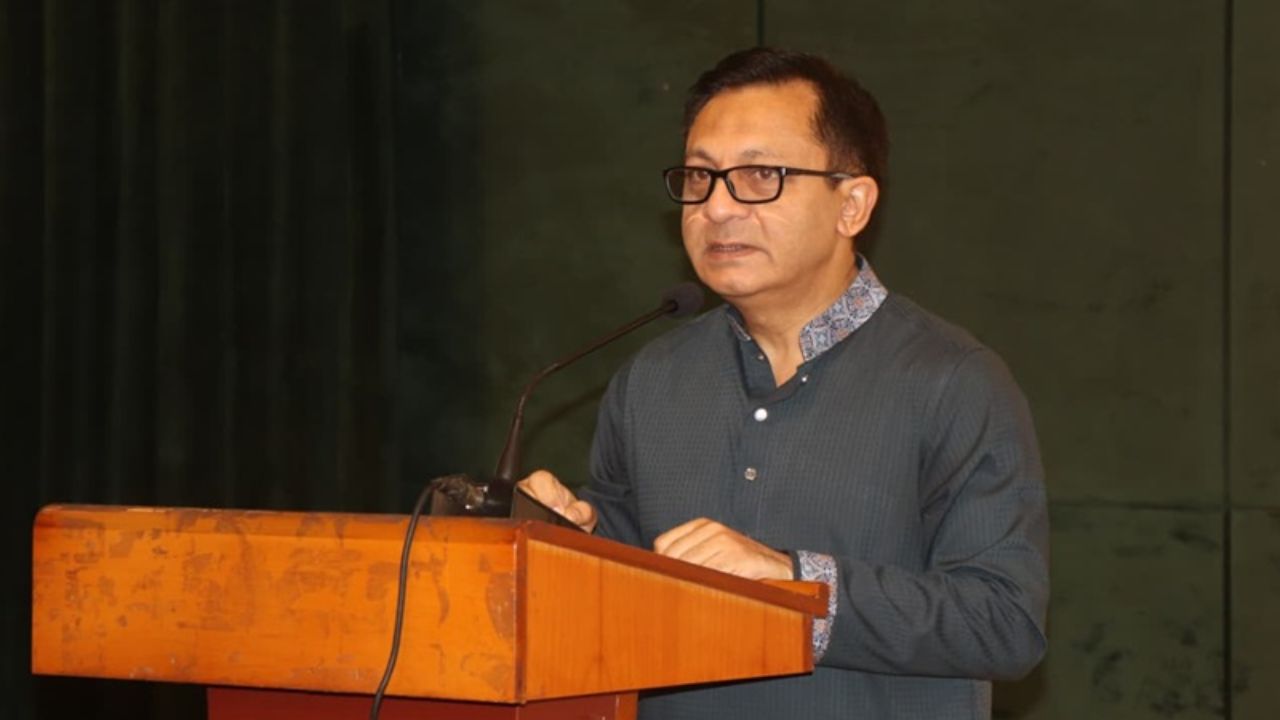

Commerce Minister Khandakar Abdul Muktadir has identified the disproportionately high cost of logistics, accounting for 16 per cent of Bangladesh’s GDP, as a primary driver of the nation’s persistent food inflation.
He noted that while global inflation has cooled following post-pandemic supply chain disruptions and excess liquidity, rates in Bangladesh have remained high for a prolonged period.
The minister was addressing a dialogue titled “Food Value Chain in Bangladesh: Role of Market Systems, Profit Margins, and Middlemen,” organised by Centre for Policy Dialogue (CPD) at the BRAC Centre in the capital on Thursday.
He emphasised that bringing inflation under control is impossible without reducing logistics and informal costs, managing the prices of production inputs, and boosting agricultural productivity.

Muktadir highlighted a significant structural disparity, stating that while the global average for logistics costs is approximately 10 per cent of GDP, the 16 per cent figure in Bangladesh keeps food prices significantly higher than they should be.
He mentioned that a reduction in these costs would lead to a meaningful decline in the price of essential commodities.
Addressing inefficiencies in the supply chain, the minister pointed to “market asymmetry” that leaves farmers disadvantaged.




He cited the example of potato farmers who continued production despite failing to receive fair prices for several years, which he attributed to a lack of accurate market information and alternative production planning.
To counter this, he announced that the government is initiating “traceability” across the entire supply chain to identify where abnormal price hikes or expenses occur.
Muktadir also raised concerns regarding the economic vulnerability of the country’s 17.8 million farming families. He observed that these families live on limited incomes with minimal savings, which restricts their ability to invest in modern technology and high-yield productivity.
He called for increased state support, research, and a transition from traditional subsidies for fertiliser and seeds toward a technology-driven, integrated agricultural strategy tailored to the country’s specific soil and climatic conditions.
As agriculture remains uniquely dependent on nature and external risks, the minister stressed that the sector must remain a national priority to ensure food security.
He concluded that increasing productivity is a dual-purpose solution that will simultaneously raise farmers’ incomes and ensure affordable food prices for consumers.
CPD Senior Research Associate Fakhruddin Al Kabir presented the keynote paper at the session, which was moderated by CPD Executive Director Fahmida Khatun.
Other speakers included Abdus Sattar Mandal, former vice-chancellor of Bangladesh Agricultural University; Siddiqur Rahman, former finance secretary; Abdul Majid, former chairman of National Board of Revenue (NBR); and Taslima Akhter, president of Bangladesh Garments Sramik Samhati.