World Bank has approved $350 million in additional financing for Bangladesh to support liquefied natural gas (LNG) imports amid global fuel market volatility driven by the Middle East conflict.
Approved on 15 May, the financing under the Energy Sector Security Enhancement Project aims to strengthen Bangladesh’s energy security by supporting payment obligations for LNG imports by state-owned Petrobangla and reducing exposure to volatile spot-market purchases, the World Bank Dhaka Office said in a press release on Monday.
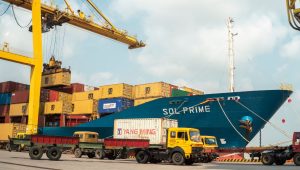
Bangladesh relies on imported LNG to meet electricity demand for power generation and industrial use.
The World Bank said disruptions in global energy markets due to the Middle East conflict have increased price volatility and supply risks, placing pressure on foreign exchange reserves and public finances.

It warned that a prolonged conflict could materially disrupt fuel and fertiliser supply, with the poorest households likely to be the most affected.
The additional financing will help Petrobangla secure LNG supplies under longer-term contracts, reduce reliance on expensive spot market purchases and support more stable electricity generation.


The financing package includes an International Development Association (IDA) payment guarantee-backed facility to support LNG import payments through standby letters of credit and short-term credit lines.
The mechanism is intended to improve predictability in LNG procurement while maintaining flexibility during market disruptions.
The World Bank said improved LNG supply stability will support electricity generation, industrial activity and job creation while reducing dependence on higher-cost liquid fuels.
World Bank Division Director for Bangladesh and Bhutan Jean Pesme said the Middle East conflict has pushed up LNG prices and disrupted supply, increasing fiscal pressure for Bangladesh as a net fuel-importing economy.
He said the financing is part of broader engagement with authorities to maintain stable LNG imports and protect the economy from energy shocks.
World Bank Senior Energy Expert and project task team leader Olayinka Edebiri said uninterrupted LNG supply is central to energy security as gas remains a lower-cost and lower-emission fuel compared with alternatives, while also generating fiscal savings by reducing reliance on expensive liquid fuels.
The original $350 million Energy Sector Security Enhancement Project was approved in June 2025 and is scheduled to run until 31 December 2031.