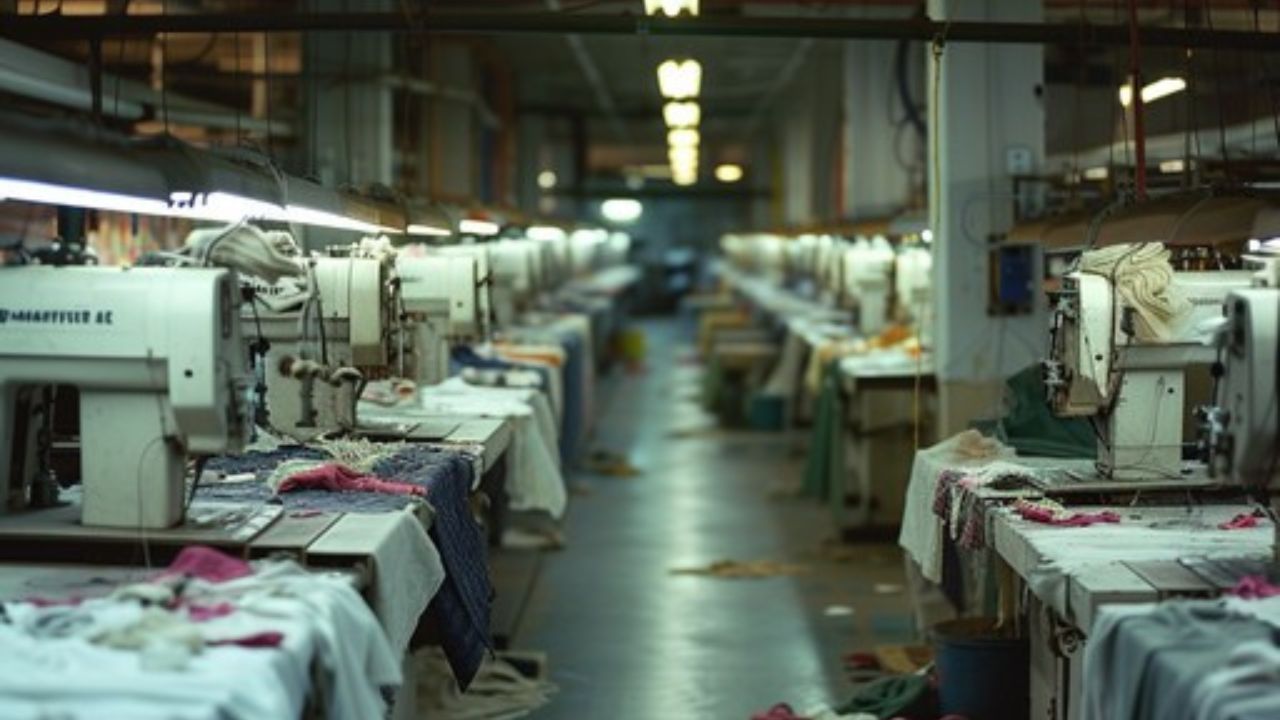
The Bangladesh Garment Manufacturers and Exporters Association (BGMEA) has estimated that 317 factories suffered production losses worth $428 million over 18 days amid unrest over garment workers’ wages, while another $254 million worth of export orders were shifted to other countries.
The estimated losses total $682 million, according to a statement issued by the BGMEA on Sunday. The association said the actual losses could be higher as it had been unable to collect information from all affected factories.
Worker protests continued in several industrial areas on the eve of the minimum wage board’s third meeting, with a number of factories remaining closed.
Meanwhile, the Centre for Policy Dialogue (CPD) has defended its proposed wage range and methodology for calculating workers’ living costs in response to objections raised by the BGMEA.
In a letter to the BGMEA, the CPD said most garment workers live in cities and adjoining industrial areas, where they have to buy most daily necessities, including food and housing, from the market. It argued that the urban poverty line was therefore more appropriate for estimating their living costs.
On 18 November, the CPD recommended a minimum monthly wage of between Tk18,578 and Tk24,204 for garment workers.
The BGMEA subsequently questioned the rationale for using Dhaka’s higher urban poverty line to determine wages across the entire garment sector.
In its response, the CPD said using the rural poverty line would fail to reflect the housing costs and market-dependent living expenses of workers living in urban areas. However, it said a weighted average of poverty lines across different areas could be used if data on workers’ residential locations were available.

The research organisation also explained its assumptions about household size. Its calculations considered an average garment worker’s household to have four members, with 1.58 income earners. The BGMEA, meanwhile, supported an average household size of 3.96 members.
The CPD also rejected the BGMEA’s allegation that housing costs had been counted twice by adding rent to non-food expenditure.
It said rent had been excluded from the Bangladesh Bureau of Statistics’ non-food expenditure figures, while tobacco expenses had been deducted from food expenditure to calculate essential living costs. The remaining expenses included clothing, utilities, education, transport, personal care and communication. Therefore, there was no scope for double-counting rent, it said.
The CPD said industrial capacity should also be considered alongside workers’ living costs when determining wages. Its analysis included production costs, interest rates, export prices and the impact of US tariffs, among other factors. This was why it proposed a wage range rather than a single figure.
The organisation also said it supported higher wages for workers but did not endorse vandalism, violence or instability, which harmed both workers and the industry. It added that workers should not bear the burden of governance-related problems, including energy shortages, high interest rates and corruption, through lower wages.




Workers, manufacturers and labour sector representatives have called for a permanent, transparent and evidence-based framework for determining garment workers’ wages.
At a virtual dialogue titled “Garment Wages: Fairness and Industrial Growth”, organised by the Power and Participation Research Centre (PPRC) on Sunday, speakers said wage determination should consider not only inflation but also the cost of living, industrial growth and productivity.
PPRC Executive Chairman Hossain Zillur Rahman said revising garment workers’ wages had become an urgent national issue.
He said three priorities should guide wage determination: ensuring fairness, sustaining industrial growth, and establishing a structured institutional process.
Inadequate advance preparation and the absence of a clear framework repeatedly turn wage discussions into disputes, he added.
Board’s third meeting today
The minimum wage board is scheduled to hold its third meeting today, a week after its previous meeting was postponed due to the illness of the workers’ representative.


The workers’ representative has proposed a minimum monthly wage of Tk32,000, while the employers’ representative is expected to submit a written proposal at today’s meeting.
According to a board notice, the board will discuss recommendations for determining the new minimum wage after receiving the employers’ proposal.
The revised wage, once finalised, will take effect from December.
The current minimum monthly wage for garment workers is Tk12,500, which came into effect on 1 December 2023. Workers have been protesting for more than a month, demanding that it be raised to Tk30,000.
Protests in Gazipur, clash on highway
Workers from several factories attempted to block the Dhaka-Mymensingh highway in Sreepur, Gazipur, on Sunday, triggering clashes with police.
Police fired tear gas and sound grenades to disperse the protesters and bring the situation under control.
Around 11am, workers from several factories, including Hams Garments, Aman Cotton and Denimex, gathered in the Gargaria Masterbari area of Sreepur and attempted to block the highway. Law enforcement personnel dispersed them, disrupting traffic for around 45 minutes.
Meanwhile, 19 garment factories in Gazipur, which had been declared closed indefinitely amid the unrest, have reopened. Industrial police said the remaining closed factories would also resume operations gradually.
According to Industrial Police-1, 39 factories in Savar and Ashulia remained closed on Sunday. Of these, 21 were shut indefinitely, while 18 declared general holidays as workers did not report for duty.
BGMEA estimates $682m losses in 18 days
A survey conducted by the BGMEA over four days found that 317 garment factories had experienced production shutdowns lasting between one and 16 days from 1 to 18 November.
The resulting production losses at these factories were estimated at $428 million.
The association said most export orders were now at serious risk as factories had failed to deliver products on schedule. To retain orders, manufacturers were being forced to resort to costly air shipments, offer substantial discounts and, in some cases, face direct order cancellations.
The unrest has also significantly affected buyers’ confidence, the BGMEA said.
Factories participating in the survey reported that buyers had already shifted 59 million pieces of confirmed garment orders to other countries, representing a market value of $254 million.
The BGMEA said the survey figures represented only a partial picture of the actual losses, as more than 600 factories had been affected and instability in industrial areas continued.