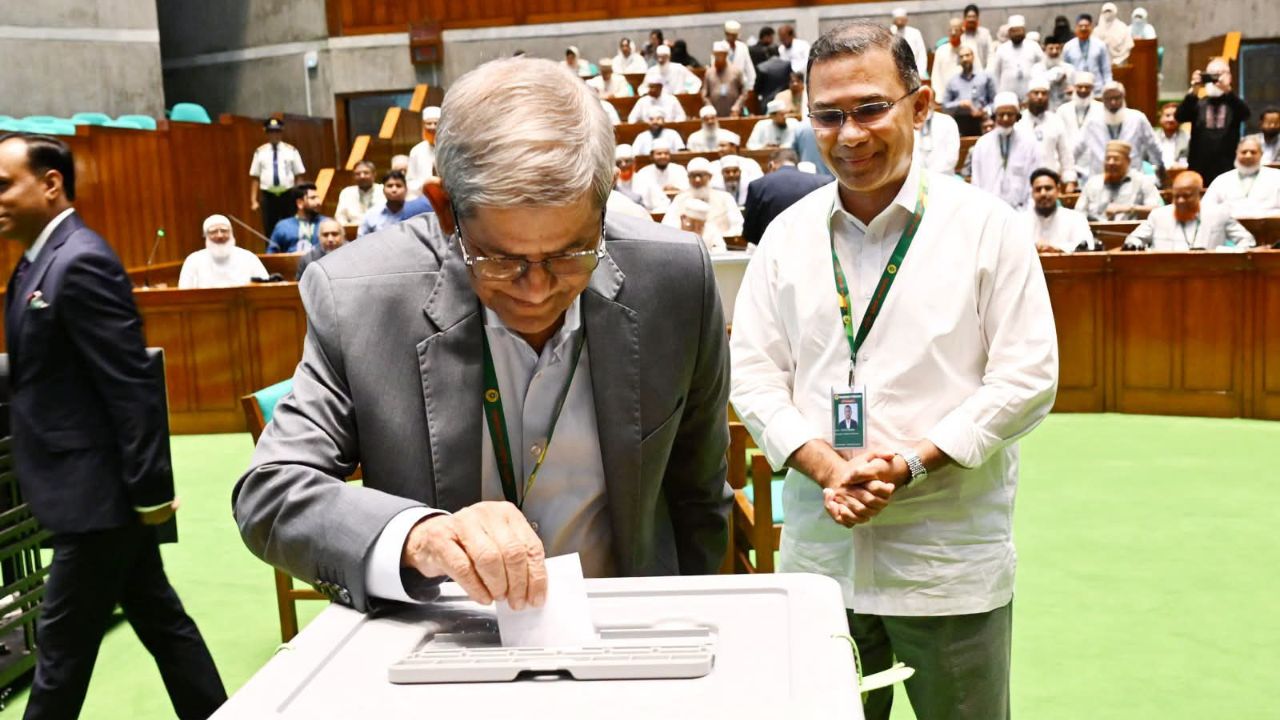



Voting for the nation’s highly anticipated presidential election concluded this afternoon at Jatiya Sangsad Bhaban. The balloting, which commenced at 2pm, ran continuously without any intermission until 5pm.
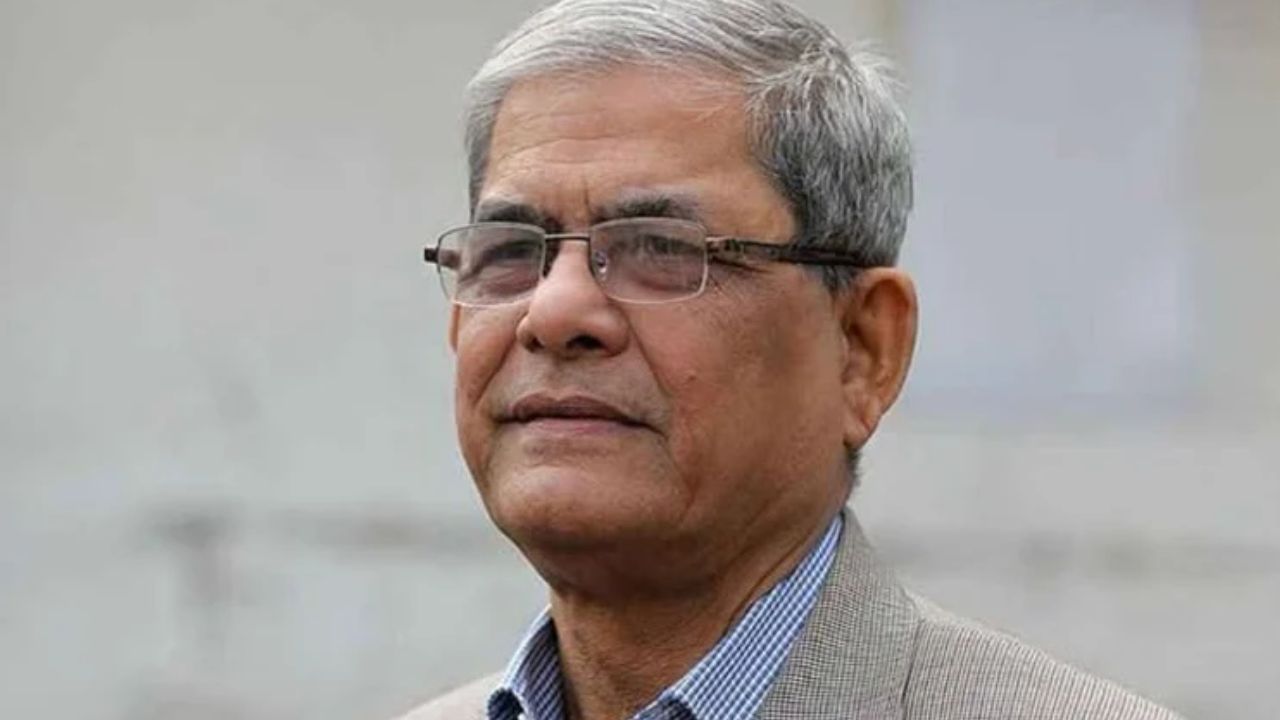
Acting President Hafiz Uddin Ahmad and Acting Speaker Barrister Kayser Kamal were among the early voters, casting their ballots at 2:10pm. Prime Minister Tarique Rahman and the presidential nominee of BNP, Mirza Fakhrul Islam Alamgir, cast their votes shortly after at 2:11pm.
A first in 35 years
This election marks the first time in 35 years that a presidential vote has been contested, owing to the presence of multiple candidates.
The race is a direct contest between the BNP’s nominee, Mirza Fakhrul Islam Alamgir, and Col (retd) Oli Ahmad, who is representing the opposition Jamaat-led 11-party alliance.
With the BNP holding an absolute majority in Parliament, Mirza Fakhrul is widely expected to be elected as the country’s 23rd President.

Under Article 70 of the Constitution, MPs face the forfeiture of their seats if they vote for any candidate going against their respective party decision.
The country’s last contested presidential poll took place on October 8, 1991, when BNP candidate Abdur Rahman Biswas secured 172 votes to defeat the Awami League-backed candidate, Justice Badrul Haider Chowdhury, who received 92 votes, to become the 11th President.
All subsequent presidential elections were decided uncontested, as only a single candidate stood for the office.
Voting mechanics and procedure
Prior to the balloting, Chief Election Commissioner (CEC) AMM Nasir Uddin briefed lawmakers on the voting procedures. As the election officer, the CEC conducted the ballot and is scheduled to announce the results immediately after the votes are counted in Parliament.



The Election Commission will then publish the final result in an official gazette today.
The ballot papers used in the election consisted of two sections: a counterfoil and the main ballot portion.
The counterfoil recorded three specific pieces of information – the lawmaker’s name, a serial number, and their divisional (constituency) number provided by the Jatiya Sangsad Secretariat – alongside a blank space where the MP had to sign their full name before receiving the ballot.
The right-hand side of the ballot displayed the candidates’ names printed in alphabetical order in Bangla, with a designated space next to each candidate’s name for lawmakers to sign and register their votes.
Parliamentary alignments and the transition
A total of 349 MPs were eligible to vote in the election, with the Chattogram-4 parliamentary seat currently vacant.
The voters include 247 BNP lawmakers, 77 Jamaat MPs, eight NCP lawmakers, eight independents, three Bangladesh Khilafat Majlis MPs, and one lawmaker each from the Bangladesh Jatiya Party-BJP, Gono Odhikar Parishad, Ganosamhati Andolon, Khilafat Majlis, Islami Andolan Bangladesh, and the Jatiya Ganatantrik Party.
The ruling BNP is allied with the BJP, Gono Odhikar Parishad, and Ganosamhati Andolon, bringing the ruling camp’s total to 250 lawmakers who are expected to support Mirza Fakhrul Islam Alamgir.
The opposition alliance, comprising Jamaat, NCP, Bangladesh Khilafat Majlis, Khilafat Majlis, and the Jatiya Ganatantrik Party, holds 90 seats in Parliament, with these lawmakers expected to vote for Col (retd) Oli Ahmad.
The presidential vacancy arose following the resignation of Mohammed Shahabuddin on July 24, which led to Speaker Hafiz Uddin Ahmad taking charge as the Acting President.
According to Article 123(2) of the Constitution, an election to fill a vacant presidential office must be held within 90 days of the vacancy arising due to resignation.
Chief Whip of Jatiya Sangsad Nurul Islam Moni announced on Wednesday, following a meeting of the BNP Parliamentary Party, that the newly elected president will take the oath of office at Bangabhaban on Friday evening.
Official preparations for the oath-taking ceremony are currently being made at Bangabhaban.