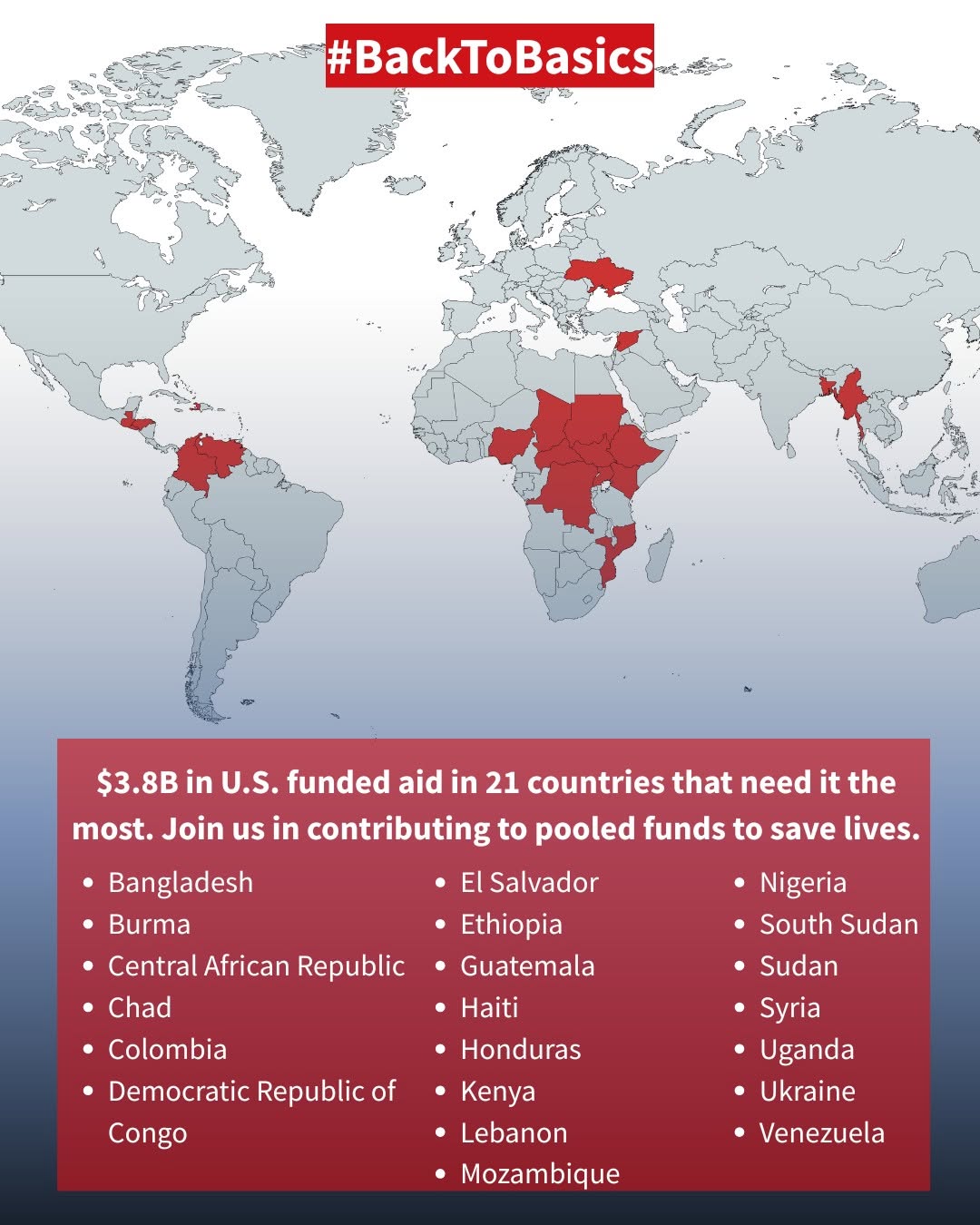
The United States has announced an additional $1.8 billion in life-saving humanitarian funding, bringing its total commitment to $3.8 billion for global reform and assistance programmes across 21 key countries, including Bangladesh.
This expanded commitment is projected to reach tens of millions of people throughout 2026, according to press release by US Mission to International Organizations in Geneva.
The announcement, made on 14 May 2026, builds upon the “Humanitarian Reset” framework agreement signed between the Trump Administration and the United Nations Office for the Coordination of Humanitarian Affairs (OCHA) on 29 December 2025, in Geneva, Switzerland.
The new funding expands the initial reach from 18 country-based and crisis-level pooled funds to 21 countries and includes support for the UN Central Emergency Response Fund (CERF).

Tangible results and efficiency
The initial US investment of $2 billion has already reached 21.1 million people in less than four months.
This model has set a new benchmark for effectiveness, with 92 per cent of funding reaching populations experiencing “Level 4 and 5” high-severity needs—the highest rate recorded by any donor in history.



Efficiency has also reached record levels, with OCHA establishing a seven-day average for award disbursement. This is twice as fast as OCHA’s previous record and significantly quicker than historical averages for USAID.
Currently, 88 per cent of available resources have been successfully disbursed into the field.
Accountability and localisation
A core pillar of the “Humanitarian Reset” is the empowerment of local organisations. Under the pooled fund mechanism, 13 per cent of funds have been obligated to local partners, a significant increase from the 3.9 per cent average of other donors last year. These resources are managed by local Resident or Humanitarian Coordinators to ensure expertise and prevent agency duplication.
To safeguard taxpayer dollars, OCHA has implemented rigorous oversight, including public dashboards for all allocations and the establishment of Accountability and Impact Teams (AITs) embedded at the country level.
OCHA has ensured that all sub-awardees and partners uphold the commitment to collect and share reporting data regarding waste, fraud, and the diversion of aid.
‘Back to basics’ reform
The US Department has challenged UN agencies to “adapt, shrink, or die,” urging a refocus on core life-saving mandates. This “Back to Basics” approach aims to maximise the impact per dollar by reducing administrative burdens and excessive bureaucracy.
The 21 countries supported under this $3.8 billion initiative are Bangladesh, Burma, Central African Republic, Chad, Colombia, the Democratic Republic of Congo, El Salvador, Ethiopia, Guatemala, Haiti, Honduras, Kenya, Lebanon, Mozambique, Nigeria, South Sudan, Sudan, Syria, Uganda, Ukraine, and Venezuela.
The United States remains the world’s largest humanitarian donor and has called on other governments and the private sector to increase their contributions to OCHA-managed pooled funds.