



The perennial factors driving down rawhide prices during Eid-ul-Adha remain unchanged this year too, and traders fear a new adversary alongside the ongoing crisis – intense heat.
As rawhide merchants in Old Dhaka’s Posta hub prepare for the Eid season, they remain bogged down by staggering financial strain. Outstanding arrears from the past year, and many preceding years, have now exceeded hundreds of crores of taka.
The vibrant competition that characterised the rawhide collection market during Eid holidays two decades ago has completely vanished. Year after year, seasonal traders have been losing money and exiting the market.
Last year, this culminated in a crisis where leather was dumped on the streets of Dhaka and other major cities. For several consecutive years, some traders have even resorted to burying raw leather in the ground rather than selling it at a loss.
Industry insiders attribute this systemic slowdown to a combination of lost international markets, a severe liquidity crisis driven by unpaid dues, and a failure to meet environmental compliance standards.

In response, the government has increased the fixed price of rawhide by Tk2 per square foot and announced the free distribution of salt worth Tk1.76 crore.
Under the new guidelines, the price of salted cowhide has been set at Tk62–67 per square foot in Dhaka and Tk57–62 outside the capital.
However, traders argue that these measures fall short.
Md Abdus Salam, a rawhide trader based in Posta, told TIMES of Bangladesh, “Our costs have skyrocketed. The prices of salt, transportation and labour have all increased. As a result, profit margins are incredibly tight.”

Leather collector Md Shaheen Molla echoed this scepticism. “Even if the government increases the price on paper, the real question is whether we will actually receive it. Local dealers always try to buy below the fixed rate. Since raw leather spoils quickly in this heat, we are often forced to sell at a loss just to get rid of it.”
Capital crunch and outstanding debts
The rawhide business is facing severe strain due to an ongoing capital crunch and mounting anxieties over securing bank loans.
Traders argue that the entire supply chain has long been crippled by a chronic backlog of outstanding payments.
Md Jahangir Alam, a rawhide trader, told TIMES, “The biggest problem is the capital crunch. The tanneries still have outstanding payments from the previous year. If we do not get that money, we will not be able to buy new hides.”
Manjur Hasan, president of the Bangladesh Hide and Skin Merchants Association, echoed this sentiment, noting that preparation for the trading season hinges entirely on receiving funds from tanners.
According to Hasan, massive sums from previous years remain stuck. Approximately Tk100 crore has been outstanding since before the tanneries were relocated from Old Dhaka’s Hazaribagh to Hemayetpur in Savar.




“The entire supply chain is in trouble,” Hasan said. “The tanners are unable to pay. They only give verbal assurances – everything here is running on promises.”

However, Ashikur Rahman, vice chairman of the Bangladesh Tanners Association, offered a different perspective. “The business runs on trust, and occasional hiccups like these arrears are simply part of the process,” he told TIMES. Even so, Rahman acknowledged that financial risks and the pressure of defaulted loans have stifled new investment.
He revealed that the leather industry holds roughly Tk10,000 crore in bank loans, with more than Tk5,000 crore owed by a single large industrial group.
In response, Bangladesh Bank has ordered commercial banks to issue special loans to traders for purchasing and storing rawhides.
The central bank has relaxed instalment collection terms for past defaulters so they can access new credit and mandated that this year’s loan disbursement targets must not fall below last year’s figures.
Despite these directives, commercial lenders report a different reality. Janata Bank Deputy Managing Director Kazi Abdur Rahman told TIMES, “We have not received any special refinancing funds, low-interest loan programmes or any such special incentives or directives for leather traders so far.”
Traders also complain that they receive very little credit, regardless of central bank policies. Central bank data highlights this inconsistency: while Tk650 crore was disbursed against a Tk644.5 crore target last year, the sector saw dismal figures in prior years.
In 2024, only Tk125 crore was disbursed against a Tk610 crore target, and in 2023, just Tk270 crore was released out of a Tk443 crore target.
State-owned lenders like Janata Bank are finding it increasingly difficult to finance the sector. “When approving bank loans, we look at financial capacity, transaction history, collateral, cash flow and repayment capacity,” explained Kazi Abdur Rahman. “In the case of seasonal traders, these documents are rarely adequate.”
He added, “Many times, traders draw money under their prescribed credit limit but fail to repay it within the stipulated time. Once an approved credit limit is entirely exhausted, opportunities for new financing naturally become limited.”
Rising salt prices, scorching heat threaten rawhide preservation
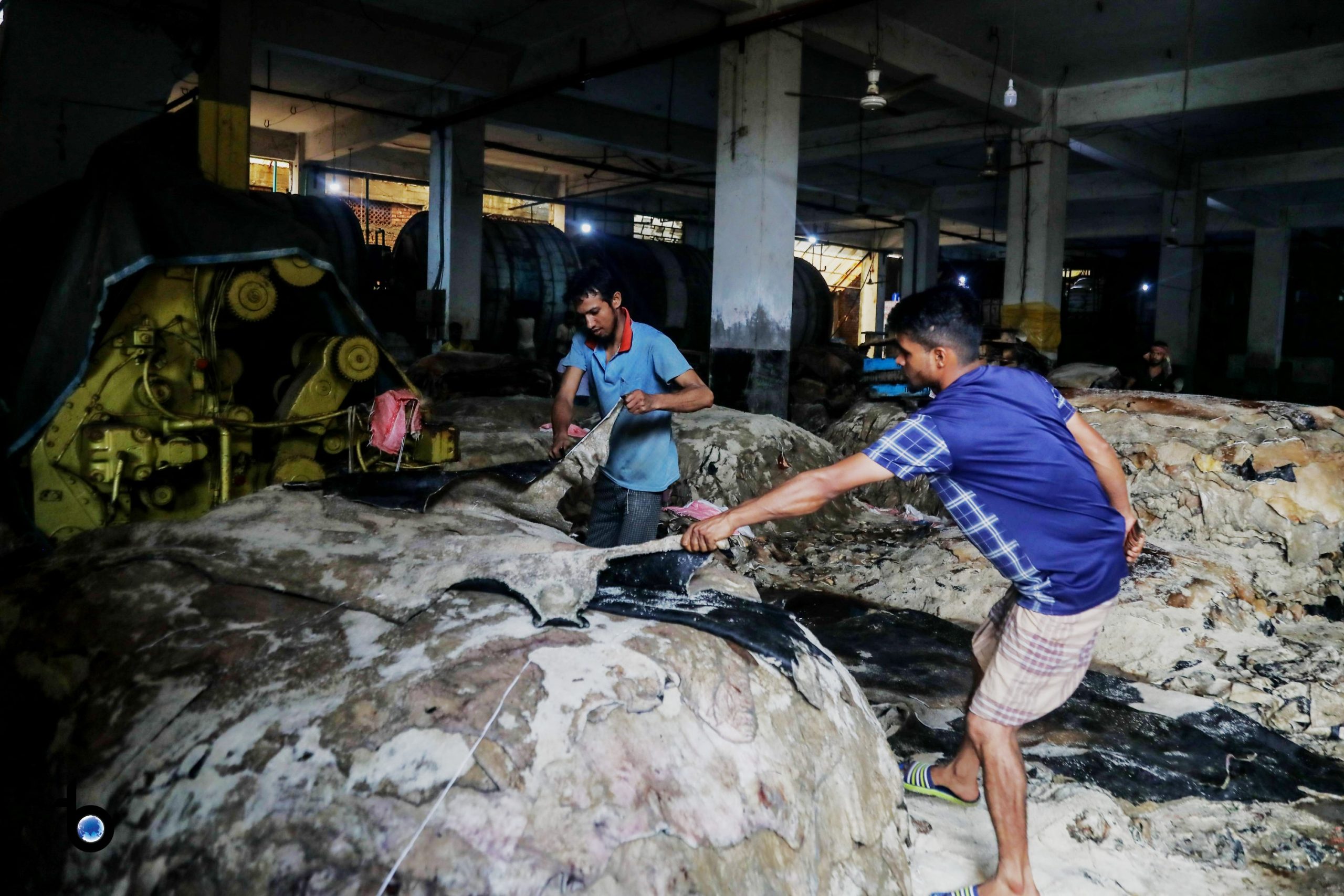
In the Eid-season rawhide business, timing is everything. Quick collection and immediate storage are critical, as rawhide will rapidly rot if it is not salted within a few hours of slaughter. This year, extreme summer temperatures have significantly heightened that risk.
Seasonal trader Md Sohel Rana explained the urgency: “The leather must be collected and salted within a few hours on the day of Eid. If the heat is intense, the risk shoots up. Even a slight delay spoils the quality of the hide, forcing us to count heavy losses.”
Hide traders’ association chief Manjur Hasan echoed this timeline, noting that hides must be salted within four to five hours to prevent spoilage.
However, a major bottleneck this year is the soaring cost of preservation. According to Hasan, the price of salt has increased by Tk100 to Tk200 per sack compared to last year. “This additional cost will inevitably impact the purchasing price of rawhide,” he warned.
Compounding the issue is a widespread lack of technical knowledge among field-level seasonal traders, many of whom do not know how to properly preserve hides. “They bring the skins in late,” Hasan said. “When that happens, we usually have no choice but to refuse them.”
Because a large portion of sacrificial animal hides is donated to madrasas, government ministries and local administrations have held several meetings urging these institutions to either sell the hides or apply salt before sundown on Eid day. To expedite the process, the government is directly supplying salt to various madrasas this year.
Weather remains the wild card. Traders are battling both scorching summer heat and the threat of sudden heavy downpours. If it rains on Eid day, collecting and salting the hides in time will become extremely difficult.
While the Meteorological Department has predicted moderate to heavy rainfall primarily in the north-eastern region, with lower chances in Dhaka and southern districts, temperatures remain dangerously high.
The department noted that maximum temperatures could hit 37°C. However, weather monitoring data from AccuWeather indicates that the heat index (feels-like temperature) has already crossed a stifling 41°C, leaving very little room for delay in the preservation process.
Export collapse triggers industry-wide crisis
The crisis gripping the leather industry is no longer just a seasonal headache; it has evolved into a long-term structural failure.
Following the relocation of tanneries to the Savar Leather Industrial City, Bangladesh has failed to reclaim its prime export markets due to a persistent inability to meet international environmental standards.
Manjur Hasan, president of the Bangladesh Hide and Skin Merchants Association, noted that the relocation initiative began back in 2003 under international pressure to ensure environmental compliance. Decades later, however, the Central Effluent Treatment Plant (CETP) in Savar is still not fully operational.
“As a result, no buyers in Europe are purchasing leather from Bangladesh anymore,” Hasan explained. “We have become almost entirely dependent on Chinese buyers, who now virtually control the market and dictate prices.”
Hasan added that the industry’s decline is evident on the ground – out of 154 tanneries, only 20 to 30 are currently functioning properly, while the rest have either shut down or are in crisis.
Ashiqur Rahman, a leader of the Bangladesh Tanners Association, echoed these concerns. He confirmed that losing the European market has effectively forced the sector under the total control of Chinese buyers, severely stripping Bangladeshi tanners of their price bargaining power.