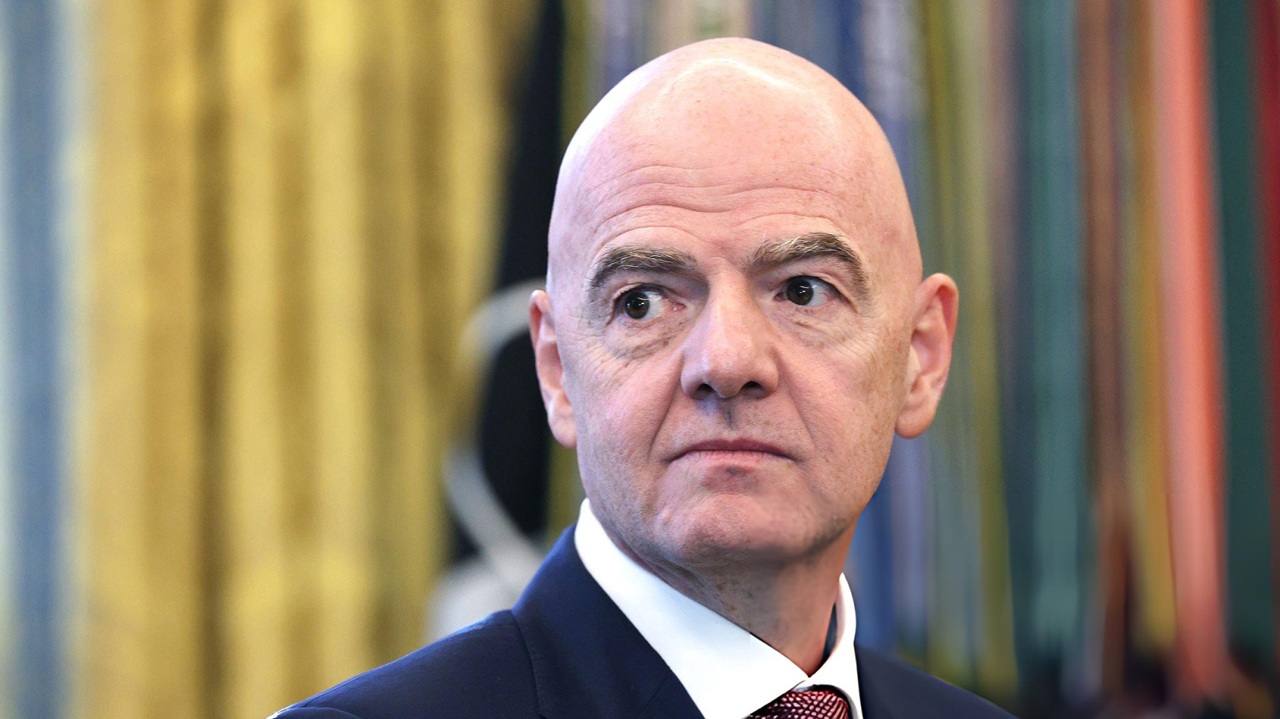



Gianni Infantino faces an unprecedented challenge to his FIFA presidency, with UEFA, the AFC and CONCACAF discussing whether to seek a no-confidence vote against him, senior figures familiar with the talks told Reuters.
The three confederations have grown increasingly frustrated with Infantino after his controversial proposal to sell private investors a minority stake in a new FIFA commercial entity controlling World Cup rights. The plan collapsed after strong opposition over transparency, consultation and governance.
Reuters could find no previous instance in FIFA’s 122-year history of its Congress holding a no-confidence vote against a sitting president.
One senior figure said the discussions had reached a critical point. “There is no way out. Either he goes the peaceful way and decides not to stand in March or he goes the hard way,” the source said, referring to a possible no-confidence vote.
FIFA’s statutes do not specifically provide for such a vote. However, the FIFA Council can call an Extraordinary Congress at any time. It must also call one if at least one-fifth of FIFA’s 211 member associations submit a written request setting out the items for discussion.

Each attending association would hold one vote at the Extraordinary Congress.
FIFA said it would not support or facilitate any process concerning the presidential election that conflicts with its statutes, democratic procedures or governance framework.
UEFA declined to comment directly on the proposed vote. It instead repeated its call for a “thorough and fundamental” review of FIFA leadership and governance, adding that “no option should be off the table”.




CONCACAF also declined direct comment, while the AFC did not immediately respond.
Infantino still plans to seek re-election at the March 2027 FIFA Congress. He also retains significant support, particularly from Africa’s CAF.
The challenge carries its own risk. One senior figure said opponents feared a failed vote could strengthen Infantino by exposing the level of his electoral support before the presidential election.
The crisis has widened since FIFA abandoned the investment proposal, which could have given member associations up to $20 million in one-off funding for infrastructure, coaching, national teams, competitions, grassroots football and women’s football.
FIFA expects revenue of more than $15 billion during the 2023-26 cycle, with most of it coming in the 2026 World Cup year.
The dispute has also spread to European clubs. European Football Clubs, chaired by Paris St Germain president Nasser Al-Khelaifi and representing more than 800 clubs, has warned FIFA that its members could refuse to participate in future Club World Cups unless governance concerns are addressed.
Clubs have no vote at FIFA Congress, but they retain major sporting and commercial influence.
Michael Payne, a former International Olympic Committee marketing chief, told Reuters that even an Infantino victory would not settle the dispute.
“It’s all very well to sneak through with a 51% majority with many of the tiny nations but all of the football superpowers against you. How do you run the organisation?” Payne said.
Infantino has also lost support from FIFA vice president Sandor Csanyi, who called the departure of chief operating officer Kevin Lamour the “final straw”.
The battle now moves towards the November 18 nomination deadline, with no challenger yet publicly declared.