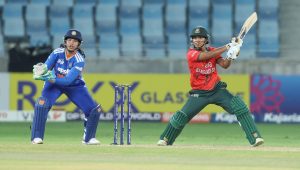


As Bangladesh hosted the 13th national election on Thursday, the sports fraternity is set to see changes, with new faces likely to take the spotlight. The interim government, which took office following the mass movement in July 2024 on 8 August, is scheduled to hand over power to the newly elected administration on 15 or 16 February.
Asif Nazrul has been the Youth and Sports Adviser since 11 December last year, following the resignation of Asif Mahmud Sajib Bhuiyan on 10 December 2025. Over the past one and a half years, Bangladesh’s sports landscape has witnessed both progress and controversy under the tenure of two different advisers. The most significant controversy arose under Asif Nazrul.
T20 World Cup Fallout
Bangladesh is absent from the ongoing ICC T20 World Cup, citing security concerns in India following a government directive. The ICC denied a request to relocate the tournament. During this period, the sports adviser’s statements appeared contradictory.
On a press conference that held on Tuesday night, he stated that he had no regrets, saying, “The decision was taken by the Bangladesh cricketers and the Cricket Board. By making their own sacrifice, the role they have played in ensuring the safety of the country’s cricketers, the safety of its people, and upholding Bangladesh’s dignity, I believe, will remain an exemplary precedent.”
Following an emergency meeting with players on 22 January, Asif Nazrul clarified that the decision not to play in India was taken by the government and was not within anyone else’s authority. Later, he attempted to clarify his remarks through a Facebook post, emphasizing that the directive came from the government. Despite his short tenure, Bangladesh’s absence from the T20 World Cup marked a historic but controversial moment.
Reforms under Asif Mahmud
Before Asif Nazrul, the Sports Adviser role was held by Asif Mahmud, who assumed office on 9 August 2024 and formally began work on 11 August. One of his first actions was to dissolve the elected committees of various sports federations and replace them with ad hoc or interim committees, a move that drew widespread praise.

Unfamiliar with the key figures and dynamics of the sporting world, he established a search committee to identify competent organizers for federation roles. This was an unprecedented initiative in Bangladesh’s sports history. The National Sports Council’s role was limited to formal approval of the committee’s recommendations.
Promises and Delays
Some major promises during his tenure remain unfulfilled. On 18 August 2024, Asif announced plans to build a sports institute to produce world-class athletes. According to Sports Secretary Mahbub Ul Alam, the project design has yet to be finalized. Changes within sports federations were limited, with many committees remaining dissolved.
Decentralization Efforts
Football and cricket, Bangladesh’s two most popular sports, have traditionally been Dhaka-centric. Asif Mahmud worked to take both sports beyond the capital, instructing the Bangladesh Cricket Board to stage more BPL matches outside Dhaka. He also initiated improvements to stadiums outside the capital.
With foreign assistance, he launched a project to develop eight sports infrastructures across the country’s eight divisions, aiming to provide modern multi-sport facilities at the divisional level.



Prize Money for Athletes
Shortly after taking office, Asif Mahmud announced a financial reward of Tk 25,000 for each player of the Bangladesh SAFF U-20 team following their championship win. A month later, after the women’s team triumphed in Kathmandu, he declared a reward of Tk 1 crore, disbursed within a week.
Financial incentives were also provided to the U-19 Asia Cup-winning cricket team, the hockey team that qualified for the Junior Hockey World Cup, the women’s football team that reached the Asian Cup for the first time, and the junior women’s hockey team. For defeating India in the Asian Cup qualifiers, Asif awarded the highest prize of Tk 2 crore.
Governance and Controversies
Following the political transition, Faruque Ahmed was appointed BCB president by the National Sports Council but was removed through a no-confidence vote after less than nine months. During this period, the Anti-Corruption Commission investigated alleged financial misconduct by the previous board, placing additional responsibilities on the interim administration. Asif Mahmud later defended Faruque’s removal as a performance-based decision.
Aminul Islam Bulbul succeeded Faruque and was elected BCB president after serving four months. However, the legitimacy of the election faced criticism. Several senior organizers, including former captain Tamim Iqbal, withdrew, and 19 candidates stepped aside a week before the vote, alleging interference and manipulation by Asif Mahmud.
In the BCB elections, the National Sports Council nominated a director politically affiliated with the fallen Awami League government. Since the Sports Council is linked to the Ministry of Youth and Sports, many believed Asif exerted considerable influence. Out of 25 BCB directors, 10 were appointed from district and divisional levels, sparking disputes that reached the courts.
During the formation of the board, Asif faced allegations of irregular interference. He initially appointed district and divisional councillors according to his preferences, resulting in directors being elected largely under his control.
Impact on Club Cricket
Bulbul was elected unopposed as a director and then as president. This sparked unrest in Dhaka club cricket, with Abahani, Mohammedan, and 40 other clubs rejecting the board’s authority. The First Division Cricket League was reduced from 20 to 12 teams, while the Third Division League was brought to a complete halt. Players from boycotting clubs faced financial hardship and inactivity.
Allegations of Favoritism
Since taking over, Asif Mahmud faced accusations of favoritism, including appointing close associates to BCB roles. Some were placed in the BCB marketing department and voluntary roles in the 11th edition of the Bangladesh Premier League. That season faced scrutiny over alleged fixing, and an independent 900-page inquiry led to nine players being barred and several officials implicated.
The Shakib Al Hasan Saga
Since October 2024, Shakib Al Hasan has been sidelined in Bangladesh cricket. The all-rounder, who last played in the Kanpur Test against India, had served as an MP under the former Awami League government. Following the political change, cases were filed against him, preventing his return despite his desire to end his career in Bangladesh.
Shakib attempted to play in the home Test series against South Africa and contacted Asif Mahmud to facilitate his return, even traveling to Dubai. However, he was denied permission due to security concerns. Responding to a Facebook post in which Shakib wished former Prime Minister Sheikh Hasina a happy birthday, Asif stated that Shakib would never represent Bangladesh. He said, “He cannot carry the flag of Bangladesh. I cannot, under any circumstances, let him wear the Bangladesh jersey. There will now be clear instructions to the board: Shakib Al Hasan will never play for the national team again.”
The current BCB board has signaled a possible reconsideration. BCB Media Committee Chairman Amjad Hussain stated that if Shakib meets fitness requirements and receives clearance from the national selection panel, he could return to the team.
Experts Weigh In
Speaking on condition of anonymity, a former BCB director who withdrew from the most recent election said, “Few people could even identify most members of the current board. Apart from the former cricketers, most cannot truly be called sports organisers.”
Former BCB director and sports organiser Sirajuddin Alamgir, commenting on Bangladesh’s withdrawal from the T20 World Cup and criticising Asif Nazrul, said, “Bangladesh cricket reached its current level through immense sacrifice, time, and intellectual effort, often at personal cost. It was deeply painful to witness the present situation.”
Another former BCB official reflected on Asif Mahmud’s tenure: “He came to the post amid a mass movement, promising change and reforms in sports. Hopes were high, but alleged government interference in the BCB elections cast doubt on his role. Tamim directly questioned him, and many feel his achievements were lost in the process.”