Wars have a strange way of accelerating the future. Technologies that once seemed distant suddenly become urgent, and decisions people planned to make “someday” are forced into the present. The ongoing conflict around the Strait of Hormuz is doing exactly that to the global energy order.
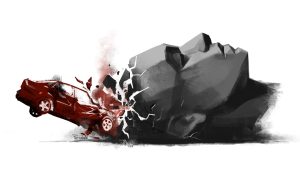
As oil tankers struggle to cross the Persian Gulf and fuel prices surge, electric vehicles are no longer just an environmental choice. They are becoming an economic necessity. In many ways, war has turned into the electric vehicle industry’s most effective salesman.
Rahel Hossain, a bank officer who commutes daily to Motijheel, never had to wait more than five minutes to refuel his bike near his Mirpur home. Since the conflict in Western Asia, he has been waiting on average five to six hours to refill his bike’s tank. Eventually, he lost his patience and called a BYD showroom.
“I kept telling myself I would switch to electric vehicles someday,” said Rahel. “The war made that arrive faster.”
Around one-fifth of the world’s daily oil supply passes through the Strait of Hormuz. It has been effectively shut since late February. The impact was quickly felt in global energy markets. Brent crude price has climbed to around $100 to $105 per barrel from roughly $70 before the crisis.

Asia, which depends heavily on Middle Eastern oil passing through the strait, has been hit particularly hard. Although Bangladesh has not yet raised fuel prices, which many experts find unusual, they believe the government will eventually have to do so if the conflict continues.
There is another side to this story. Bangladesh has been running its own quiet electric vehicles revolution for years. It just does not look like anything from a tech conference. The small three-wheeler, often called the ‘Bangla Tesla’ and seen across the capital and beyond, is an electric vehicle. It runs on a battery, uses an electric motor and produces no direct emissions.
There are hundreds of thousands of these vehicles on the roads, and none of them depends on fuel prices. They just appeared, met a need and became part of everyday life.




Now, global EV makers are entering this evolving landscape. BYD has emerged as a major player. The company stopped producing petrol-only vehicles in 2022 and has since become one of the world’s largest EV manufacturers. They sold over 4.6 million electric and plug-in hybrid vehicles alone last year. With fuel prices climbing from Manila to Melbourne, its showrooms are struggling to keep up with the demand.
An official from BYD Bangladesh said sales have increased during the ongoing conflict involving Iran, Israel and the United States. Customer interest has also grown in recent weeks, with the company’s showroom in Tejgaon seeing noticeably higher footfall than before.
Online searches for electric vehicles jumped 20 per cent in the first week after the Iran strikes. In Australia alone, Google searches for “electric vehicles” shot up between late February and late March. People weren’t just curious; they were buying as well. In the United States, nearly 31,000 used electric vehicles were sold in February, up 29 per cent from a year before.
The economics are becoming more attractive. In some markets, the price of used electric vehicles has declined in recent years, while fuel costs have increased. This combination is making EVs more competitive than before.
This is what makes this moment different from previous EV pushes. The question is no longer whether EV is a nice idea. It is whether petrol is still something you can depend on. Analysts say this crisis could push the world further away from oil, and a longer closure will speed up electric vehicle production.
Governments are already responding. Laos has reduced EV-related fees while increasing costs for petrol cars. BYD is offering 18 months of free charging in China on select models. A VinFast dealership in Vietnam had to hire additional staff after showroom visits quadrupled. The competition for EV buyers has entered a new phase.
Back in Mirpur, Rahel has not made the purchase yet. But his mind is made up. The war did not turn him into an environmentalist. It turned him into someone who can do basic arithmetic.
“Every time I see the fuel price, I do the calculation again,” he said. “The electric car wins every time.”
The Strait may reopen one day. Oil flows may return to normal. But those who walked into an EV showroom this month are not going to forget what pushed them there.
The question now is simple. When the next fuel shock comes, will more Bangladeshis continue to wait at the pump or decide it is finally time to switch to an electric vehicle?