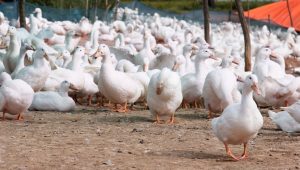
Eggs and broiler chicken, long seen as the last affordable sources of protein for millions after rice and lentils, are fast slipping beyond reach as Bangladesh’s poultry industry buckles under soaring feed prices and mounting taxes.
The sector, with an estimated investment of Tk50,000 crore, now stands on the verge of collapse, industry insiders said in a press release, warning that any further downturn could trigger a nationwide nutrition crisis with long-term consequences.
Production costs in the poultry sector have nearly doubled over the past five years, with the sharpest increase recorded this year.
Farmers are bearing the brunt of the squeeze as costs continue to rise while returns remain weak.
Hundreds of poultry farms are shutting down, pushing thousands into unemployment, sector insiders said.
Industry data show a steady 90 per cent rise in production costs over the past five years.
Taking 100 as the base index in 2021, costs rose to 115 in 2022, 145 in 2023, 170 in 2024 and 190 in 2025, reflecting a sharp and sustained increase.
The once-promising sector is now under severe strain, driven largely by policy pressure.
Corporate tax has been increased from 15 per cent to 27.5 per cent, while higher duties on feed and other inputs have significantly inflated production costs.

Bangladesh Poultry Industries Association President Mosharraf Hossain Chowdhury said Bangladesh is among the few countries imposing such high taxes on a food-producing sector.
“Instead of supporting farmers, we are burdening them. The impact is already visible at the production level and will soon affect the market and consumers,” he said.
He warned that unless taxes and duties are reduced by half, small and medium-scale farmers will not be able to survive and the entire sector could fall under the control of large corporate companies.
The cost and price gap is already exposing the depth of the crisis.
Sector insiders said the cost of producing an egg now stands between Tk10.5 and Tk11, while wholesale prices often range between Tk7.5 and Tk8.5.




Similarly, broiler production costs are around Tk146 per kg, whereas wholesale prices fluctuate between Tk145 and Tk148.
Bangladesh Poultry Industries Association Secretary General Md Safir Rahman said that without special incentives in the upcoming budget, investment in the sector will dry up.
“No new entrepreneurs will emerge, and existing ones will shift to alternative sectors. As a result, eggs and chicken will have to be bought at much higher prices, putting these affordable sources of animal protein beyond the reach of ordinary people,” he said.
Bangladesh Poultry Industries Association Secretary General Md Safir Rahman also serves as a director of Quality Feed.
While Bangladesh tightens its tax regime, neighbouring countries are offering substantial support to their poultry industries.
Sector insiders said Pakistan, Nepal, India, Thailand and Malaysia provide significant tax relief and incentives to poultry and livestock feed producers, placing Bangladesh at a competitive disadvantage.
They said advance income tax has increased from 1 per cent to 5 per cent, while turnover tax has risen from 0.6 per cent to 1 per cent, further intensifying pressure on producers.
Experts have emphasised the need for targeted incentives, tax exemptions and expanded support in income tax, import duties and advance income tax, particularly for small-scale farmers.
Without such measures, they warned, the sector may increasingly fall under the control of large corporate entities, driving up the prices of eggs and chicken beyond the reach of ordinary consumers.
The poultry sector supports an estimated 6 million to 7 million jobs, many of them held by young entrepreneurs.
Continued farm closures could severely disrupt rural economies and lead to widespread job losses, they said.
Sher-e-Bangla Agricultural University Professor of Agricultural Economics Ripon Kumar Mondal said the government must reduce taxes and duties on imported feed raw materials to stabilise the sector.
He added that incentives for domestic feed production and duty waivers on machinery imports are also essential.
Bangladesh Agricultural University Professor Md Ilias Hossain suggested reducing corporate tax to 10 per cent and lowering turnover tax to 0.2 per cent in line with actual profit margins.
He also recommended simplifying tax refund procedures and reducing tax deducted at source.
According to the Bangladesh Poultry Industries Association, Pakistan taxes small and medium feed mills at 7.5 per cent to 15 per cent based on turnover.
Thailand offers five to eight years of full tax exemption under its investment board.
Malaysia has removed sales tax on feed raw materials and provides up to 10 years of tax holidays.
Nepal waives advance tax on key feed ingredients, while India imposes no advance income tax on general imports and has withdrawn tax collected at source on agricultural machinery.
In contrast, Bangladesh continues to impose a 5 per cent advance tax on feed imports, underscoring the urgent need for policy reform.
Industry insiders said the policy gap is no longer only a business concern.
They said it is now directly linked to food affordability, nutrition and the future structure of the poultry market.
If the pressure persists, they warned, the country risks losing small and medium farmers, deepening corporate concentration and making two of the most accessible sources of animal protein costlier for ordinary households.