



A surge in the narcotics trade is fuelling deadly violence and deepening public anxiety across Chattogram, as law enforcement drives repeatedly fail to dismantle the powerful financiers and political patrons shielding the network.
While police regularly intercept couriers and street-level dealers, massive consignments of yaba smuggled from Myanmar through Cox’s Bazar’s Ukhiya border continue to flood the port city and beyond.
Recent bloodshed, including a turf-war murder and the broad-daylight stabbing of a citizen journalist who reported on local drug dealing, has underscored the worsening crisis.
The 108-name intelligence dossier
A recent intelligence dossier has identified 108 individuals linked to the yaba trade in Ukhiya, categorising three brothers as syndicate godfathers, two men as wholesalers, and 103 others as retail dealers.
Alarmingly, intelligence sources claim the retail list includes several women, elected local representatives, and political activists.

Topping the dossier are three fugitive brothers from Shafir Bil village in Jaliapalong union, Md Hossain Ali, Roushan Ali, and Jasim Uddin, who are named as the ring’s kingpins and face multiple cases at Ukhiya and Ramu police stations.
Two wholesalers from Jaliapalong’s Rupabati village, Ahsanul Karim and Jasim Uddin, are currently behind bars facing charges across Ukhiya, Cox’s Bazar Sadar, and Teknaf.
The remaining 103 listed retailers hail from five unions in Ukhiya, with the highest concentrations in Rajapalong and Palongkhali, including several Union Parishad members.



A resilient supply chain
According to intelligence and local sources, consignments enter Bangladesh across porous Ukhiya border points, including Balukhali, Shiallapara, Betbunia, Dargabil, Deilpara, Digilia, Baraitali, Rahmater Bil, and Dhamankhali.
Once across, the pills pass through multiple hands before travelling by road to Cox’s Bazar, Chattogram, Dhaka, and other districts.
Local residents point out that operations routinely stall after low-level couriers are caught. Because investigators rarely follow the trail to the financiers, transport coordinators, and masterminds, syndicates swiftly recruit new runners, leaving the core criminal infrastructure untouched.
Intelligence officials also note that many traffickers now leverage political connections for impunity, echoing past allegations in Teknaf where dealers operated under the shadow of former MP Abdur Rahman Bodi, whose brothers later surrendered to authorities.
Escalating violence and insider arrests
The intensifying drug trade has spilled onto Chattogram’s streets in recent days. Last Friday afternoon, Md Belal Uddin, administrator of the news-based Facebook page Fatikchhari Sanglap, was stabbed multiple times in the abdomen in broad daylight at Bibirhat Bazar in Fatikchhari. Bleeding heavily en route to hospital, Belal went live on Facebook, tearfully pleading for his life and alleging that local butcher Shamsul Alam, known as Koshai Shamsu, attacked him for reporting on the drug trade. Police later arrested Alam, 45, the sole accused in a case filed by Belal’s younger brother.

Fatikchhari Police Station Officer-in-Charge Rabiul Alam Khan said Alam had recently been released on bail in a narcotics case and suspected Belal of tipping off police.
The previous night, a 30-year-old man named Sobhan, son of Nur Islam, was fatally stabbed outside his home in the city’s Bakalia Taktarpool area in what police described as a dispute over drug trafficking.
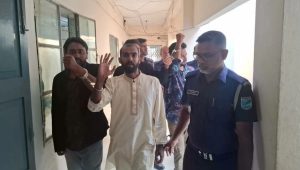
Meanwhile, on Friday around 1:45pm, the Detective Branch of Chattogram Metropolitan Police arrested Hasibur Rahman, 39, a member of the Department of Narcotics Control, in Karnaphuli’s Shikalbaha Charfarid area with 10,000 yaba pills and seized a black hard-top jeep used to transport the haul.
Socioeconomic roots
Commenting on the crisis, Professor SM Monirul Hasan of the Sociology Department at the University of Chittagong noted that the narcotics boom is deeply tied to domestic and regional politics as well as economic disparities.
“Despite infrastructural and economic growth, job creation has not kept pace,” he said. “Unemployment, frustration, and social alienation are driving many young people toward drugs, turning Bangladesh into a major narcotics market. Law enforcement raids alone will not stop this; we must create jobs and empower our youth economically.”