Savar, a suburb of the capital, has become a stark example of unplanned urbanisation. The upazila, home to around 90 lakh people, suffers from severe shortages of civic amenities and has emerged as a major crime hotspot.
Murder, rape, drug dealing, mugging, extortion, militant hideouts and land grabbing have become common occurrences. Two police stations, one outpost and five police camps spread across the vast area are struggling with shortages of manpower and vehicles.
Public representatives, administrative officials, residents and business leaders said the rapid expansion of industries and settlements over the past three decades took place without proper planning or oversight. They warned that continued neglect could turn Savar into an unliveable city.
The 280-square-kilometre upazila consists of one municipality and 12 unions. Although it falls under three parliamentary constituencies and has around 9,25,000 registered voters, government estimates put its population at around nine million. A large share of the population comprises industrial workers.
“Drug dealers, troublemakers and teenage gangs roam around even during the day. There is no guarantee of safety at night. People are increasingly worried about security,” Borhan Uddin of Kuturia village told TIMES of Bangladesh.
Savar Citizens’ Committee General Secretary Salah Uddin Khan Naim said, “More police stations, outposts and investigation centres are needed in proportion to the population to maintain law and order.”
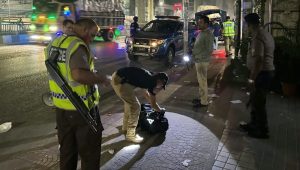
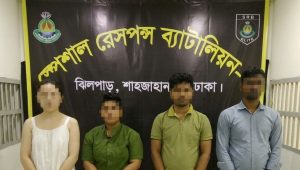
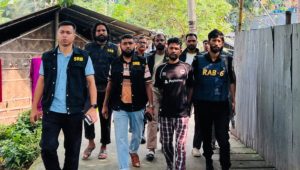
The fragile security situation came into renewed focus after the recent discovery of militant hideouts and two pressure-cooker bombs in Savar.
Locals said extremists were exploiting security gaps in the area. Law enforcement officials also said criminals were living there without completing mandatory tenant registration forms.

Savar Circle Additional Superintendent of Police Rakibul Hasan Ishan told TIMES, “After the arrest of militants and recovery of bombs, emphasis has been placed on ensuring tenant registration forms are completed.”
Police said their manpower and vehicles remain occupied daily with investigations and VIP protocol duties on the Dhaka-Aricha Highway. While some night patrols continue, daytime coverage remains limited, allowing criminals to commit offences and escape.
Besides the Dhaka-Aricha Highway, Savar has several entry and exit routes, including Nabinagar-Chandra Road, Ashulia, Birulia, Hemayetpur-Singair, Tetuljhora and Bhakurta routes. The area also has waterways, giving criminals multiple escape routes.
Additional Superintendent of Police Rakibul Hasan Ishan said many criminals commit offences in Dhaka and take shelter in Savar. He said police manpower and vehicles were far below what was required for the population, creating a major challenge in maintaining law and order.
“A police officer in this densely populated area works continuously for 12 to 14 hours, which is inhuman,” he said.
Ashulia Police Station Officer-in-Charge Mohammad Tariqul Islam said, “There is no end to crime here. There are allegations of drug-related crimes, mugging and extortion.”




He said the station receives more than 150 cases on average every month, mostly involving property disputes, family violence and child marriage. “In June alone, 171 cases were filed,” he added.
Savar Model Police Station OC Md Saiful Alam said his station receives around 100 to 120 cases every month, with half involving drug-related offences.
Civic crisis deepens
Besides two export processing zones, Savar has nearly 3,000 factories employing around five million workers. Factories are also being established indiscriminately in residential areas. The leather industrial city has added to environmental concerns, with untreated waste flowing into rivers.
Housing projects, residential buildings, multi-storey structures and factories – built with or without approval from municipalities, Rajuk and union parishads – often escape proper monitoring.
Residents have complained of waterlogging, river encroachment, waste dumping, damaged roads, poor drainage and inadequate street lighting.
Salah Uddin Khan Naim said Savar needs a city corporation and a development authority to improve civic services.
Local Government State Minister Mir Shahe Alam said the government was considering expanding Savar Municipality and creating separate municipalities in Amin Bazar and Ashulia to improve services.
“Despite being a first-class municipality, civic facilities are extremely poor. This area on the outskirts of the capital is like a city left in darkness under a lamp,” said Abdur Rahman, a Bank Colony resident.
“People from all 64 districts live in Savar for their livelihoods. Due to their pressure, original residents have become a minority,” said Bajlur Rahman of Teyabpur village.
Abdul Malek of Pandhoa village in Pathalia said Savar was once known for rice, wheat, mustard and vegetable production. “Over the past three decades, agricultural production has almost disappeared as farmland has been filled to build residential areas and industrial units,” he said.
Savar Upazila Nirbahi Officer (UNO) Saiful Islam told TIMES of Bangladesh, “Savar was developed in an unplanned manner decades ago. We are now paying the price for it.”
He said building approvals were now issued under Rajuk’s Detailed Area Plan (DAP), but thousands of unplanned structures had already been built before its implementation.
“Waste management, environmental pollution, residential projects on agricultural land, river and canal pollution and encroachment, waterlogging, hawkers, traffic problems and child marriage are among the daily challenges here. The administration struggles to handle everything,” the UNO said.
Mohammad Shamsul Haque, general secretary of Savar River and Environment Development Council, said, “Although effluent treatment plants (ETPs) exist, they are not used due to high costs. Tanneries are polluting the Dhaleshwari River, while the Banshi River has been occupied to build a stadium. There is no remedy.”
Former Savar municipality mayor Refat Ullah said, “There is no end to the problems here. Which one should I mention and which one should I leave out?”
He said resolving the crisis required joint efforts from elected representatives, political parties and the administration.
Kaundia: An isolated union
Kaundia, located at the confluence of the Turag and Buriganga rivers, remains disconnected from the rest of Savar. Residents mainly depend on Mirpur for communication.
Except for land registration, filing cases and institutional work, residents rarely travel to Savar.
Boats remain the only mode of transport outside the union. Although several feasibility studies have been conducted for a bridge over the Turag River, no project has moved forward.
“A bridge over the Turag River is the people’s long-standing demand,” said a former union chairman.
Another former chairman said, “Residents want to become part of Dhaka. If Kaundia is brought under Darus Salam instead of Savar Police Station, civic services will improve and criminals will lose confidence.”