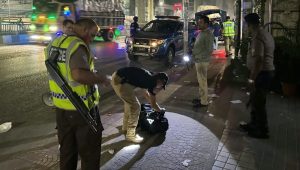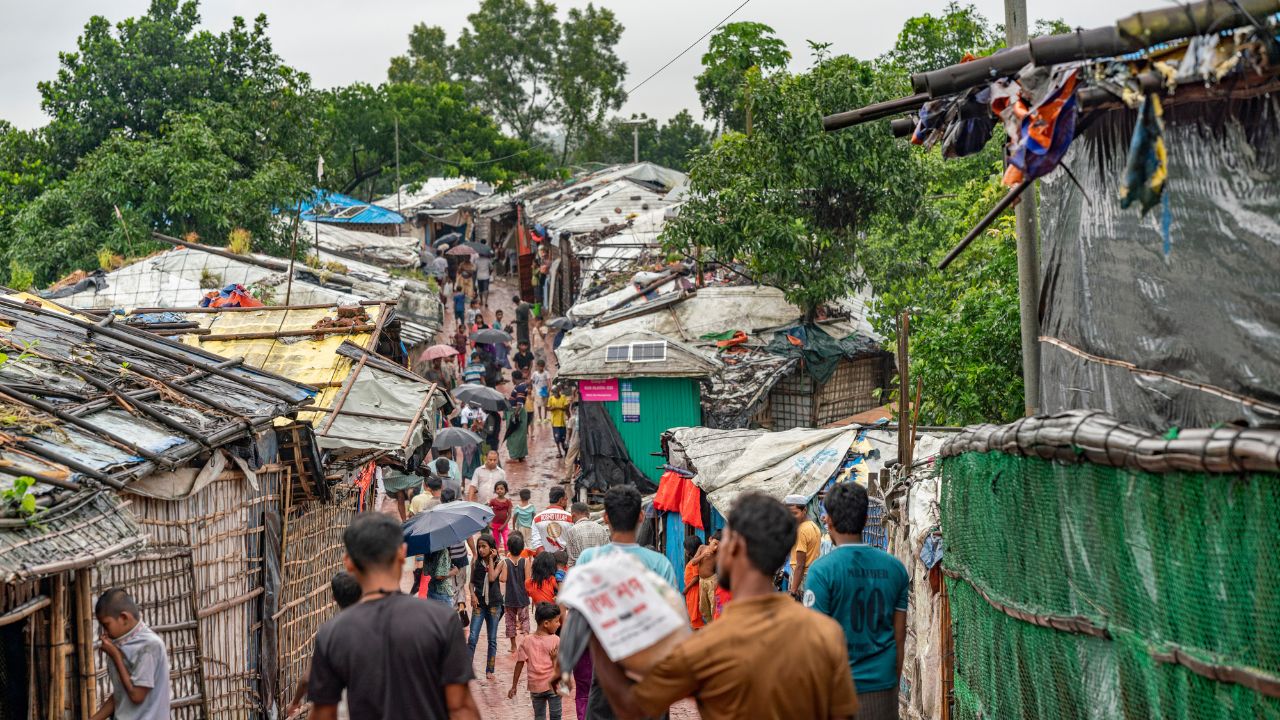



The Rohingya crisis has emerged as a major security challenge for the greater Chattogram region, with clashes among armed groups, drug and human trafficking, organised crime, border instability and cross-border conflict increasingly shaping the security landscape around the camps in Cox’s Bazar.
More than 1.2 million Rohingyas are now living in Bangladesh, while at least five armed groups—including the Arakan Army (AA), Arakan Rohingya Salvation Army (ARSA), Rohingya Solidarity Organisation (RSO), Arakan Rohingya Army (ARA) and Rohingya Islami Mahaz (RIM)—remain active in and around the Bangladesh-Myanmar border area.
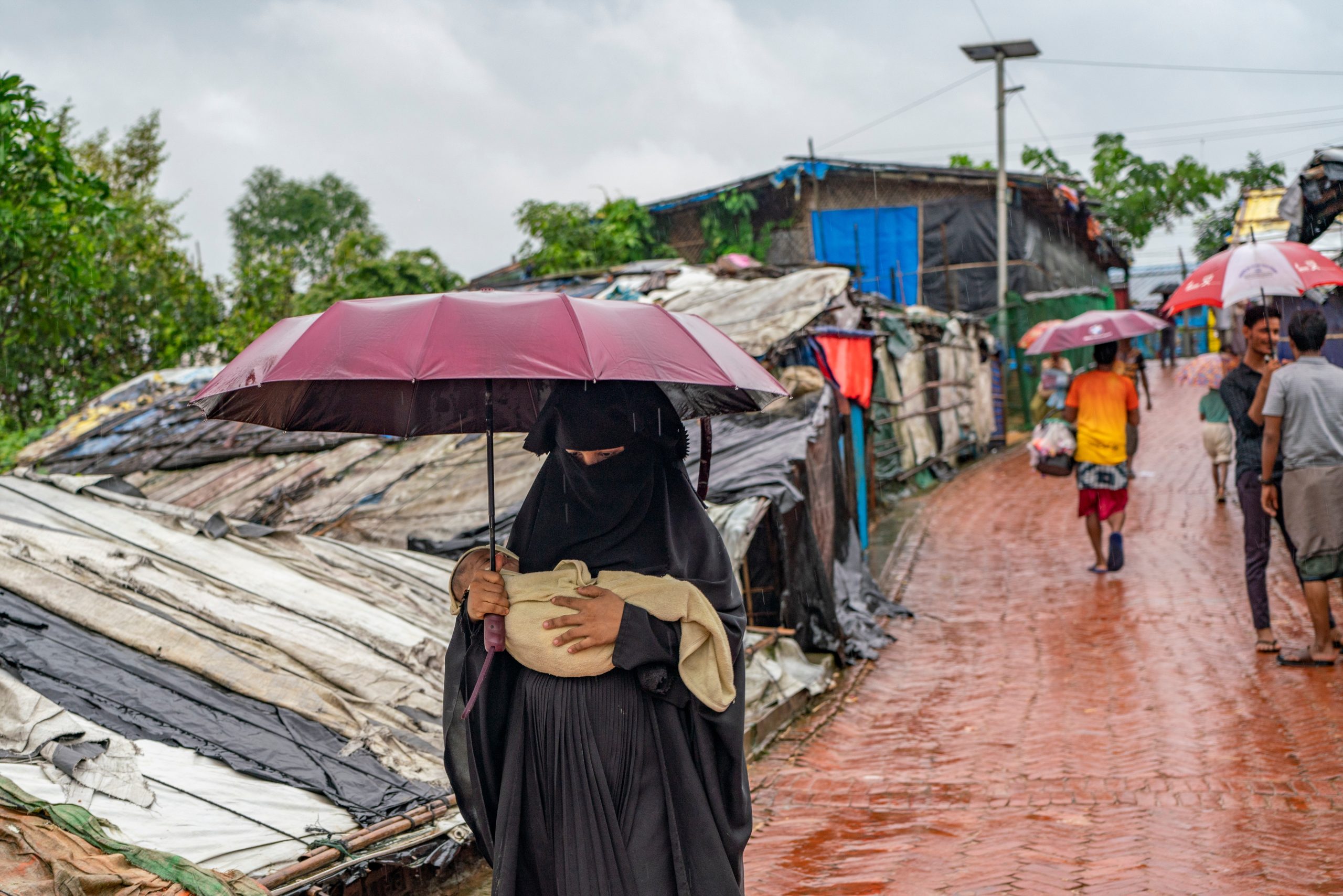
Nine years after the first major wave of displacement from Myanmar, 1,202,034 Rohingyas were living in Bangladesh as of 31 July 2026, including 1,168,375 in Cox’s Bazar and 33,659 on Bhasan Char, according to UNHCR and Bangladesh government data.
Colonel Anwarul Alam, sector commander of Border Guard Bangladesh in Ramu, told TIMES of Bangladesh that the security situation along the border was changing rapidly.
“New challenges are emerging along the border, requiring us to adopt new measures. Drug trafficking and other security incidents have increased significantly compared with the past,” he said.
He said modern radar systems had already been installed along the Myanmar border to strengthen surveillance.
Rival armed groups fuel insecurity
The Rohingya armed landscape has become increasingly fragmented, adding another layer of complexity to the security situation.
ARSA, formed around 2013 under Ataullah Abu Ammar Jununi, drew international attention after attacks on Myanmar security posts in 2016 and 2017. Security sources estimate that the group has several hundred fighters, although its actual strength remains difficult to verify due to its clandestine structure.

Following Ataullah’s detention in Bangladesh, Mohammad Khaled is reportedly leading the group.
The RSO, established in 1982, regained prominence after Myanmar’s 2021 military coup. Two smaller groups—the ARA and RIM—are also reported to be active along the border, although their command structures remain unclear.
Mohammad Ismail, a Rohingya civil society activist now living in a Western country, said armed groups had failed to restore Rohingya rights and had instead become associated with criminal activities, including drug trafficking, kidnapping and extortion.
Camps become a battleground
The conflict in Myanmar has increasingly spilled over into Rohingya camps in Bangladesh.
Law-enforcement agencies and camp officials estimate that around 250 Rohingyas have been killed in the camps over the past decade, including community leaders, teachers, activists and religious figures.
Mohammad Reaz Uddin Ahmed, commander of the 8th Armed Police Battalion (APBn), said Rohingya armed groups were involved in various criminal activities, particularly drug trafficking and kidnapping.




Mohammad Zubair, 40, a Rohingya refugee, recently approached authorities at Camp-20 Extension seeking protection after allegedly receiving threats from people accused of killing his elder brother Mohammad Samir in 2021.
“The people accused of killing my brother are now threatening me and pressuring me to withdraw my complaint,” he told TIMES.
Kidnapping becomes a parallel economy
Abduction has emerged as one of the major security threats inside the camps, with ransom demands becoming part of a growing criminal economy.
According to the 8th APBn, 13 abducted Rohingya women, men and children were rescued between May 2025 and July 2026, while 12 people were arrested in connection with abduction cases.
Acting commander Riaz Uddin Ahmed said many incidents remained unreported because victims were reluctant to disclose links to criminal networks or illegal activities.
Rohingya activist Yunus Arman said abductions had become more frequent.
“In addition to organised criminal gangs, ransom is also being demanded through abductions arising from various other disputes,” he said.
AA: From insurgent group to powerful non-state actor
At the centre of the changing security equation is the AA, which has transformed from a relatively small ethnic armed group into a powerful force controlling large parts of Myanmar’s Rakhine State.
For Bangladesh, the rise of the AA means that a powerful non-state actor now controls much of the territory directly bordering its southeastern frontier.
Founded in 2009, the AA’s political wing, the United League of Arakan (ULA), is led by Major General Twan Mrat Naing.
Ran Nin Soe, a former senior adviser to the ULA chairman, told TIMES that the AA was no longer merely a guerrilla organisation but was seeking to establish itself as a political and military authority in Rakhine.
Border turns into a frontline
The security risks are no longer confined to the Rohingya camps. They are increasingly affecting the Naf River, Teknaf, St Martin’s Island and the Bandarban frontier.
Between January 2025 and August 2026, more than 39 landmine explosions were recorded along the Bangladesh-Myanmar border, killing at least six people and injuring or permanently disabling more than 40 others, according to available information.
The maritime frontier has also become increasingly vulnerable.
A total of 434 fishermen—222 Bangladeshis and 212 Rohingyas—have reportedly been detained or abducted. Of them, 348 have returned, while 86 remain missing.
Displacement continues
The rise of the AA has also triggered a new wave of Rohingya displacement.
As fighting spread across northern Rakhine, Rohingya-majority areas became battlefields. Rights groups have accused the AA of abuses against Rohingya civilians, including attacks on people attempting to flee towards Bangladesh.
According to UNHCR data, 154,690 Rohingyas have entered Bangladesh since fighting between the AA and Myanmar’s military junta intensified in 2024.
Drug routes deepen insecurity
Drug trafficking from Myanmar remains one of the biggest cross-border security threats, with yaba and crystal methamphetamine entering Bangladesh through routes in Cox’s Bazar and Bandarban.
In 2025, law-enforcement agencies seized 43.56 million ATS tablets, while BGB recovered more than 147 million yaba tablets and arrested 2,334 people over alleged involvement in drug trafficking.
APBn commander Riaz Uddin Ahmed said rival armed groups and criminal networks were involved in drug trafficking, with some groups attempting to exchange narcotics for essential goods.
“We have to stay ahead of the evolving situation and take whatever measures are necessary at any given time to ensure security along the border,” Colonel Anwarul Alam said.