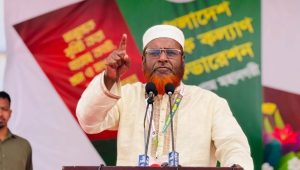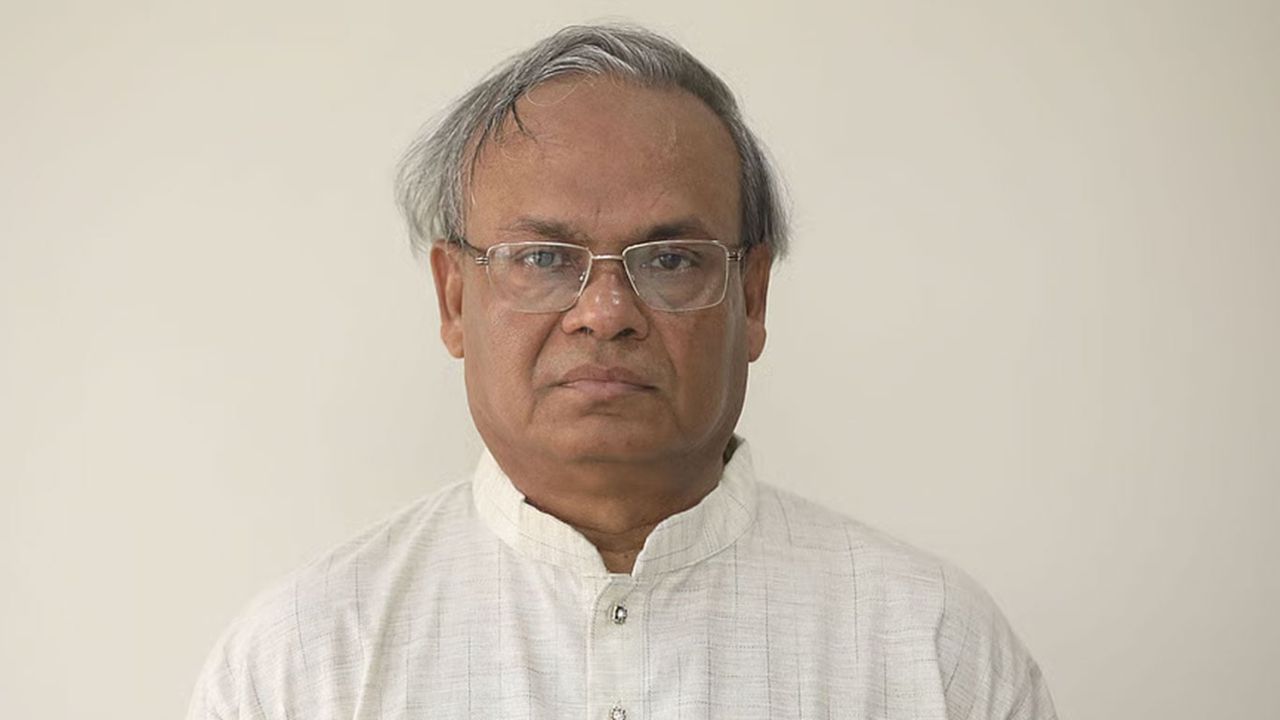

BNP Acting Secretary General Ruhul Kabir Rizvi has said that democracy cannot be sustainable without establishing a strong institutional foundation.
He said the failure to build a strong institutional foundation for democracy led to the repeated emergence of fascism, autocracy and one-party rule in the country.
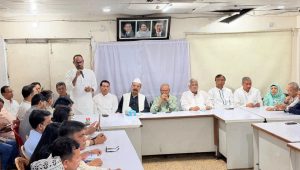
Rizvi made the remarks as the chief guest at a discussion after paying tribute to martyred physician Shamsul Alam Khan Milon, who was killed during the 1990 anti-autocracy movement.
The Doctors Association of Bangladesh (DAB) organised the discussion at Shaheed Milon Chattar of Dhaka Medical College Hospital in the city.
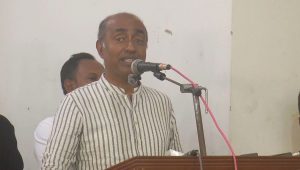
Member of Parliament Amanullah Aman attended the programme as the chief discussant, while BNP Standing Committee member Farhad Halim Donar was present as a special guest.

Milon’s mother Selina Akter was also present on this occasion.
Rizvi said the sacrifice of Milon was not merely the loss of an individual life but a sacrifice for the broader ideal of democracy. His martyrdom inspired people in subsequent struggles for democratic rights.




He said that Milon was not confined to the identity of any political party. He was a professional and a physician who studied at one of the country’s prestigious educational institutions.
Rizvi called for initiatives to commemorate Milon’s sacrifice for democracy through a significant state recognition bearing his name.
The BNP Acting Secretary General said democratic values and consciousness must prevail in society and in the state. Although people may have differing opinions, they must develop the mentality to tolerate one another’s views as they live in the same society and state.


Regarding the caretaker government system, Rizvi said it was introduced due to a lack of confidence over whether neutral elections could be held under the incumbent political party in power.
He noted that elections held under the system did not result in the repeated return of the same political party to power.
Rizvi further said the caretaker government system was adopted as an effective mechanism for strengthening democracy. Although democratic structures vary across countries, their fundamental principle is people’s rule and the reflection of their opinions.

He added that the caretaker government system should have been made permanent after its introduction in Bangladesh.
However, he said, those who had demanded the system through movements later abolished it, which was highly regrettable.
Milon was shot dead on November 27, 1990, during the anti-autocracy movement against the regime of HM Ershad.
On that day, he was travelling by rickshaw to attend a BMA meeting at the then Institute of Postgraduate Medicine and Research (IPGMR), now Bangladesh Medical University, when gunmen opened fire on him near the Teacher-Student Centre (TSC) of Dhaka University. He was taken to Dhaka Medical College Hospital, where he died.