


A series of recent leadership changes and growing concerns over workplace culture at the Ministry of Foreign Affairs have prompted questions among current and former diplomats regarding professionalism, morale, and institutional stability.
Serving and former foreign service cadre officials say a lack of clarity over the chain of command, frequent administrative reshuffles and what they describe as inappropriate conduct by a politically appointed official are creating a less conducive working environment at a time when Bangladesh’s diplomatic engagements are expanding.
The BNP government has recently undertaken a major reshuffle at the ministry, making changes both at headquarters and in several key overseas missions only five months after assuming office.
The changes include the appointment of a new foreign secretary and new heads of mission in New York, New Delhi, London and Geneva. The appointments to New York and London have been made from outside the career foreign service.
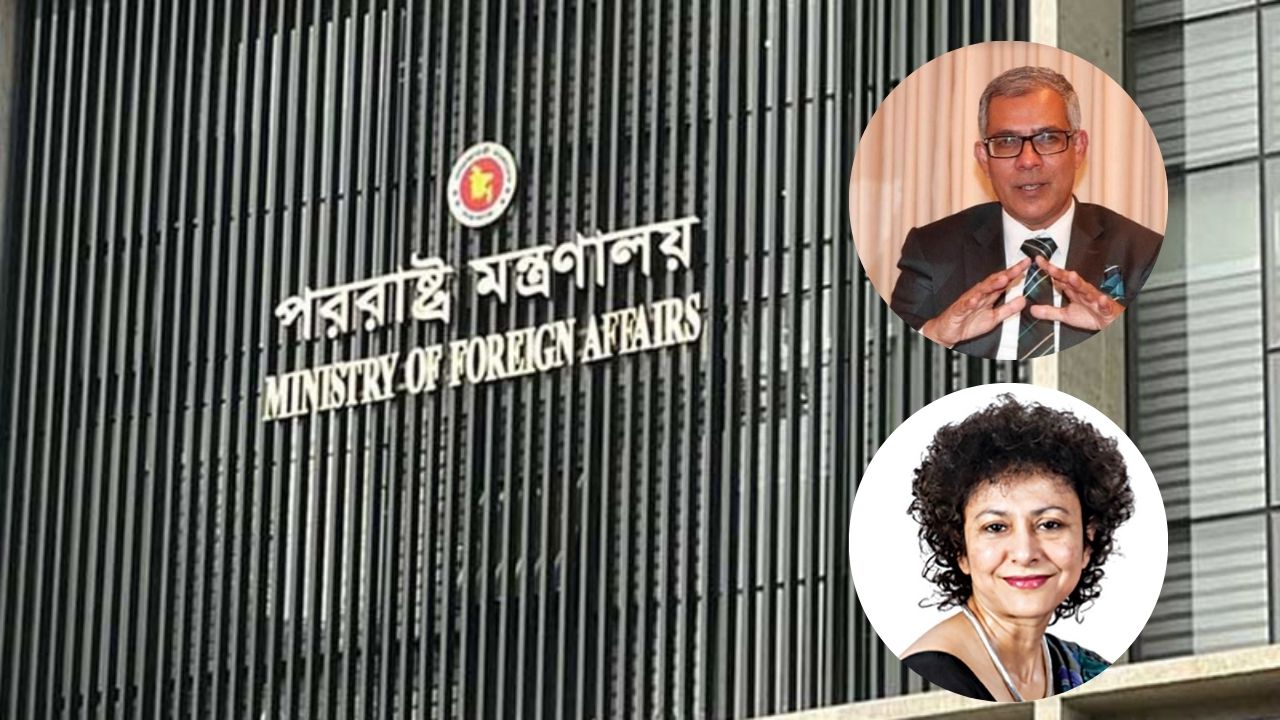
Salahuddin Noman Chowdhury, Bangladesh’s Permanent Representative to the United Nations in New York, has been appointed foreign secretary, replacing Asad Alam Siam, who has been named the next high commissioner to India.

Under the reshuffle, M Riaz Hamidullah, currently high commissioner to India, will become Bangladesh’s Permanent Representative to the UN in Geneva.
Nahida Sobhan, now serving in Geneva, will return to Dhaka as rector of the Foreign Service Academy.
The government has also appointed internationally renowned human rights activist Irene Khan, a cousin of Dr Zubaida Rahman, the wife of Prime Minister Tarique Rahman, as Bangladesh’s next Permanent Representative to the United Nations in New York with the rank of state minister.




Need for a conducive work environment
Former diplomats say an effective foreign ministry depends on professional continuity, a clearly defined chain of command and mutual respect between political leaders and career diplomats.
Some have questioned the rationale behind transferring the foreign secretary and the high commissioner to India after about a year in office. Similar questions have been raised over the recall of Bangladesh’s high commissioner to the United Kingdom and the transfer of the permanent representative in Geneva less than a year before her retirement.
According to former diplomats, while governments have the authority to make appointments and transfers, the decision-making process should be transparent enough to maintain confidence within the diplomatic service.
Due to the sensitive nature of its work, the Ministry of Foreign Affairs demands an exceptionally high degree of professionalism. The stakes are immense; a single diplomatic misstep can carry severe, long-term costs for both the government and the nation, making swift rectification difficult.
This vulnerability is magnified by a profound shift in global diplomacy. As neighbouring India and China recalibrate their relations, and the Middle East undergoes a massive realignment following the Israel-US conflict with Iran, Bangladesh faces a highly fluid geopolitical landscape.
Navigating these dynamics requires the country’s diplomatic leadership to act with the utmost prudence, prioritising a clear chain of command, institutional stability, and objective, professional decision-making.
Concerns over workplace culture
Several serving and former officials also expressed concern over what they describe as an increasingly harsh working environment.
They alleged that Prime Minister’s Adviser Humayun Kabir frequently uses derogatory language, including describing officials as “utterly incompetent”, which they say has affected morale within the ministry.
Diplomats also criticised remarks made by Humayun Kabir about former Bangladesh high commissioner to the United Kingdom while she was serving as an envoy, arguing that public criticism of senior diplomats can undermine both individual officers and the country’s diplomatic image abroad.
Former officials emphasise that while political leaders retain the absolute right to reassign or replace diplomats, such transitions must be handled professionally and communicated in a manner that preserves institutional dignity. Restoring a respectful, predictable working environment is viewed as essential to strengthening the ministry’s capacity to execute Bangladesh’s foreign policy objectives.
As the country expands its engagement with major global and regional partners, analysts argue that a motivated and confident diplomatic service is indispensable. A foreign ministry anchored by clear leadership, institutional stability, and mutual trust between political appointees and career diplomats is far better positioned to safeguard national interests on the international stage.