



Ghorashal does not feel like one power station. It feels like several generations of Bangladesh’s power sector standing side by side. During a recent visit, I walked past retired units from the 1960s and 1970s awaiting demolition – a modern 365 MW combined-cycle unit commissioned in 2018, and two steam units from 1986 and 1989 still undergoing repowering.
It was like walking through five decades of Bangladesh’s power sector in a single afternoon. What stayed with me, however, was not the contrast between old and new. It was the question of why repowering ageing power plants is proving far more difficult than it appears on paper.
Ghorashal is often mentioned in public discussions as another victim of the country’s gas supply constraints. Fuel availability has undoubtedly affected generation across the sector. Yet the experience of Units 3 and 4 suggests that the story is considerably more complex. Unit 3, originally commissioned in 1986 as a 210 MW steam unit, entered repowering in 2015 with a planned three-year implementation period.
The project aimed to almost double capacity to 416 MW while increasing overall plant efficiency from around 24 per cent to 54 per cent. Nearly a decade later, the project is still progressing toward full combined-cycle commissioning. During implementation, costs increased, timelines slipped repeatedly, and turbine rotor blade damage caused another shutdown in 2025.

Unit 4 presents an equally instructive case. Repowering began in 2016 with World Bank financing, targeting 409 MW and approximately 54 percent plant efficiency. While the new gas turbine entered commercial operation in 2018, the combined-cycle configuration never materialised as originally planned. By project closing in 2023, the World Bank’s independent evaluation found only 240 MW operating in simple-cycle mode, with overall plant efficiency reaching 34 percent against the 54 percent target.
The report rated the project outcome ‘Moderately Unsatisfactory,’ attributing the shortfall primarily to weak government ownership and political economy constraints rather than fuel supply alone. That observation deserves attention because it comes not from outside critics but from the project’s own development partner after completion.
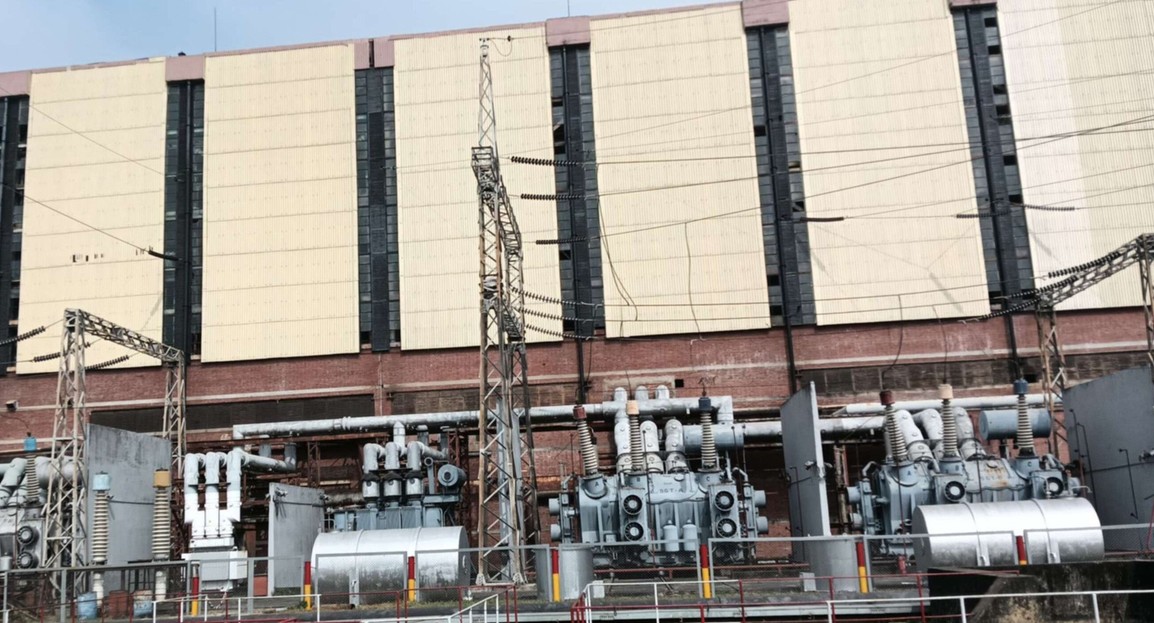
Ghorashal offers several broader lessons for Bangladesh’s future brownfield infrastructure projects. The first lesson concerns feasibility studies. Repowering is fundamentally different from building a new power plant. Existing assets cannot simply be assumed to integrate successfully with modern technology. Their remaining life, structural condition and compatibility should be rigorously assessed before project approval.




The experience of Ghorashal demonstrates that overlooking ageing equipment can create implementation risks that remain hidden during project preparation. Those risks often emerge only after construction begins, when corrective actions become significantly more expensive. The second lesson concerns financing and implementation readiness. Infrastructure projects begin long before construction starts. Delays in securing financing, contract execution, and meeting other pre-implementation requirements can delay equipment deployment by months or even years. Strengthening the initial financial readiness of the project, as well as the engineering design, deserves equal attention.
The third lesson concerns contract management. Brownfield EPC contracts involve interface risks that rarely arise in greenfield projects. Warranty provisions, risk allocation and responsibilities for ageing equipment become increasingly important when implementation runs much longer than the original schedule. These issues should be addressed during contract development, not after problems arise.
The fourth lesson concerns institutional ownership. Consultants, lenders and contractors all contribute to project delivery, but successful implementation ultimately depends on sustained leadership from the implementing agency. Commissioning, operational handover and final project completion often require the same level of institutional attention as procurement and contract award.
Bangladesh’s thermal power fleet is gradually ageing. Future decisions will increasingly involve whether existing plants should be repowered, rehabilitated, retired or replaced. These are not merely engineering choices. They are questions of long-term public asset management.
An effective asset management strategy should evaluate infrastructure across its entire lifecycle. It should consider not only technical feasibility, but also economic value, operational reliability, environmental performance, and the opportunity cost of retaining ageing assets. Repowering makes sense where existing assets can continue delivering value. In other cases, retirement, decommissioning or site redevelopment may offer better long-term outcomes.
Bangladesh has made remarkable progress in expanding electricity generation over the past two decades. The next phase of sector development should place equal emphasis on managing ageing infrastructure more strategically. Stronger feasibility studies, better financing readiness, more effective contract management, and systematic asset lifecycle planning can help ensure that future repowering projects deliver not only additional capacity, but also greater value for public investment.
Ghorashal reminds us that the success of a repowering project is determined not only by the technology installed, but by the quality of governance that prepares, manages, and sustains it throughout its lifecycle.
The views expressed in this article are solely those of the author
The writer is a policy researcher and development analyst. E-mail: [email protected]