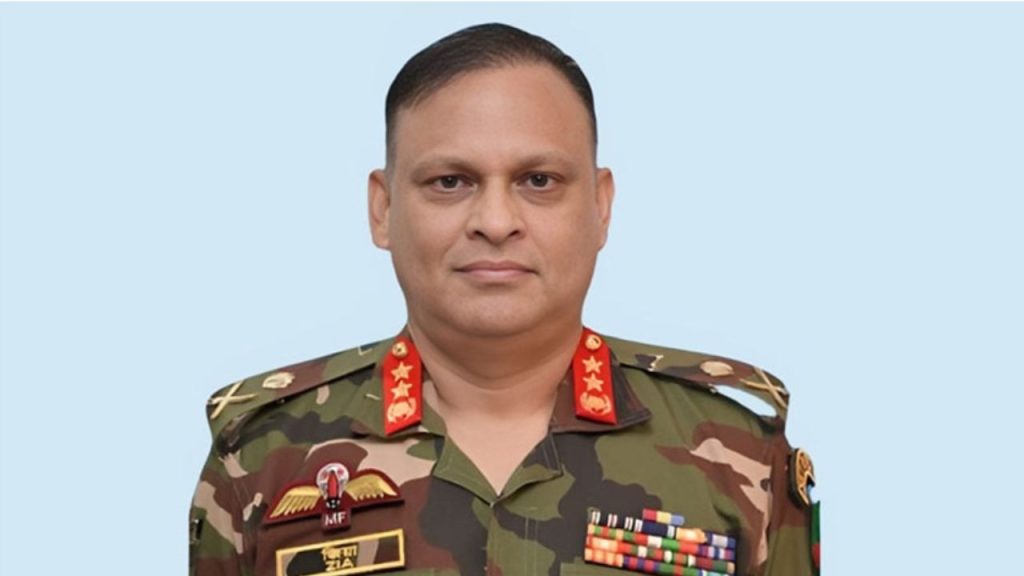



The prosecution is set to present closing arguments on Tuesday in the trial of former army officer Ziaul Ahsan over alleged crimes against humanity involving over a hundred enforced disappearances and killings during the tenure of Awami League.
Subject to court permission, the arguments will be broadcast live on Bangladesh Television (BTV) and the prosecution’s Facebook page, Prosecutor Gazi MH Tamim said.
The International Crimes Tribunal-1 (ICT-1) fixed Sunday to schedule the arguments following the completion of witness testimonies from both sides, setting Tuesday for the prosecution’s submission.
Earlier on Sunday, defence lawyer Taslima Jahan Popy testified on behalf of the accused, presenting video evidence and case-related documents pertaining to Ziaul Ahsan.

Prosecutor Mizanul Islam subsequently cross-examined her, while lawyers Sahidur Rahman and Naznin Nahar represented the defence.
The prosecution concluded its witness examination phase on 19 November.




Witnesses testifying in the case included former army chief Iqbal Karim Bhuiyan and several military officers. According to the prosecution, their depositions detailed how Ziaul Ahsan became a “serial killer” and described how Rapid Action Battalion (RAB) personnel gradually became embroiled in such atrocities.
Formal trial proceedings commenced after ICT-1 framed three charges against Ziaul Ahsan on 14 January over allegations of killing 104 people in state-sponsored enforced disappearances and murders.


The prosecution alleged that between 2009 and 2016, while serving as director of RAB’s Intelligence Wing and Additional Director General (Operations), Ziaul Ahsan directly participated in enforced disappearances and extrajudicial killings.
It further said RAB personnel executed these crimes under his directives and authorisation.
According to prosecution sources, Ziaul Ahsan was posted to RAB as an army major in 2009 and subsequently became a trusted confidant of former prime minister Sheikh Hasina.
He served in various forces and agencies under the home ministry and was not required to return to the Bangladesh Army until his dismissal from service in 2024.
The prosecution noted that his promotion to the rank of major general – achieved without mandatory courses, training, or experience in commanding any battalion or brigade – was unprecedented in the professional history of the Bangladesh Army.