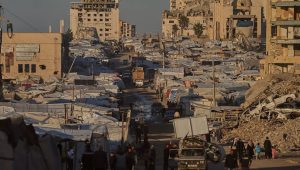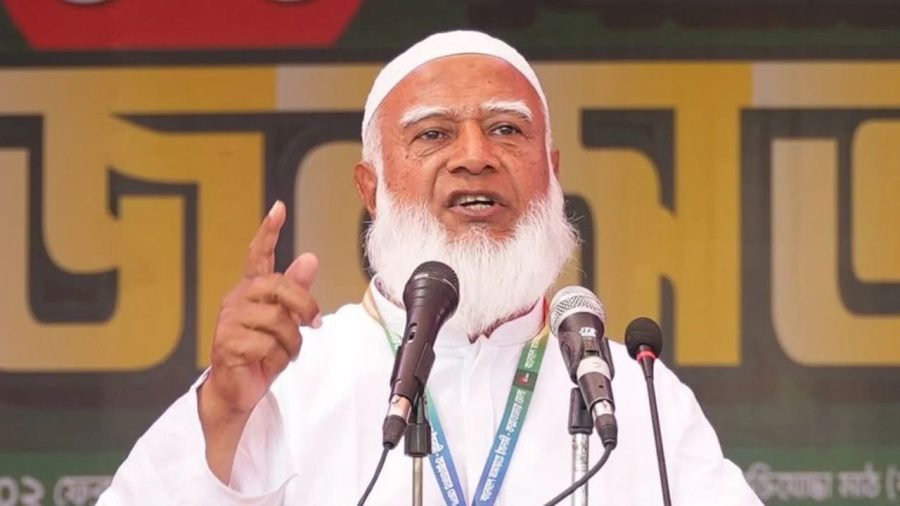



Widespread fury over Jamaat-e-Islami Ameer Shafiqur Rahman’s praise for Hamas figures has triggered mounting pressure on the Australian government led by the prime minister, Anthony Albanese, to revoke his visa.
Shafiqur arrived in Sydney on Friday for a five-day tour, claiming to meet Australian government representatives ahead of his scheduled departure on Wednesday, reports The Australian.
The visit comes weeks after the home affairs minister, Tony Burke, publicised that his department was using executive powers to pre-screen visa applicants for problematic histories.
However, Australian authorities are now facing criticism from Raymond Salomonn, a Sydney migration agent, who submitted a formal application urging Burke to exercise his executive powers under the Migration Act to cancel Shafiqur’s visa and deport him immediately.
Salomonn argued that Shafiqur violates Australia’s character standards and threatens social cohesion.

Speaking to media, Salomonn said Burke had promised heightened border vigilance that failed to materialise, pointing to a potential conflict of interest as Burke’s parliamentary electorate includes Lakemba and Bankstown.
During his visit, Shafiqur was welcomed by expatriate Bangladeshis in Campbelltown and attended a weekend lunch hosted by the Australian National Imams Council in Chullora. Conversely, his presence drew outrage from religious minority groups.
The Australian Jewish Association (AJA) and the Australian Hindu Association (AHA) issued a joint press release demanding to know why Shafiqur was granted entry and whether any government officials met him.
The AJA president, Robert Gregory, highlighted that Australia previously barred former Israeli minister Ayelet Shaked and revoked the visa of Israeli parliamentarian Simcha Rothman over social cohesion concerns.


Gregory asked how Israeli politicians could be excluded while a leader who publicly glorified Hamas terrorists was welcomed into Australia.
Counter-terrorism concerns, domestic backlash
Shafiqur’s glowing tributes to Hamas figures have intensified counter-terrorism concerns.
Following the death of Yahya Sinwar, the Hamas leader who orchestrated the 7 October 2023 attacks on Israeli civilians, Shafiqur issued a eulogy condemning his “brutal killing” and hailing him as a hero fighting for Palestinian liberation.


Shafiqur expressed similar sentiments following the assassination of Hamas political chief Ismail Haniyeh. Salomonn’s submission argued that such explicit praise breaches Australian counter-terrorism laws prohibiting public applause for terrorist entities.
Salomonn also raised concerns over Shafiqur’s diplomatic engagements with Tehran at a time when Australia listed Iran’s Islamic Revolutionary Guard Corps as a state sponsor of terrorism following foreign-directed antisemitic incidents in Sydney and Melbourne.
The controversy also touches on Jamaat-e-Islami’s historical legacy in Bangladesh, where the party was responsible for atrocities against thousands of Hindus during the 1971 Liberation War, with its convicted leaders eulogised as “martyrs” by Shafiqur.

Moreover, Shafiqur’s hostility toward female empowerment previously ignited widespread protests across Bangladesh.
Ahead of national elections earlier this year, a post on his verified X account claimed that women leading political parties was un-Islamic and described female employment outside the household as “nothing but another form of prostitution.”
The remarks drew tens of thousands of women, students, and trade unionists onto the streets in Bangladesh, where nearly 24 million working women drive the vital ready-made garment sector.
Although Shafiqur removed the post alleging a cyber attack, leading women’s organisations dismissed the claim after no evidence of hacking was produced. Jamaat-e-Islami subsequently fielded no female candidates in the 2026 general election.
When asked whether Shafiqur’s public statements were identified during pre-visa vetting, subjected to character screening, or referred to the Controversial Visitors Unit, Burke declined to comment on privacy grounds.
A departmental spokesperson said all non-citizens applying for Australian visas must satisfy health, character, and security criteria. Shafiqur did not respond to requests for comment.