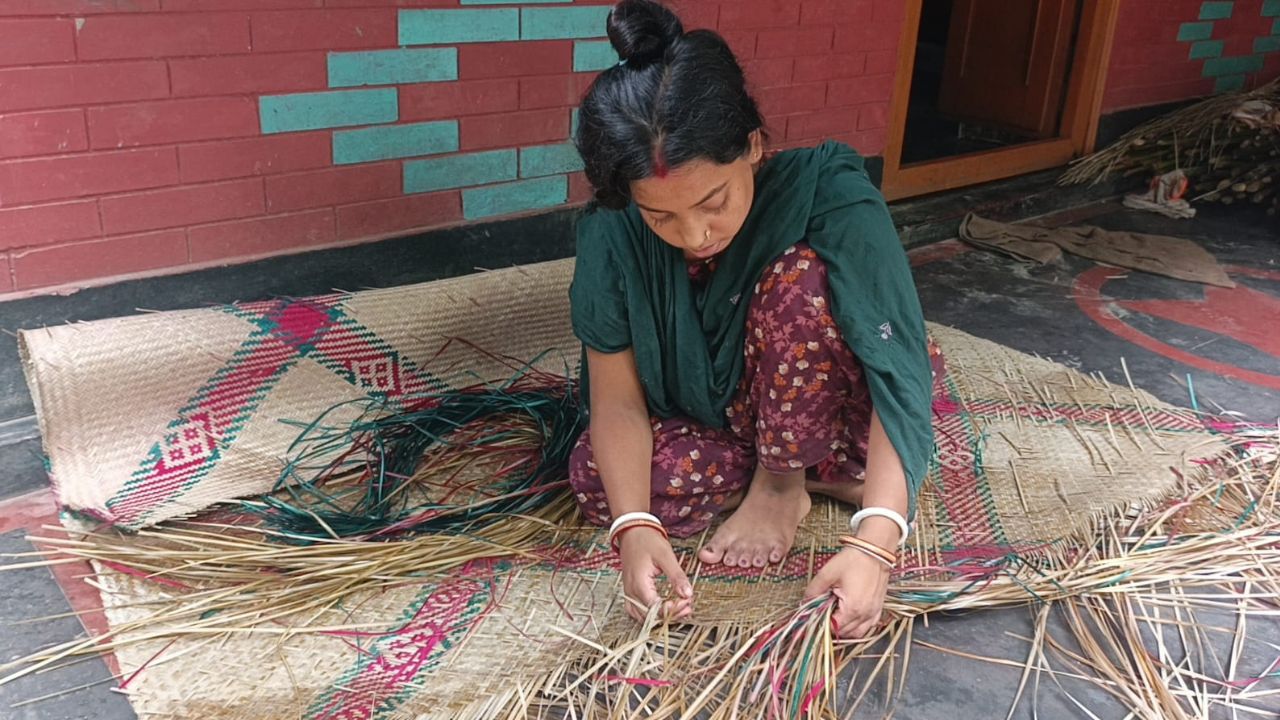



Once a household essential across rural Bengal, the traditional shital pati made from murta cane is now struggling to survive as plastic mats, jute products and carpets dominate the market.
The century-old shital pati industry in Sirajganj is facing a deepening crisis due to a shortage of raw materials, rising production costs, low wages and a lack of capital support.
A handful of families in Chuniati village under Sirajganj Sadar and Jhauler Chandpur village under Kamarkhanda still continue the craft passed down through generations. But the once-thriving cottage industry has lost much of its vibrancy, with only a few artisans now holding on to the profession.
Artisans said shital pati was once an inseparable part of rural life, especially during weddings and social events in the 1980s and 1990s. However, changing lifestyles and the availability of cheaper plastic alternatives have sharply reduced demand.
The product still sees some demand during summer as it provides a naturally cooler surface compared with synthetic alternatives. Artisans in Jhaul and Chandpur also produce prayer mats and sitting mats alongside traditional shital pati.
“I started making mats when I was a child. My father and grandfather were also involved in the craft. I am continuing the work to preserve our family tradition,” said artisan Manmohan of Jhaul Chandpur.

He said their products still have buyers in different parts of the country, but the market is far smaller than before.
Artisan Purnima of the same village said a woman can make only one mat a week and earns around Tk600 to Tk700 for the labour.
“Many people are leaving the profession as the income does not match the effort. Government support can help save this industry,” she said.




The biggest challenge for artisans is the rising price of murta cane, the key raw material for shital pati. Higher labour costs, transport expenses and limited market access have further reduced their earnings.
“It once felt impossible to arrange a wedding without shital pati. But that demand has disappeared. A single mat takes three to four days to complete, yet we do not receive fair payment,” said artisan Monon Joy of Jhaul Chandpur.
Chuniati-based trader and artisan Nandalal De said the industry is suffering from both raw material shortages and weak market demand.
“Many artisans have already changed their profession. Training, market expansion and easy loans are needed to revive the industry,” he said.
Depending on quality and size, a shital pati currently sells for Tk1,000 to Tk5,000. Mats made with improved designs and skills fetch higher prices, but artisans say they do not receive the full benefit of the increased market value.
Billu Chandra Das, general secretary of the Shital Pati Industry Association, said the industry is shrinking due to a lack of capital.
“Although the Bangladesh Rural Development Board has provided loan support, it remains inadequate compared with the actual needs of artisans. Without larger government initiatives, preserving the traditional craft will become increasingly difficult,” he said.
Kamarkhanda Upazila Rural Development Officer Md Abdur Razzaque said training programmes have been arranged to improve the quality of shital pati.
“Earlier, artisans sold mats for Tk1,000 to Tk1,500. After training, they can now produce better-quality products and sell them for Tk3,000 to Tk4,000,” he said.
He added that around Tk30 lakh was provided as incentive loans during the coronavirus period to support the artisans.
Industry stakeholders said preserving shital pati requires more than recognising its cultural value. They called for easier access to quality raw materials, low-interest loans, modern design training, fair wages and stronger domestic and international markets.
They also suggested connecting artisans with online marketplaces to attract younger buyers and create new opportunities for the next generation.
Around 120 families in Chuniati and Jhaul Chandpur villages are still carrying forward the craft despite numerous challenges. For them, each handwoven mat is not just a household product but a symbol of rural heritage and a centuries-old tradition.
The question remains whether timely support can help Sirajganj’s shital pati industry regain its lost glory or whether it will disappear under the growing dominance of plastic alternatives.