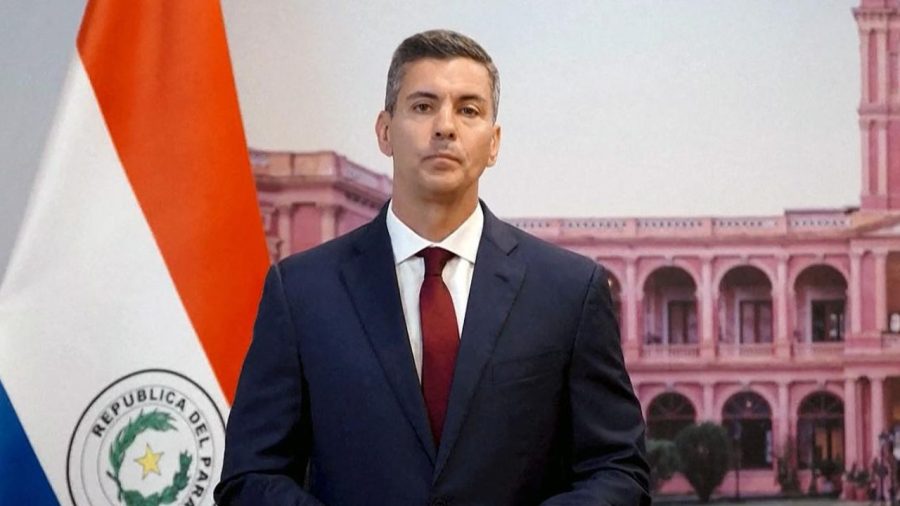



Pedro Alliana was sworn in as Paraguay’s new president on Friday after authorities placed his impeached predecessor, Santiago Peña, under house arrest, marking the latest twist in a rapidly escalating political and financial crisis linked to the collapse of digital bank ueno.
Prosecutors outside Peña’s residence in Asunción said potential charges against the former president were still being assessed but could include influence peddling. He has been ordered to appear before prosecutors on Saturday morning.
Peña was removed from office roughly an hour earlier after the Senate unanimously voted to impeach him. Lawmakers cited concerns over his past ties to ueno, a digital lender that had provided banking services to nearly half of Paraguay’s population.
Although Peña submitted his resignation on Thursday, senators opted to complete the impeachment process rather than accept it. They then moved quickly to swear in Vice President Alliana as his successor.
Following the impeachment, dozens of demonstrators gathered outside Peña’s home, prompting police to establish a security perimeter around the property.

The crisis erupted earlier this week when Paraguay’s central bank intervened in ueno, which had become one of the country’s fastest-growing financial institutions and was widely used by people who previously lacked access to formal banking services.
Founded in 2021, the bank expanded rapidly but later came under scrutiny over its lending practices and connections to influential political and business figures. Among those linked to the institution were Peña, who was a shareholder in ueno’s holding company until last year, and central bank chief Carlos Carvallo, who led the bank until 2023.



On Friday, prosecutors also issued an arrest warrant for Carvallo, who resigned earlier in the week as authorities launched emergency efforts to prevent the lender’s collapse. Eight former ueno executives have already been detained as part of the investigation.
The fallout has extended deep into Peña’s administration. His interior minister, chief of staff and two advisers have all resigned amid the growing scandal.
The impeachment case accused Peña of multiple abuses of office, including conflicts of interest, interference in regulatory oversight, the misuse of pension funds and involvement in an alleged institutional cover-up linked to the central bank.
Peña has rejected the allegations, insisting the matter is primarily a regulatory issue rather than evidence of wrongdoing. The central bank has also denied any conflict of interest, saying Carvallo recused himself from all decisions involving ueno.
Depositors demand access to savings
The banking crisis has triggered public anger, with protests spreading across central Asunción as demonstrators demand accountability for the bank’s collapse and quicker compensation for customers whose funds remain inaccessible.
Small groups of protesters gathered outside the central bank headquarters on Friday, chanting demands for the return of their savings.

Among those affected are pensioners who receive government benefits through ueno and have been unable to access their accounts. Earlier this week, Peña approved legislation aimed at accelerating payments to affected depositors, and some customers began recovering funds on Thursday.
The prospect of a prolonged political transition has also raised concerns among investors, particularly in neighbouring Brazil, Paraguay’s largest trading partner. Authorities have sought to calm markets by guaranteeing most deposits and working to contain risks to the broader financial system.
A Brazilian government source told Reuters that Brasília’s immediate priority was to prevent social unrest in Paraguay and ensure the banking crisis is resolved without triggering wider instability.
Analysts warned that public anger could intensify if Peña’s removal is perceived as allowing him to avoid accountability or if compensation payments to depositors and pensioners are delayed.