






For years, my morning ritual has been a battle of endurance. Like thousands of other working women in Dhaka, my day begins not with a peaceful cup of tea, but with the daunting task of “boarding.” In the sweltering heat of a Dhaka morning, standing at the edge of the curb in Mirpur, the sight of a crowded bus is enough to trigger a familiar anxiety.
It is a world of sharp elbows, “accidental” shoves, and the constant, wearying need to shrink oneself into the smallest possible space to avoid unwanted contact. But today, the city offered us something we have long fought for: a sanctuary.

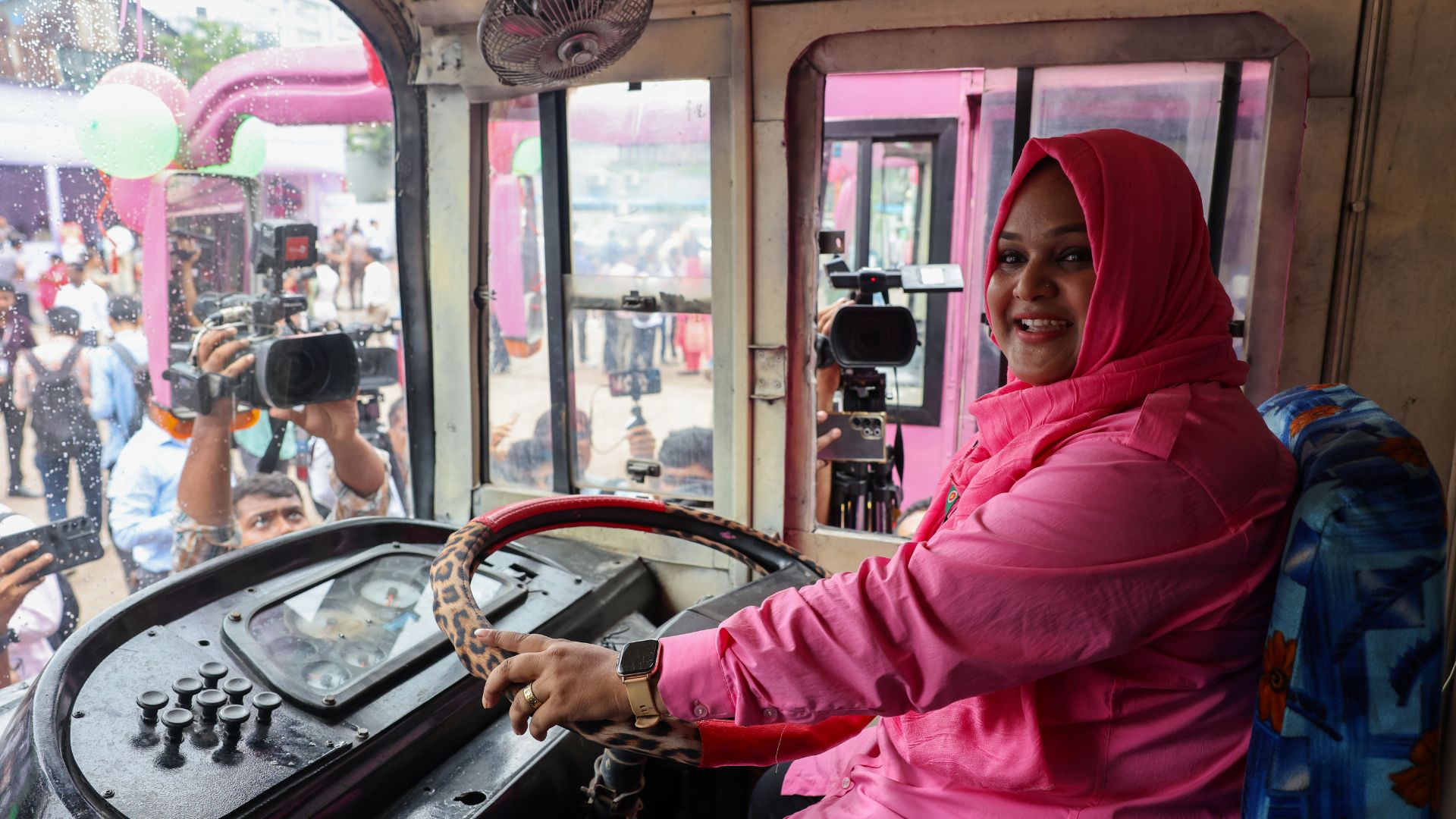
The launch of the “Pink Bus” service marks more than just a new coat of paint on the state-run transport fleet; it feels like a reclamation of our right to the city. As I watched Road Transport and Bridges Minister Shaikh Rabiul Alam inaugurate the service, I couldn’t help but feel a surge of cautious optimism. For the first time, the person behind the wheel and the conductor collecting the fare will be women, just like us.
The struggle of the female commuter in Bangladesh is often invisible to those who do not live it. It is the calculation of whether to wait for the next bus because the current one is too full of men, or the fear of being the last woman left on a night bus. The “Pink Bus” initiative, introduced as part of the government’s election manifesto, aims to dismantle these fears by providing a safer, more convenient, and comfortable environment.

Operating on ten key routes in Dhaka and adjoining areas, these buses connect the lifeblood of our professional world. Whether it is the bus running from Natun Bazar (Coca-Cola) to Gulistan via Badda and Rampura, or the Mirpur-10 to Motijheel service, the routes cover the very paths we tread every day to build our careers. For those of us working in the commercial heart of the city, the Mohammadpur to Motijheel route – passing through Shankar, Dhanmondi, and Shahbagh – will be a lifeline.
While the trial began on Tuesday afternoon, the regular service starting tomorrow isn’t just a gift for Dhaka. The initiative acknowledges that women’s safety is a national priority. Two buses each are set to begin operations in Bogura and Chattogram. In Bogura, the Sherpur-Matidali route will serve students and professionals alike, while the Kalurghat-Patenga route in Chattogram will offer a much-needed reprieve for women in the port city.
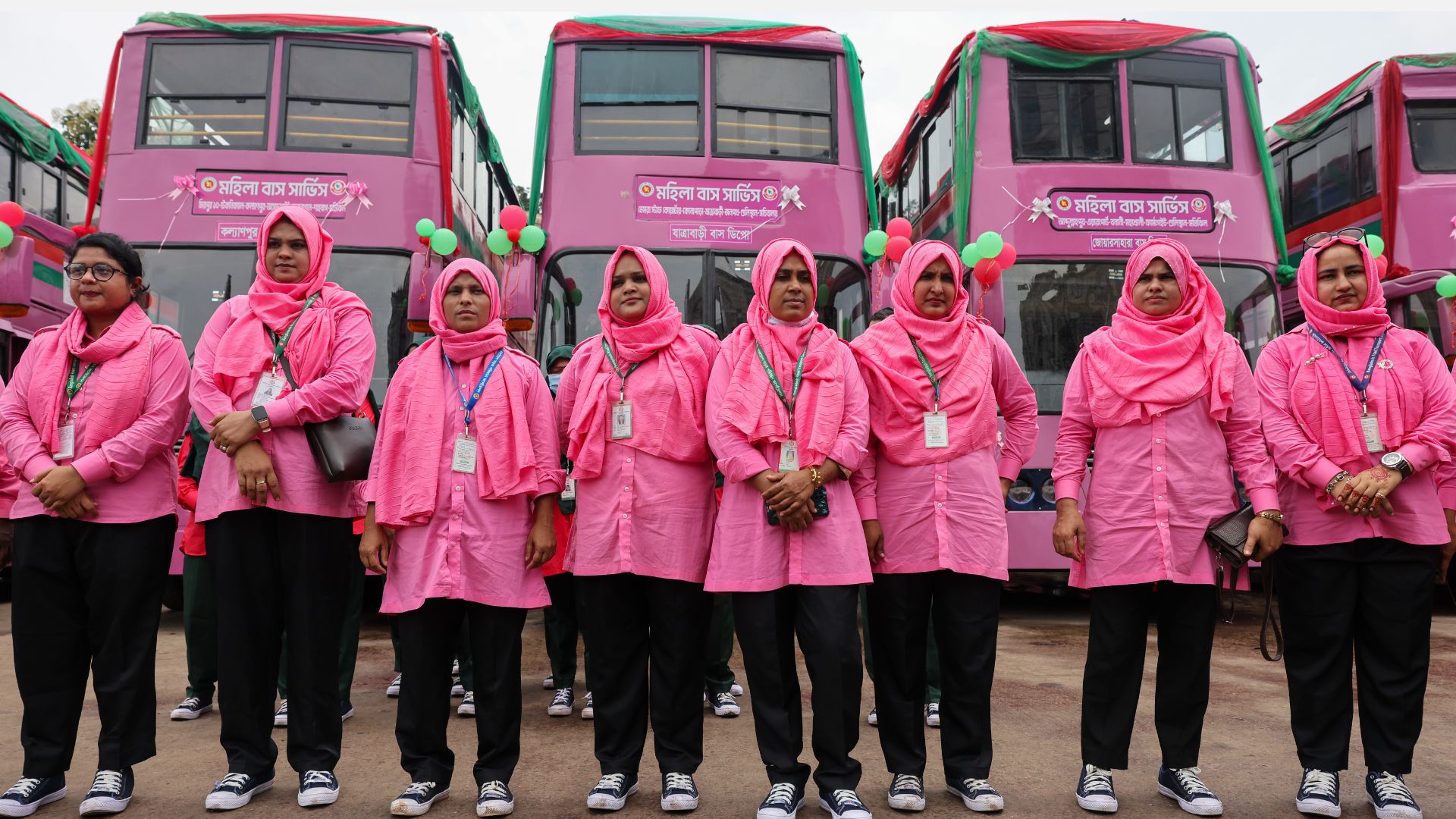
The pictures of the vibrant pink buses felt like a promise. However, as any working woman in this city knows, 10 buses for a population of millions is a drop in the ocean. The BRTC has signaled that the number of buses will increase based on passenger demand, and we will certainly be demanding it.
For now, I look forward to my commute tomorrow. I look forward to sitting in a seat where I don’t have to keep my bag as a shield in my lap. I look forward to a journey where the only thing I have to focus on is the workday ahead, rather than the person standing too close behind me. In a city that often feels designed to keep us out, these pink buses are a sign that we finally have a seat at the table – or at the very least, a safe seat on the way to it.


