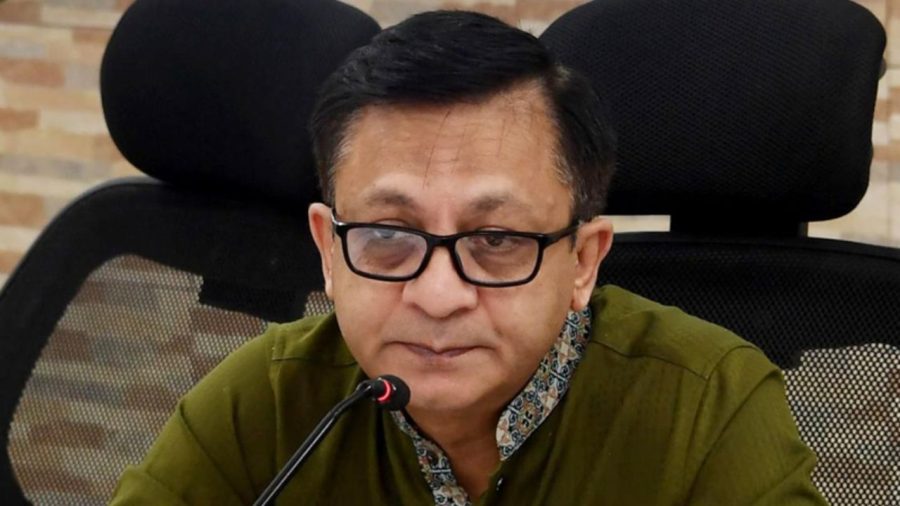



Only five out of 55 state-owned industrial enterprises under the Ministry of Industries are currently in a profitable condition, Industries Minister Khandakar Abdul Muktadir informed the National Parliament on Thursday.
The minister shared this information while responding to a query from Member of Parliament Md Moktar Ali (Jessore-6) during the question-and-answer session on the fourth day of parliament’s fourth session.
Outlining plans for enterprises under the Bangladesh Steel and Engineering Corporation (BSEC), Muktadir said that arrangements have been made to procure produced goods through government departments and agencies via the Direct Procurement Method (DPM), market electric motorcycles and scooters, and operate factories under joint ventures with foreign institutional investments.
In addition, initiatives have been taken to set up a 600 kW solar power plant at National Tubes Limited and establish a new production line for XLPE cable production at Eastern Cables Limited.

Addressing the status of the Bangladesh Sugar and Food Industries Corporation (BSFIC), the minister outlined steps to increase the productivity of loss-making and closed units by improving financial management, cost control, regular budgeting, internal and external audits, and conducting procurement through e-GP.
Plans are also underway to modernise sugar mills through phased implementation of BMR (Balancing, Modernisation and Rehabilitation) programmes, digital sugarcane purchasing, automated technology, and expanding sugarcane crushing capacity.


Furthermore, initiatives have been undertaken for sugar mill-based distilleries, organic fertiliser production, and power generation.
Muktadir also presented proposals to utilise unused land owned by state-owned enterprises for establishing new industries.
Under these plans, a pre-feasibility study has been completed to build joint-venture factories for premium float glass, solar glass, and solar panels on 197 acres of unused land at Ashuganj Fertilizer and Chemical Company Limited (AFCCL).
On the same company’s land, there are also plans to build a factory with an annual production capacity of 800,000 metric tonnes of MOP fertiliser and a factory with an annual capacity of 15,000 metric tonnes of pesticides and bio-pesticides.
At the site of the closed Osmania Glass Sheet Factory Limited, a proposal has been put forward to set up an energy-efficient and environment-friendly glass plant or container glass plant, for which a pre-feasibility study has already been completed.

Meanwhile, a feasibility study is currently underway to establish a new TSP fertiliser factory with an annual production capacity of 400,000 metric tonnes on 15 acres of unused land at TSP Complex Limited.
For Ghorashal Palash Fertilizer PLC, proposals include establishing a Urea Formaldehyde-85 factory on 10 acres of unused land and an environment-friendly WPP bag factory on five acres of land.
The minister informed parliament that these measures are aimed at reducing losses at state-owned enterprises, boosting production and employment, and ensuring the economic utilisation of unused assets.