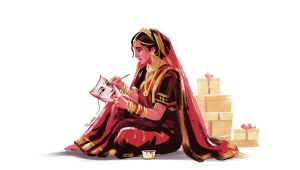




Growing up as a daughter in Bangladesh often means learning the rules before understanding them. Be respectful, study hard, help at home, dress appropriately and never give people a reason to question your upbringing. As the years pass, expectations grow. A daughter must become educated but remain modest, independent but obedient, ambitious but willing to make sacrifices for her family.
For many young women, the challenge is not simply growing up. It is growing up while trying to become the person they want to be without disappointing the people they love. Although attitudes towards women’s education and careers have changed in many Bangladeshi families, traditional expectations continue to influence how daughters behave, make decisions and imagine their futures. Sometimes, the pressure is obvious. At other times, it appears in everyday questions and seemingly harmless instructions that gradually shape a girl’s understanding of what is expected of her.
A nationally representative study published in Frontiers in Public Health in 2023 examined gender-role attitudes among unmarried adolescents aged 15–19 in Bangladesh. Based on survey data from 7,800 girls and 5,523 boys, the study found differences in their attitudes towards gender equality, including education, household responsibilities and women’s participation in employment. The findings highlight how gender expectations can take shape during adolescence.
Learning to Meet Expectations
For many daughters, academic success becomes more than a personal goal. It can feel like a way to repay their parents for years of sacrifice. A disappointing result may bring frustration and guilt, particularly when a girl’s achievements are closely tied to her family’s hopes for her future.
Fatema is a private university student; her experience reflects the pressure that can accompany these expectations. She describes the difficulty of trying to meet family expectations while accepting that nobody can succeed at everything all the time.
“There is an expectation that you should do well in your studies, behave properly and make the right decisions,” Fatema says. “Sometimes, I feel that making a mistake is not really an option. I wish my family understood that I can work hard and still have difficult days.”
For some daughters, the challenge becomes even greater when academic responsibilities must be balanced with household work. They may be encouraged to pursue higher education while still being expected to help with cooking, cleaning or caring for younger family members. During demanding periods of study, these responsibilities can leave them struggling to divide their time.

Two Children, Two Different Rules
The difference between raising sons and daughters can become particularly visible during adolescence. A son may be allowed to return home late, meet friends without extensive explanations or make independent decisions, while a daughter may face questions about her safety, clothing and company.
Farhana is a 20 year old student she believes that these differences can influence how young women understand freedom and independence.
“Sometimes, a boy’s independence is seen as normal, while a girl has to explain where she is going and when she will return,” she says. “I understand that parents worry about their daughters, but I think trust should also be part of that relationship.”
Parents may impose restrictions because they are concerned about their daughters’ safety. However, when protection means fewer opportunities to make independent decisions, girls can feel that they must constantly prove they are responsible enough to be trusted.


The familiar question, “What will people say?” can add another layer of pressure. A daughter’s choices may be judged not only by her family but also by relatives and neighbours, making personal decisions feel like public matters.
The Pressure to Stay Silent
Being a good daughter is often associated with patience, emotional restraint and an ability to adjust. Girls may learn to avoid arguments, hide disappointment and remain agreeable even when they feel misunderstood.
Saima currently studying at a public university, believes that expressing disagreement should not be confused with a lack of respect.
“Sometimes I stay quiet because I do not want a small disagreement to become a bigger problem,” she says. “You can love your parents and still disagree with them. Daughters should be able to explain what they feel without being considered disrespectful or ungrateful.”
Family relationships are rarely simple. Parents may have their own fears about social acceptance, financial stability and their children’s safety. Their expectations can come from experience and a genuine desire to protect their children. Yet even well-intentioned advice can become overwhelming when daughters feel that their own perspectives are not being heard.
When expressing a different opinion is repeatedly treated as disobedience, silence can become easier than conversation.
When Marriage Becomes a Deadline
For many young Bangladeshi women, expectations about marriage begin long before they feel ready to make that decision. Questions about when they will marry, whom they will choose and whether their careers will fit around family responsibilities can emerge while they are still completing their education.
A 25-year-old undergrad student Asma feels that the pressure often comes from the assumption that every woman must follow a particular timeline.
“There is often an idea that a woman should complete her education, find a job and then get married within a certain period,” she says. “Everyone’s life is different, though. I want marriage to be a decision I make when I feel ready, rather than something I do because people think it is time.”

Marriage is not necessarily the problem; the pressure comes when it becomes the principal measure of a woman’s success or when her ambitions are considered acceptable only if they fit a predetermined family role.
A woman’s future can include marriage, a career, both or a different path altogether. The important question is whether she has the freedom to make that decision for herself.
Redefining the Perfect Daughter
Despite these expectations, many young women are finding ways to communicate their needs, challenge unequal rules and establish their own definitions of success. They are not necessarily rejecting their families or traditions. Instead, they are asking for relationships in which affection and respect do not require them to abandon their individuality.
Sadika currently studying in Australia believes that understanding between parents and daughters begins with listening.
“I wish people understood that daughters do not have to agree with everything to love their families,” she says. “We can respect our parents and still have our own opinions, dreams and boundaries. We do not need to be perfect all the time. Sometimes, we just need our families to listen to us.”
Growing up as a daughter in Bangladesh does not have to mean choosing between family and personal freedom. Respect can coexist with independence, household responsibilities can be shared, and ambition does not have to come at the cost of belonging.
Perhaps the definition of a good daughter needs to change. She should not be valued only because she achieves excellent grades, follows every instruction, protects the family’s reputation or fulfils society’s expectations of adulthood.
She should also be allowed to make mistakes, change her mind, express disagreement and pursue a future that reflects her own aspirations.
After all, daughters do not need to be perfect to deserve understanding. They need the space to grow, the freedom to make choices and the reassurance that being themselves will never make them any less worthy of love.