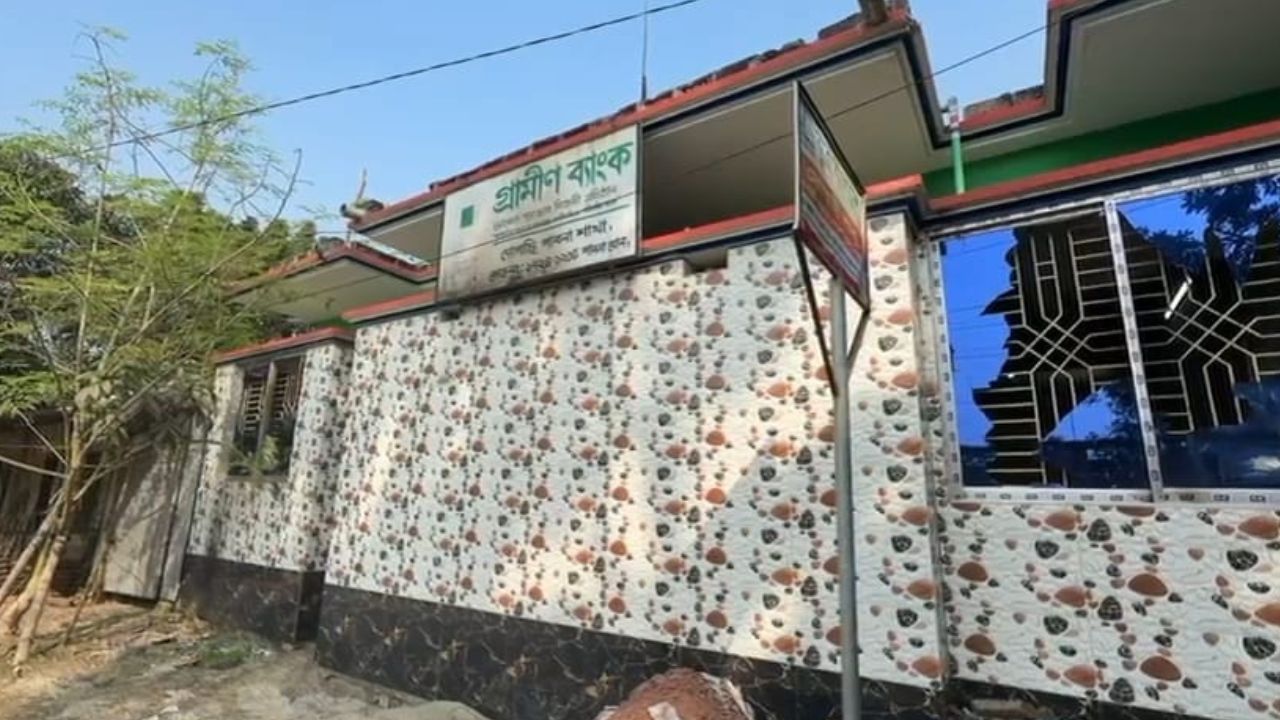
A coordinated wave of attacks, arson, and attempted firebombings has targeted 41 branches and offices of Grameen Bank across Bangladesh in just eight days, sparking grave concern over staff safety and the potential fallout for the rural economy.
Occurring between 10 and 18 November across numerous districts, the assaults have been blamed on alleged supporters of the banned Awami League. Assailants used petrol bombs and other incendiary materials to torch premises, destroying doors, signboards, furniture, and vital records.
In several locations, intruders forced entry into offices to loot equipment and supplies.
The escalating violence threatens to disrupt the institution’s daily operations and essential microcredit services for millions of rural residents.


Speaking to TIMES, Grameen Bank Chairman Dr Abdul Hannan Chowdhury warned that harming an institution built on the participation and ownership of ordinary women borrowers extends far beyond institutional loss, risking wider damage to the national economy.
He urged the government to take immediate, decisive action to restore order and secure the bank’s nationwide network, noting that management has already formally requested protection from relevant state departments.




“Grameen Bank belongs to the people; it is not owned by any individual,” Chowdhury said. “There should be no reason for anyone to hold a grudge against this institution. The attackers appear to believe that damaging Grameen Bank will hurt the country’s economy, and targeting the national economy is precisely their objective.”
Meanwhile, the United Nations has urged national authorities to conduct a thorough investigation into the incidents, emphasising the necessity of accountability for those responsible. Beyond physical destruction, observers warn that prolonged disruption to loan disbursements, repayments, and deposit collections could severely undermine financial inclusion among poor and marginalised women who rely on the bank.
According to a report compiled by Grameen Bank’s Internal Audit and Compliance Division on Wednesday, 18 November, the 41 incidents began on 10 November with attacks on branches in Gazir Khamar (Sherpur), Baro Bheola (Cox’s Bazar), Patgati (Gopalganj), Belaichandi (Dinajpur), Atapur (Joypurhat), Koraibunia (Patuakhali), Hajirhat (Noakhali), and Barkhain (Chattogram).
The violence continued on 11 November at branches in Dogachi (Pabna), Sujalpur and Ghoraghat (Dinajpur), and Palashbari (Nilphamari), followed by further assaults on 14 and 15 November across Netrokona, Kishoreganj, Gazipur, and Sylhet.

Among the most severe incidents occurred at the Ulpur branch in Gopalganj, where attackers torched the premises, smashed CCTV cameras and monitors, and stole a hard drive. In the same district, a second assault on the Patgati branch on 15 November destroyed nearly everything inside, with assailants surrounding the building to bar staff from entering.

The campaign widened significantly on 18 November, hitting locations across Patuakhali, Gopalganj, Tangail, Pabna, Rajshahi, Cox’s Bazar, Pirojpur, Habiganj, Rangpur, Faridpur, Gazipur, Barishal, and Naogaon. At Faridpur’s Kashiani and Ratil branches, intruders broke locks, dragged collection sheets and furniture outside, and doused them in petrol before setting them ablaze, destroying crucial records at Kashiani. At the Sajail branch, assailants set fire to paperwork on a desk and loaded chairs and tables onto a van.
Additional damage, including burnt gates, electrical wiring, doors, and signboards, was recorded at the Lauhati and Basail branches in Tangail, area offices in Rajshahi and Satkania, and the Kadamtala branch in Pirojpur, though several attempted arson attacks failed to ignite.
As threats persist across multiple districts, safeguarding Grameen Bank’s personnel, clients, and infrastructure, and keeping vital rural financial lifelines open, now hinges on the speed and resolve of the authorities’ response.