
Final election results published on Friday have left New Zealand in a political deadlock, with neither the incumbent right-wing coalition nor the left-wing opposition securing enough seats to form a majority government.
The final tally following the counting of nearly 485,000 special votes – including overseas ballots – cost National party of New Zealand’s prime minister, Christopher Luxon, two seats, leaving the right-wing bloc with 65 seats in the 130-seat parliament, one short of the 66 required to govern, reports AP.
Out of a total of 2.8 million votes cast in the 7 November election, the left-wing opposition bloc led by Chris Hipkins, the Labour party leader, won 58 seats.
The balance of power now rests with the unaligned centrist Opportunity party, which secured seven seats and emerged as the decider in determining the country’s next administration.
The outcome leaves Christopher Luxon as the only leader with a viable route to power, though he faces complex four-party negotiations.
To return the centre-right National party for a second term in office, Luxon requires backing from all three minor parties: the libertarian Act, which won 13 seats, the populist New Zealand First, which won 12 seats, and Opportunity.
Opportunity’s seven seats are insufficient to propel a left-wing government to office, a reality conceded by Chris Hipkins, the Labour party leader.

Luxon, who had vehemently ruled out working with Opportunity prior to the vote, reversed his stance on Friday and announced that formal talks would begin with all three potential partners.
He warned that discussions would be challenging and could take time, adding that getting the agreement right mattered far more than completing it quickly.
Policy friction, ministerial vetoes
Negotiations to form New Zealand’s first four-party government could prove arduous due to sharp ideological divides.
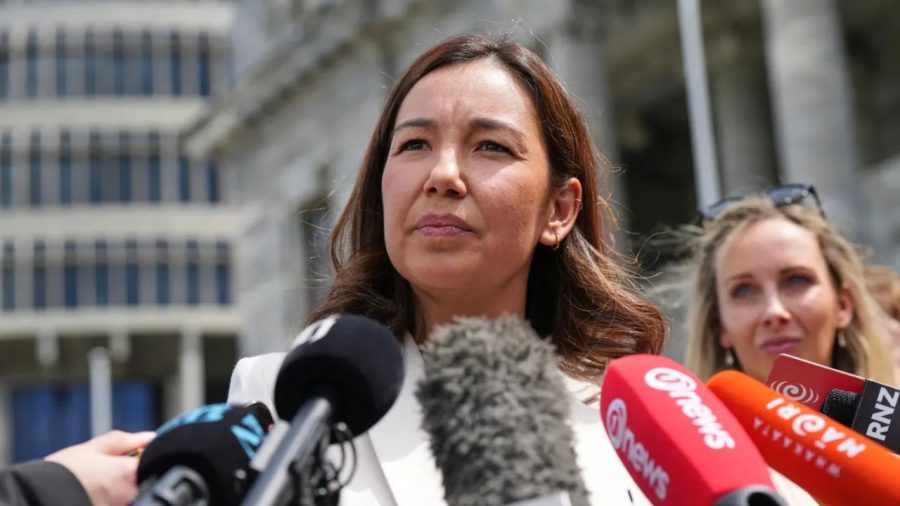
Led by 38-year-old Auckland businesswoman and political newcomer Qiulae Wong, Opportunity achieved a remarkable rise after failing to enter parliament in three previous attempts.



Wong emphasised that her party’s five non-negotiable “bottom-line” policies include stronger action on climate change, ending bottom-trawling fisheries, tackling the supermarket duopoly, capping political donations, and establishing a 10-year cross-party health plan.
Several of these pledges directly conflict with the stances of Act and New Zealand First, which hold opposing views on environmental policy and political donation limits.
Wong explained that Opportunity would consider either a formal coalition agreement or a confidence and supply arrangement.
Further complicating talks, Wong confirmed that Opportunity would not enter any administration in which Winston Peters, leader of New Zealand First, serves as foreign minister.


Wong criticised remarks made by Peters in parliament regarding Asian people, maintaining that his past behaviour made him unsuitable to represent the nation internationally. Peters had served as foreign minister until the election.
Luxon did not disclose how he intends to reconcile these conflicting demands, but warned that the nation might face an extended wait before a government is established.
With Christmas four weeks away, negotiations could stretch into 2027, exceeding the five weeks required to finalise the 2023 coalition.
Recount options, leadership uncertainty
If coalition negotiations break down, New Zealand could face an unprecedented fresh election.

Lara Greaves, a political scientist at Victoria University of Wellington, noted that the probability of returning to the polls is at its highest level in the country’s history due to the complexity of the four-party talks.
However, National could potentially regain a majority without Opportunity if it applies for a recount in three electorate seats that flipped to the opposition after special votes were processed.
Labour won Wairarapa from National by 81 votes and Hamilton East by 173 votes, while the Greens took Wellington Bays from Labour by 1,610 votes.
Applications for a recount must be submitted by 3 December, with results taking five days; securing just one additional seat would grant National a slim 66-seat majority.
The final count also highlighted voter dissatisfaction with the major political parties, both of which received under 30 per cent of the preferred party vote amidst concerns over living costs.
Labour secured 29.88 per cent of the vote and 36 seats, while National won 28.35 per cent and 40 seats, obtaining more parliamentary seats due to victories in local electorate races.
Among other opposition groups, the Greens won 17 seats and Te Pāti Māori secured five. Chris Hipkins, the Labour leader, expressed pride in gaining the largest share of the party vote but acknowledged disappointment at failing to secure a change of government.
Hipkins, who previously led Labour to defeat in 2023, said a decision regarding his political leadership would be made after a government is formed.