
National University (NU) Vice-Chancellor Professor ASM Amanullah has announced that the institution has undertaken extensive plans to bring about a “paradigm shift” in its educational framework.
The initiative aims to equip the youth of Bangladesh with future-ready skills to meet the challenges of Fourth Industrial Revolution (4IR) and the rapidly evolving digital economy.
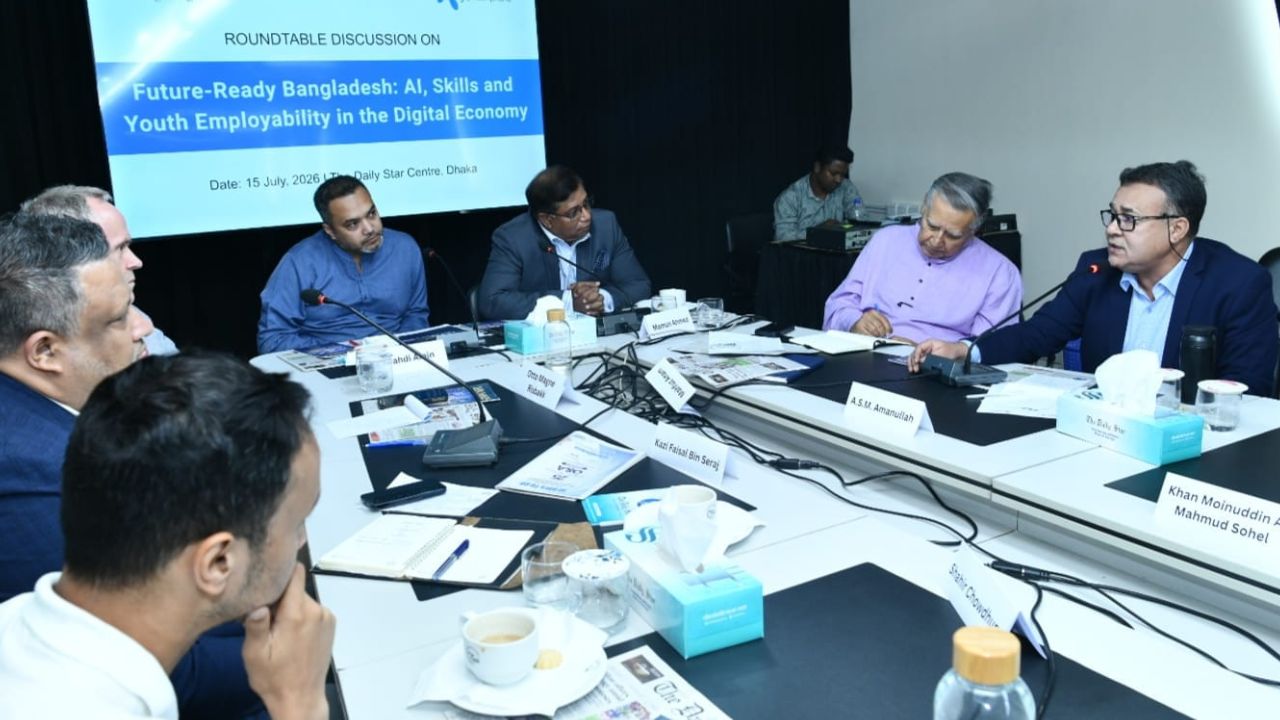
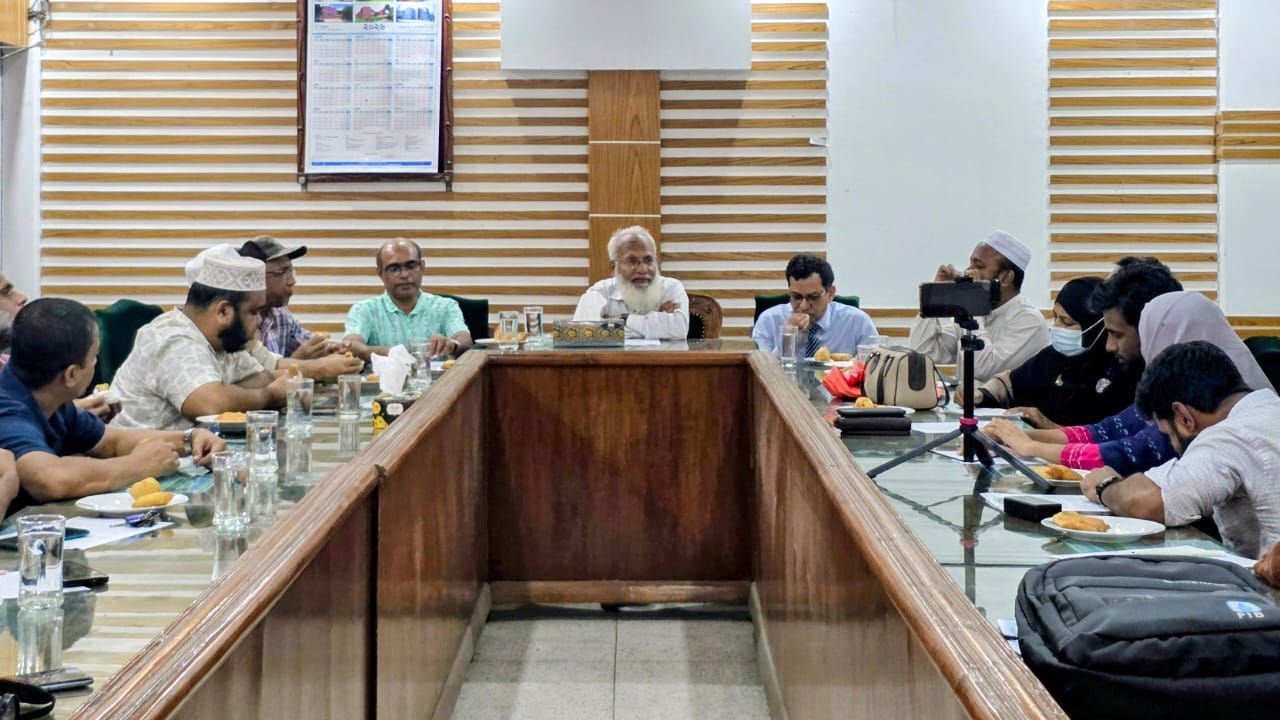
The vice-chancellor made these remarks as an honoured guest at a roundtable discussion titled “Future-Ready Bangladesh: AI, Skills and Youth Employability in the Digital Economy,” organised by The Daily Star and Grameenphone in the capital on Wednesday.
Amanullah highlighted the university’s significant reach, noting that NU manages 70 per cent of higher education in Bangladesh. With approximately 4 million students and 2,500 affiliated colleges, it stands as the second-largest university in the world.

“The future of this vast number of students cannot be confined to certificates alone,” the vice-chancellor said.
“Current and future markets are dependent on Artificial Intelligence (AI), data analytics, and digital skills. Therefore, we are bringing a ‘paradigm shift’ to our curriculum so that every student can enter the workforce proficient in a practical or technical skill before completing their graduation.”
Addressing the shortage of specialised ICT teachers, Amanullah explained that the university is providing ICT training to teachers across various disciplines to develop them as master trainers.



He acknowledged that despite numerous limitations, the university is pushing students forward. The vice-chancellor also noted that the university’s academic system has long suffered from session jams and various disruptions.
He further observed that the politicisation of higher education has made it difficult to break these cycles, asserting that “state policy support is essential to overcome this crisis”.
The vice-chancellor described the current syllabus as being so far behind that it struggles to meet the challenges of even the first or second industrial revolutions. “Yet, we are living in the era of 4IR and discussing AI,” he said.
To address this, the university has modernised its activities, making English and ICT compulsory for students, and taking steps to introduce a third language. In alignment with current government policies, work is fast progressing to integrate IT, coding, AI literacy, and soft skills into the mainstream curriculum.
NU is launching “Industry-Academia Linkage” and various apprenticeship programmes in collaboration with world-renowned universities and institutions in the USA, UK, and China. To increase remittances and support dropout students, micro-learning and micro-credential courses are also being introduced.
“Our youth are extremely talented and technology-friendly,” Amanullah remarked. “If we can provide them with the right skills at the right time, I am hopeful they will lead in the global tech job market”.
The event commenced with a welcome address by Mahfuz Anam, editor of The Daily Star. Other key participants included Mahdi Amin, adviser on Strategic Partnerships and Labour and Employment, and Professor Mamun Ahmed, chairman of the University Grants Commission (UGC), who attended as a special guest.
Expert speakers at the session included Otto Magne Risbakk, chief financial officer (CFO) of Grameenphone; Munir Hasan, president of Bangladesh Open Source Network; Kazi Faisal Bin Seraj, country representative of The Asia Foundation; Maruf Azam, project manager at UNDP; Shahir Chowdhury, CEO of Shikho; and Farhana Hossain Shammi, Aman Ullah Aman, and Maria Nawar from Grameenphone Academy.
Thematic presentations were delivered by Zulkarnain Jahangir, assistant professor at North South University, and Farhana Islam, head of Environment, Social and Governance at Grameenphone.