Day after day, journalists find themselves barred from entering the courtrooms of the Supreme Court, yet the chief justice displays no shortage of eagerness when it comes to seeing his preferred news published across media outlets.
This stark contradiction between shutting out reporters and simultaneously lobbying for positive coverage from the very same court raises profound questions about transparency, accountability, and the fundamental concept of open justice in the judiciary.
A ten-month ban breaking decades of tradition
It has been 10 months since Chief Justice Zubayer Rahman Chowdhury unilaterally imposed an administrative decision prohibiting journalists from entering Supreme Court courtrooms.
Such a self-centered act in a country that claims to be democratic has sparked persistent resistance, yet attempts by the registrar general, the attorney general, and the president of the Supreme Court Bar Association to lift the restriction have all failed.
Even as lawyers rallied under constitutional arguments and journalists held protests standing under the scorching sun on the court premises, the decision remained firmly in force.
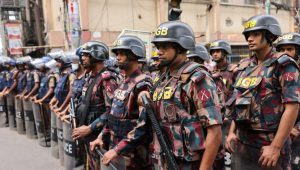
The restriction broke a two-decade tradition of news gathering at the apex court, which began on 7 January when security personnel turned reporters away during an Appeal Division hearing.

Since that day, journalists have been unable to observe Appeal Division proceedings directly, restricting their ability to translate complex constitutional matters, human rights issues, and public interest rulings into plain language for the general public.
Because the Appeal Division acts as the court of final disposal for cases coming from the High Court, denying direct access prevents reporters from delivering continuous and complete coverage of the judicial process.
Eagerness for publicity despite closed doors
Despite closing the courtroom doors, the chief justice remains eager for favourable media exposure, creating a troubling dichotomy.




According to the general secretary of the Law Reporters’ Forum, the chief justice regularly issues press releases and lobbies through various channels to secure preferred coverage, even extending lobbying efforts to Dhaka journalists for events held outside the capital while ignoring local reporters.
This eagerness was starkly illustrated on 24 November during the morning appeal hearing of the Narayanganj seven-murder case, when journalists were excluded from the courtroom and Supreme Court administration released an evening press release instead.
When TIMES of Bangladesh asked a high-ranking Supreme Court administration official whether the chief justice desired coverage of the release, the official replied, “What do you mean ‘desires’? He wants it desperately!”
Meanwhile, when asked about the latest stance on reporter access, the public relations officer of the Supreme Court admitted that he had no updated information and that the original ban remained unchanged.


Relying on selected press releases issued hours after hearings conclude risks reducing independent journalism to a mere public relations exercise.
As legal journalism relies on observing proceedings, scrutinising arguments, and verifying judicial observations, receiving pre-packaged information fails to reflect the reality of courtroom proceedings.
Misinformation risks and mounting opposition
The perils of excluding journalists were recently highlighted when an alarming comment falsely attributed to the chief justice circulated in the media.
The resulting confusion forced separate clarifications from the Supreme Court administration, the attorney general, and the chief prosecutor of the International Crimes Tribunal to confirm that he never uttered such remarks.

Had reporters been present in the courtroom to gather direct facts, such misleading reports could have been prevented, proving that closing courtroom doors breeds misinformation rather than stopping it.
Opposition to the ban extends well beyond the press corps itself. At a sit-in programme on 12 August involving more than a hundred journalists, Nurul Kabir, president of the Editors’ Council, expressed deep grief over the situation and cited the constitutional obligation for open court trials. He observed that it is sad, unfortunate, and shameful when the highest level of the judiciary undermines constitutional rights instead of protecting them.
Similarly, AFM Abdur Rahman, retired Supreme Court judge, questioned on social media whether proceedings conducted behind closed doors without non-lawyers present can truly be deemed open court trials.
Erosion of open justice
The concept of an open court relies on public visibility, transparency, and media scrutiny to maintain judicial accountability. Judicial dignity is not built upon media praise or flattering reports, but on transparency, justice, and the capacity to accept constructive criticism.
Closing courtroom doors while expecting positive publicity represents a fundamental self-contradiction and dual standard that erodes public trust.
It is hoped that the chief justice will move away from this contradiction and reconsider restoring journalists’ rightful access to the courtrooms.