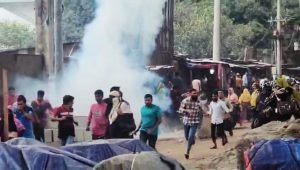
On 17 November, activists of the Awami League, whose political activities remain banned, allegedly attacked, looted, and set fire to the Tungipara residence of Gopalganj-3 MP SM Zilany while he was in Dhaka attending a parliamentary session, leaving his family members and political supporters caught in the violence.
According to Zilany, the banned party spread rumours and mobilised cadres from across the country to orchestrate widespread unrest throughout the district. In an exclusive interview with TIMES Senior Reporter M Shiful Islam, SM Zilany recounts the harrowing night his relatives spent hiding in neck-deep river water, reflects on the irreplaceable family memories lost to the flames, and weighs in on the administration’s response, alleged extortion, and the future of the Awami League.
Your family members and political supporters faced a devastating situation following the attack and arson at your residence. Could you describe what happened and explain their current condition?
I entered politics to serve the people. I first contested an election as a BNP candidate in 2008 and ran again in 2018 while imprisoned, though I stayed out of the 2014 and 2024 polls in line with my party’s boycott. Following the 2024 mass uprising, the people of my constituency elected me to parliament on 12 February 2026, and I have been working to address their grievances ever since.
It is difficult to fathom how such a crisis erupted so suddenly. Terrorist acts were orchestrated in Tungipara through the spread of false information and rumours. My residence was set ablaze, affecting my family, relatives, and political activists alike. Yet beyond my personal losses, the greater tragedy is the lasting damage inflicted upon the people of Gopalganj. These events have once again stoked resentment against residents of this district across the country; now, whenever we approach authorities for development projects, we are met with suspicion.
My family members were at home when the attack took place, while I was in Dhaka attending a parliamentary session. As one group set fire to the ground floor, another looted the first floor. When the flames spread, the looters became trapped, and three or four of them were injured while cutting through the balcony grilles to escape.

My family spent the entire night outdoors in the courtyard. Many of my relatives stood in neck-deep river water, hiding behind water hyacinths until dawn—telling me they had not witnessed such terror even during the Liberation War. I can rebuild my house, but it held irreplaceable memories of my father and my uncle, SM Nurul Haque Nuru Mia. The bed my father slept in, the sofa where he sat and conversed—those are gone forever. Nothing can compensate for that loss.
You informed the prime minister and the home minister about the incident. What was their response?
I briefed them on every detail of what transpired, and they advised me to remain patient. The prime minister reminded me of the persecution his own family had endured in the past—how his mother was forced out of the home where she had lived for 40 years with nothing but the clothes on her back, and how their residence was destroyed. Listening to him recount those experiences helped me set aside some of my own grief.

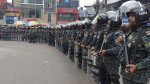

I believe the state has adopted the right strategy in handling this crisis. The attackers wanted the administration to respond with lethal force, resulting in casualties that could then be exploited to discredit the government internationally. The state did not fall into that trap, and effective measures must now be taken gradually.
What steps are you taking to ensure the safety of those affected and help them return to normal life?
I am doing everything within my means to support those whose homes were attacked and who were forced to flee their neighbourhoods following the persecution, and I will continue to stand by them. My party and I are working tirelessly to help them resume their normal lives. While I hope stability returns swiftly, the psychological scars left on people’s minds will inevitably linger.
What are your expectations regarding bringing the perpetrators to justice and ensuring the safety of ordinary people?
Not everyone in Gopalganj was complicit in these atrocities; a terrorist group executed them in a premeditated manner. I urge the administration to examine video footage and other evidence to identify the real culprits and bring them to justice, ensuring that no innocent citizen is subjected to harassment. Those affected will consult legal counsel before lodging formal complaints, and I demand exemplary punishment for the perpetrators under existing laws.


How have your party leaders and activists reacted to the attack on your residence?
Naturally, there is considerable anger and resentment. I believe a militant group was mobilised in Gopalganj from across the country to corner the democratic government. They initially tried to provoke a clash with law enforcement before storming the police station and my residence, hoping to trigger a state crackdown that could be weaponised for anti-government propaganda.
Constituents are currently visiting my office in Dhaka, and I remain in constant contact with people on the ground via telephone, WhatsApp, and Zoom to offer reassurance. Our party leaders and activists are stationed in Kotalipara, and once calm is fully restored, we will visit the area with the prime minister’s permission.
There are allegations of politically motivated cases, extortion, and harassment involving BNP leaders and activists in Gopalganj. What is your response?
Show me a single instance of the BNP filing a politically motivated case since the election. Legal action was taken following an attack on the army after 5 August 2024, and after an assault on me on 23 September that resulted in a fatality and the vandalism of vehicles. Those cases were strictly about seeking justice for criminal offences. In fact, at the request of local elders, I withdrew two cases filed over the vandalism of my front gate and the burning of banners and festoons.

Meanwhile, there are allegations that Awami League Organising Secretary Masud Gazi turned the filing of cases into a lucrative enterprise by leveraging his ties as the brother-in-law of former inspector general of police Baharul, even exploiting internal rifts within his own party after its fall. I am not aware of any BNP leader or activist profiting from such practices.
What is your position on permanently banning the Awami League?
In principle, I do not favour banning any democratic political party. However, the time has come to ask whether the Awami League genuinely qualifies as a democratic party. Over the past 17 years—through enforced disappearances, extrajudicial killings, and state-sponsored terror—it has demonstrated that its conduct is fundamentally undemocratic, and its recent actions show no signs of legitimate political behaviour either. If the state takes decisive action against the party on those grounds, it cannot be called unjust.
Do you fear renewed unrest surrounding the Awami League’s programmes next week?
No political programme can succeed without genuine public participation. One can pay drug addicts or members of teenage gangs to set off firecrackers or commit arson, but you cannot prevail by challenging the full weight of the state. Many of those seen causing unrest in Gopalganj were not ordinary locals, but outsiders brought in from across the country. I am 100 per cent certain that ordinary citizens do not back the Awami League’s reckless agenda, and no movement can survive without popular support.
Allow me to add one final point: people are claiming that “Apa” (Sheikh Hasina) will return to Bangladesh in December. Let me be clear, Apa will not return in December. Only winter will arrive.