US President Donald Trump announced that the US military successfully captured Venezuelan President Nicolas Maduro and his wife, Cilia Flores. Both face US charges related to cocaine trafficking to the country, according to media reports.
Speaking at a news conference on Saturday at Mar-a-Lago, Trump said the United States will “run the country until such time as we can do a safe, proper and judicious transition.”
Maduro has been in power in Venezuela since 2013, following the death of his ideological ally, Hugo Chavez, who had led the country from 1999. Under both leaders, relations with the United States deteriorated due to disagreements over foreign policy, oil, and human rights.
Maduro declared victory in a presidential election widely criticised by international observers as fraudulent in July 2024.
Tensions between Trump and Maduro intensified in September 2025 after the US began targeting vessels off the Venezuelan coast. Donald Trump had repeatedly called on Maduro to step down, accusing him of aiding drug cartels that the US has labeled as terrorist organisations and blaming them for thousands of American deaths linked to illegal drugs.

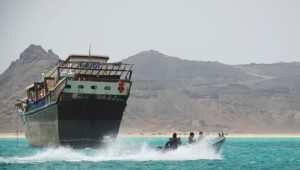
Since September, US military actions have targeted alleged Venezuelan drug trafficking, striking at least 30 boats in the Caribbean and Pacific and resulting in over 100 fatalities.
Legal analysts have suggested these attacks may have breached both US and international law.
World leaders have responded to the United States’ capture of the Venezuelan president with a mix of outrage, concern, and caution.
Was the capture of Maduro legal?
The US said it requested military support to capture Venezuelan President Nicolás Maduro, who, along with his wife, son, two political figures, and an alleged leader of an international gang, had been indicted by a New York grand jury on charges connected to terrorism, drug trafficking, and weapons offenses.


Attorney General Pam Bondi posted on social media that the accused “will soon face the full wrath of American justice on American soil in American courts.”
During a press briefing, Donald Trump accused Venezuela of seizing US oil assets and declared that Washington would reclaim them, indicating that the US would govern Venezuela for a time, though he did not clarify how, reports Reuters.
Legal analysts questioned this reasoning, pointing out that the mission blended law enforcement objectives with the prospect of extended governance. Jeremy Paul, a constitutional law professor at Northeastern University, commented, “You cannot say this was a law enforcement operation and then turn around and say now we need to run the country. It just doesn’t make any sense.”
Trump’s Chief of Staff, Susie Wiles, told Vanity Fair that military operations on Venezuelan territory would normally need Congressional authorisation. Secretary of State Marco Rubio admitted that lawmakers were not informed before Saturday’s action. Experts in international law note that the use of force abroad is strictly limited to narrow cases, such as UN Security Council approval or self-defense. Criminal offenses like drug trafficking do not meet these conditions.
Matthew Waxman, a national security law professor at Columbia University, also said, “A criminal indictment alone doesn’t provide authority to use military force to depose a foreign government, and the administration will probably hang this also on a theory of self-defense.”
The US has not recognised Maduro as Venezuela’s lawful president since 2019. Past instances include the 1989 arrest of Panama’s General Manuel Noriega and the 2022 extradition of former Honduran President Juan Orlando Hernández.
Legal experts remain doubtful that any meaningful accountability will follow, with Paul noting, “It’s hard to see how any legal body could impose practical consequences on the administration.”
Concern over US intention to run Venezuela
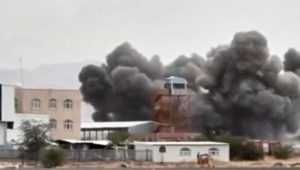
UN Secretary-General Antonio Guterres has voiced serious concern over the escalating confrontation between Washington and Caracas, which reached a critical point on Saturday with the capture of Venezuelan President Nicolás Maduro by US special forces.
According to a statement released by UN spokesperson Stéphane Dujarric, “The Secretary-General is deeply alarmed by the recent escalation in Venezuela, culminating with today’s United States military action in the country, which has potential worrying implications for the region.”
The statement stressed that the implications extend beyond Venezuela itself, noting: “Independently of the situation in Venezuela, these developments constitute a dangerous precedent. The Secretary-General continues to emphasise the importance of full respect – by all – of international law, including the UN Charter.”
Guterres also expressed concern over adherence to legal norms, saying, “He’s deeply concerned that the rules of international law have not been respected.”
The UN chief urged all sides to pursue an “inclusive dialogue” and to act in line with international law and human rights principles.