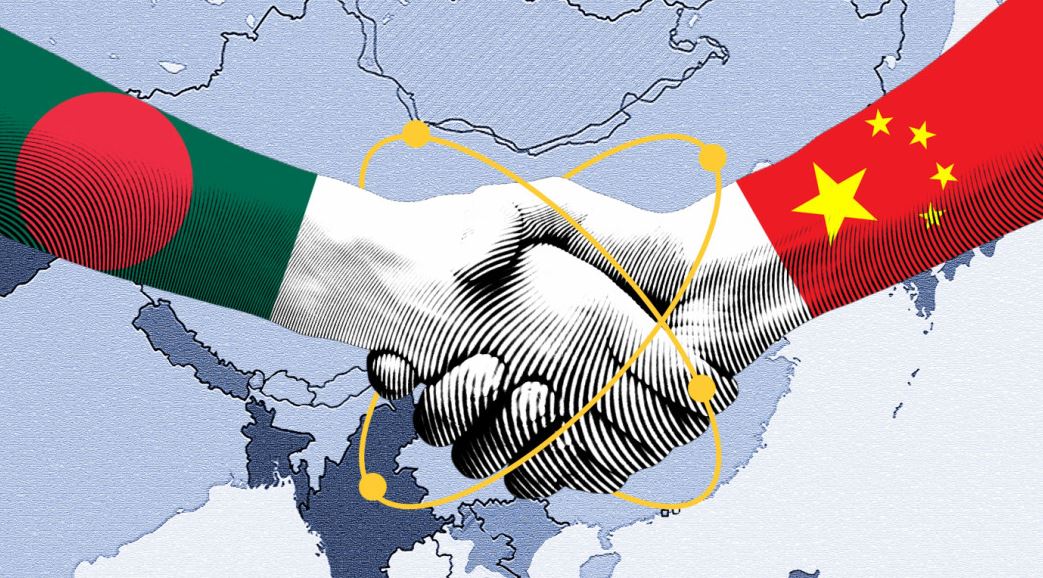



Bangladesh has skidded into a new phase of its development diplomacy by joining the Global Development Initiative (GDI). Bangladesh’s GDI membership is a new phase in Bangladesh’s development diplomacy. The Memorandum of Understanding (MoU) signed during the official visit of PM Tarique Rahman to China at the end of June 2026 is another sign of the continuous growth of the China-Bangladesh relationship. After 50 years of enhanced bilateral cooperation in trade, infrastructure, investment, and connectivity between Bangladesh and the member countries of the GDI, the country is moving towards association with the GDI.
The decision comes as the international development landscape is rapidly changing. Traditional Western development institutions do not just provide financing, technology, and infrastructure support. China has become one of the biggest donors to development projects thanks to the Belt and Road Initiative (BRI), Asian Infrastructure Investment Bank (AIIB), and the new Global Development Initiative. The GDI affiliation is a wonderful opportunity in Bangladesh and also raises several governance, transparency, independence in strategic decision-making, data availability, and long-term national-interest-related questions.
The GDI was presented by President Xi Jinping at the UN General Assembly in 2021 as China’s action plan to accelerate the implementation of the United Nations Sustainable Development Goals (SDGs). The project is not about changing the SDGs; it is about reinforcing them by narrowing them down to eight priority areas: poverty reduction, food security, public health, green development, digital connectivity, industrialisation, climate resilience, and economic cooperation. These priorities are very similar to Bangladesh’s vision of development – Bangladesh’s dream of becoming an upper-middle-income country – and the SDGs.
But if it is an economic opportunity we are considering for joining the GDI, it must not be just about that before then. The initiative has sparked much international discussion on its wider geopolitical implications. The GDI is viewed by some as a platform to allow China to play a role in international development. The GDI is not primarily concerned with the values held by many Western development partners – including democratic governance, institutional accountability, civil liberties, and human rights – but they are also important in combating poverty and promoting economic development.

The problems they raise are debt sustainability and financial transparency. China has stated that it does not believe in the concept of a debt trap, but many countries around the world do borrow from China to finance their infrastructure development. But there is still a lot of open demand for loan terms, who will be bidding, interest rates, and how the project will be executed. Though Bangladesh has been prudent in managing its debt, careful consideration should be given to future financing arrangements, as they can be compared with those of other developing countries. All major infrastructure projects should be thoroughly assessed for economic viability and be subject to independent financial evaluation and parliamentary review, to ensure long-term protection of the interests of the nation’s best.
Environmental sustainability is another factor. Transportation and energy projects financed by the Chinese have made major contributions in many nations. Other projects, however, have been criticised for their environmental impacts, ecological impacts, and working conditions. But for one of the most climate-vulnerable countries in the world, like Bangladesh, climate-resilient development is not an affordable option. Future GDI projects should, therefore, be fully compliant with National environmental regulations, international sustainability standards, and impact assessment. Equally important is a role for Bangladeshi workers, engineers, contractors, and local companies to ensure that infrastructure investment is complemented by technology transfer and capacity building.




Governance also needs to be put on the institutional agenda. A combination of physical infrastructure is needed for sustainable development. The efficiency, transparency, strength, and predictability of public administrative systems, procurement processes, legal systems, and regulatory systems are necessary for the benefits of roads, ports, industrial parks, and digital networks. Therefore, it is crucial to treat the development of the GDI more as a component of Bangladesh’s overall development process rather than as governance reform. The quality of the institutions will determine the extent to which these changes will be lasting and permanent, and whether economic benefits will accrue from the external investment.
The other practical issue is the data and information. In the last few years, reports on Chinese overseas projects have been marred by missing information for most projects, and even when available, it has been hard for independent researchers to obtain details on financing or implementation. More transparency is beneficial to development partners, as it will foster greater public confidence in their work and provide an independent way to assess and limit misinformation. If information on projects, procurement, environmental assessments, and financial aspects were available to everyone, it would increase accountability and, in turn, improve policy outcomes in Bangladesh.
Apart from the economic aspects, Bangladesh should know the bigger picture of where the GDI will be operating. A main arena of strategic competition in the South Asia region between the great powers, particularly China, the USA, and India. The growth of Bangladesh’s relationship with China through GDI aligns with Bangladesh’s ties with the United States and other international partners. Diplomatic relations play a significant role in Bangladesh’s foreign policy, helping maintain good relations with major powers.
Dhaka’s existing partnership and strategic cooperation with the U.S. is also noteworthy in this regard. Cooperation with the Chinese and the U.S. must not be in binary terms; Bangladesh’s foreign policy should be pragmatic, focusing on interests and a desire to constructively cooperate with several partners. It would foster strategic independence and help avoid dependence on any other foreign power. Geopolitical balance for a nation in the middle of the Indo-Pacific and the Bay of Bengal is not an option but a must.
Latterly, in line with Bangladesh’s vision of participating in the Global Development Initiative, the process is ongoing to identify new development partners in a multipolar world. It provides investment opportunities in infrastructure, working together in technology, digitalisation, climate adaptation, and poverty alleviation. It needs to be handled with utmost care, taking into account financial risks, institutional management, environmental requirements, transparency, and geopolitical sensitivities.
It will be up to the countries to make the right policy choices for the initiative’s success, not the initiative itself. Each project in the GDI framework should be open, have effective debt management, competitive procurement, strong institutions, and balanced diplomacy. If the above is done in all situations, the developmental benefits both countries can derive can be maximised without infringing on Bangladesh’s sovereignty, strategic interests, flexibility, or future interests. What is the nation’s greatest strength in this new great power competition? Its development policy, which is confident, sensible, and national-interest-driven, prioritises the welfare of its citizens over geopolitics.
The views expressed in this article are solely those of the author
The writer is a Professor, Department of International Relations, University of Chittagong, Bangladesh. Director, Hong Kong Research Centre for Asian Studies-Bangladesh Centre (RCASBC). Email: [email protected]