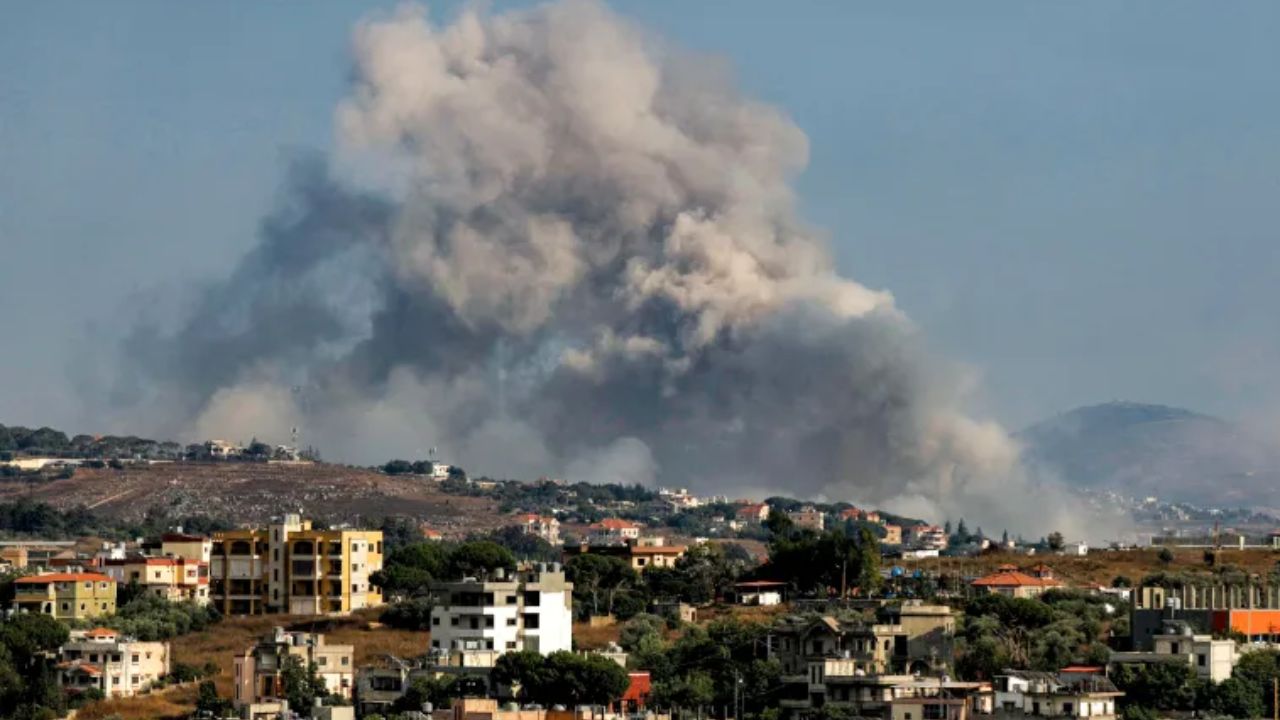



A seventh round of United States-mediated talks between Israel and Lebanon opened in Rome on Tuesday, aimed at establishing new “pilot zones” in southern Lebanon from which Israeli forces would begin withdrawing as the Lebanese army takes control, even as Israeli strikes on the south continued, reports Al Jazeera.
The three-day talks come despite a conditional ceasefire agreed in early June, with Israeli forces having failed to fully withdraw from occupied Lebanese territory as promised under a US-brokered framework signed on 26 June.
That deal saw Israel agree to pull back from swathes of southern Lebanon in exchange for the disarmament of the Iran-backed Hezbollah, a step that has not yet occurred. High-level political and military officials from both sides are attending the Rome talks.
A Lebanese official told Anadolu news agency that Beirut’s delegation would include former US ambassador Simon Karam and incumbent ambassador Nada Mouawad, with the military side led by Brigadier-General George Rizkallah, joined by legal adviser Antoine Sfeir and land-surveying expert Najib Massihi.
Israeli political and military representatives are also present, according to The Times of Israel. Israel and Hezbollah have been at war since 2 March, when the group fired rockets into northern Israel in response to US-Israeli strikes on Iran on 28 February.

Israel has since occupied close to a fifth of Lebanese territory in the south, with more than 4,000 people killed and over a million displaced amid Israeli operations targeting Hezbollah strongholds in the south and Beirut’s southern suburbs.
The June framework set out a “sequenced process” under which the Lebanese army would restore authority over Lebanese territory pending Hezbollah’s verified disarmament, though it stopped short of mandating a full Israeli withdrawal.
Instead, it proposed a “progressive redeployment” via two pilot zones in which Lebanese forces would gradually take over security responsibility.



The first such withdrawal took place in July, though Israel continues to hold a buffer zone roughly 10 kilometres inside Lebanon, which Prime Minister Benjamin Netanyahu has said will remain under Israeli control until Hezbollah disarms.
Following the sixth round of talks in mid-July, a US official said Israel and Lebanon had agreed on the structure for the pilot zone process.
A Lebanese official said Beirut would use the seventh round to propose new pilot areas, with a second phase potentially covering Bint Jbeil or Khiam, both south of the Litani River.
The Lebanese military delegation was expected to present maps detailing its deployment in Zawtar al-Gharbiyeh, the first agreed pilot area, along with plans for further zones.
Ahead of Tuesday’s session, Lebanese Agriculture Minister Nizar Hani said the government was dissatisfied with progress since the framework deal, telling the state-run National News Agency that developments fell short of the expectations of President Joseph Aoun.
Israeli officials have maintained they will stay in southern Lebanon as long as Hezbollah remains armed.
The talks mark the latest in a series that began in Washington in April, chaired at various points by US Secretary of State Marco Rubio and President Donald Trump, with the pilot zone concept first agreed in early June and reaffirmed in mid-July.
Strikes have continued in the meantime. NNA reported Israeli forces dropped phosphorus bombs on groves in Yaroun, Arnoun and Bint Jbeil on Tuesday, alongside missile strikes near Nabatieh and a drone attack in Tyre. Strikes near the UNESCO-listed Beaufort Castle last Friday prompted Aoun to call the timing a “direct threat” to the framework.
Hezbollah, not a direct party to the negotiations, has criticised them sharply, with secretary-general Naim Qassem saying the talks bring Lebanon only humiliation and concessions, and accusing Aoun of deepening division rather than acting as a unifying figure.
US Ambassador to Lebanon Michel Issa said he remained encouraged by the Rome talks but cautioned that moving too quickly could endanger civilians, stressing the need for careful, responsible implementation to allow future pilot zones to proceed more smoothly.