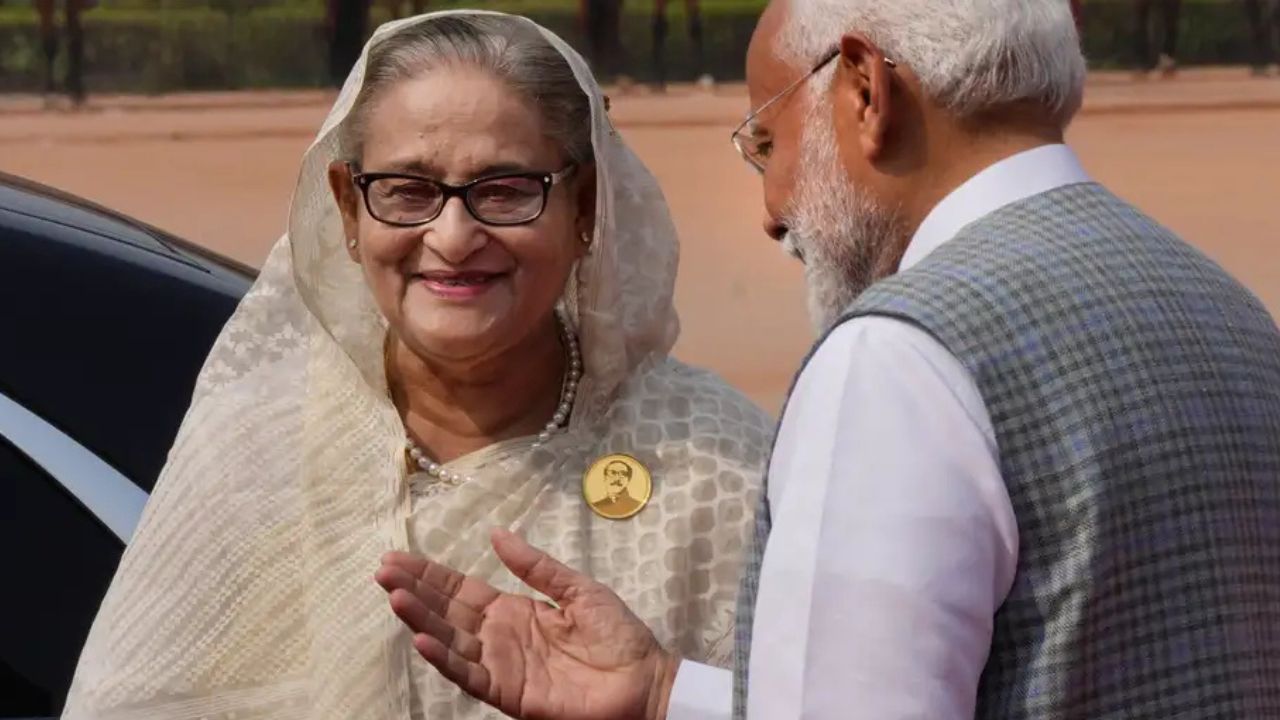



Sheikh Hasina is set to address a press conference in New Delhi on Friday, marking her first public appearance since her ouster as prime minister a year and a half ago.
The event, titled “Bangladesh at the Crossroads,” is being organised by the Foreign Correspondents’ Club of South Asia and the International Association of Press Clubs.
The invitation card identifies Hasina as “The Honourable Prime Minister of Bangladesh,” a designation that has raised eyebrows among political and diplomatic observers in Dhaka.
The announcement has triggered widespread speculation over whether Indian authorities are tacitly facilitating the emergence of a de facto “government in exile”.
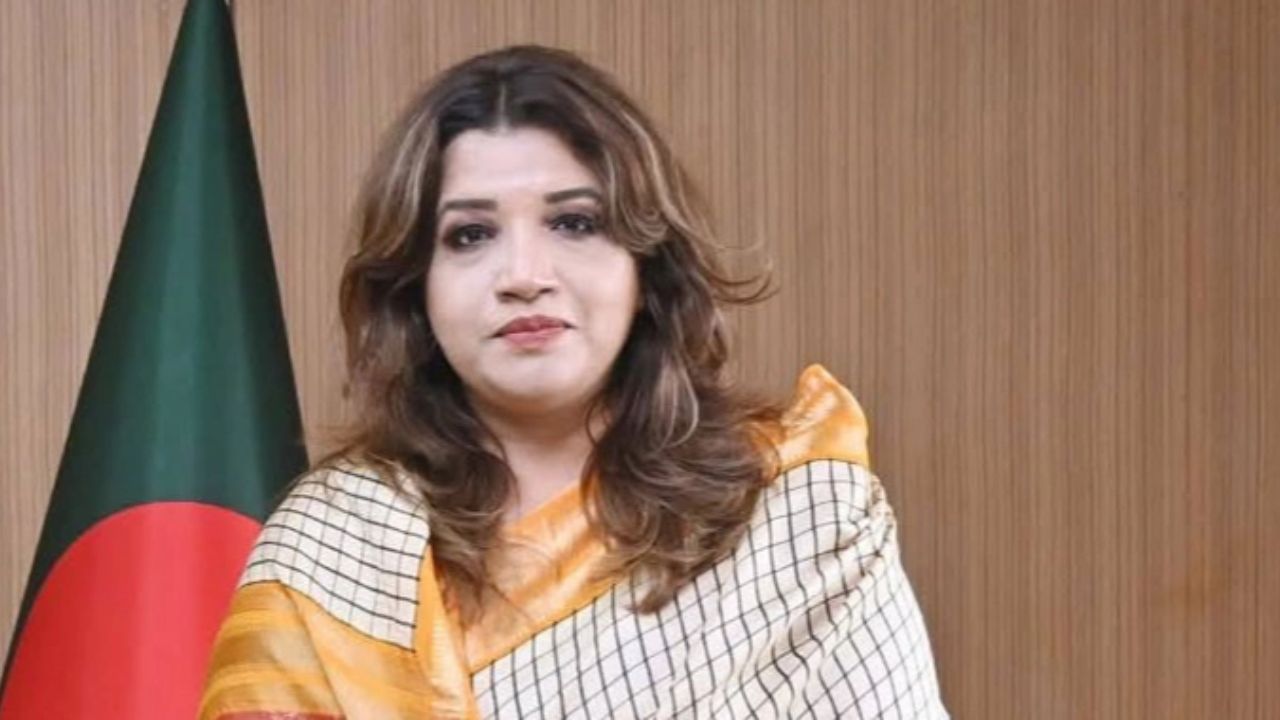
The same invitation also refers to Md Ali Arafat as “Minister of Information & Broadcasting” and Mohibul Hassan Chowdhury Nowfel as “Minister of Education”, despite the dissolution of the previous cabinet.
Nowfel confirmed the programme to TIMES of Bangladesh, though he could not confirm whether Hasina would participate in person or virtually.

All India Press Club President Goutom Lahiri also confirmed the event, saying the programme would begin at 6:30pm Bangladesh time and be broadcast live on Facebook, YouTube, X (formerly Twitter), and the website of the Foreign Correspondents’ Club of South Asia, www.fccsouthasia.com.
Analysts question signals from India
The development has sparked speculation among political and diplomatic analysts over whether the Indian administration or sections of civil society are in any way facilitating Hasina’s political activities.
A former Bangladeshi ambassador, speaking on condition of anonymity, said India has yet to formally clarify the legal status of Hasina, who fled to India in the face of the student-led mass uprising on 5 August 2024.
“If she is staying in Delhi on a regular visa, there should be restrictions on engaging in overt political activities,” he said, adding that historical precedents such as the Dalai Lama’s Tibetan government-in-exile exist but are politically sensitive and exceptional.


“The fact that the invitation addresses Sheikh Hasina as prime minister suggests that the organisers may have received signals from the Indian political establishment,” the former diplomat said, noting that Indian officials have publicly acknowledged Muhammad Yunus as head of Bangladesh’s interim government.
Bilateral engagement
The interim government in Bangladesh was formed on 8 August 2024, and Indian Prime Minister Narendra Modi was among the first world leaders to congratulate Chief Adviser Muhammad Yunus.
The two leaders also met on the sidelines of the BIMSTEC Summit in Thailand in April last year.
Since then, Foreign Adviser Md Touhid Hossain and Indian External Affairs Minister S Jaishankar have held several meetings in neutral venues, while Indian Foreign Secretary Vikram Misri visited Dhaka in December 2024 for foreign office consultations.
“These engagements clearly indicate that India recognises the interim government as the legitimate authority in Bangladesh,” a former ambassador said.
What is a govt in exile?
A government in exile is a political authority that claims to be the legitimate government of a country but operates from abroad due to war, revolution, or political upheaval.
Such entities rely heavily on diplomatic recognition and international support to maintain relevance.
The most prominent example is the Tibetan Government in Exile, also known as the Central Tibetan Administration, based in Dharamshala, India.
Diplomatic implications
Hasina has previously given email interviews to Indian and international media outlets, including Reuters, AFP, Al Jazeera, and the BBC.
Those appearances prompted strong reactions from Dhaka, with the interim government formally protesting her political activities conducted from Indian soil.
“If Hasina attends this press conference, it would indicate approval from Indian authorities and could negatively affect Bangladesh–India relations,” said one analyst.
Officials in Dhaka have consistently conveyed that they do not welcome political activities by Hasina from abroad, particularly from India.
“Just ahead of the national election, such an event could send the wrong signal to Bangladesh,” the analyst added.
When contacted, the foreign ministry said it was not formally aware of the programme.
Asked whether Dhaka would react if Hasina appears at the event, a senior official said any response would be determined by the country’s top political leadership.